


Geopolitics has moved decisively from the margins of corporate risk planning to its centre. Rising tensions around Iran, combined with ongoing instability in key maritime corridors, are creating a strategic environment where global logistics could be disrupted across multiple domains simultaneously. For companies reliant on international trade and aviation connectivity, the implications could be profound.
According to Stefano Ritondale, chief intelligence officer at geopolitical risk intelligence firm Artorias, the scale of the current military posture in the Middle East alone should prompt serious concern. The United States has assembled what he describes as the largest military build-up in the region since the 2003 invasion of Iraq. Even without open conflict, such deployments are already influencing risk calculations across the logistics sector.
“The severity of the situation needs to be understood in context,” Ritondale says. “This is the largest US military build-up in the region since the 2003 invasion of Iraq, and that alone tells you how serious the environment has become. When tensions reach this level, companies have to start thinking about the consequences not only for maritime shipping, but also for aviation and airfreight.”
Two critical arteries of global trade sit at the centre of this concern: regional air corridors and the Strait of Hormuz. Disruption in either would ripple across global supply chains.
Commercial aviation routes between Europe and Asia depend heavily on transit corridors across the Middle East. The closure or restriction of these airspaces would create immediate operational challenges.
In a crisis scenario involving Iran, airlines could be forced to reroute aircraft away from multiple countries simultaneously. The problem would extend far beyond Iranian airspace itself.
“If Iran launches ballistic missiles into neighbouring countries such as Saudi Arabia, Qatar or the UAE, the risk envelope expands dramatically,” Ritondale explains. “Airlines would not simply avoid Iranian airspace — they would likely have to avoid a much larger portion of the region because of the risk environment. That has a direct impact on aviation connectivity, airfreight operations and the speed at which goods can move between continents.”
This matters because the Gulf has evolved into one of the world’s most important aviation hubs. Airports such as those in Doha, Dubai and Istanbul serve primarily as intercontinental connectors between East and West. Their business models depend on uninterrupted transit traffic.
“A lot of these airports were built specifically to serve as connectors between East and West,” Ritondale says. “Cities like Doha or Dubai are not primarily destination markets — they are transit hubs designed to link global travel networks. If the region becomes unsafe for aviation, you remove a critical piece of infrastructure from the global transport system.”
In such a scenario, airlines flying between Asia and Europe would face longer routes, higher fuel costs and significant scheduling disruptions. For the airfreight sector, which depends on speed and predictable transit times, the consequences could be severe.
The maritime domain presents an equally serious vulnerability. The Strait of Hormuz remains one of the world’s most strategically important chokepoints, through which a substantial portion of global oil and gas exports pass.
Although the waterway cannot be physically “closed” in a conventional sense, Iran possesses multiple tools to disrupt traffic. Naval mines, missile strikes and harassment of vessels could quickly make the route unsafe for commercial shipping.
“Iran would likely attempt to disrupt the Strait rather than literally close it,” Ritondale explains. “Mining operations, missile threats and harassment of shipping could quickly make the route unsafe for commercial traffic. The practical effect of that kind of disruption is that insurers and shipping companies simply stop using the route.”
This risk comes at a time when shipping routes through the Red Sea are already under strain due to attacks on commercial vessels by Houthi militants. Should both corridors become unsafe, the consequences for global trade would be significant.
Ships would likely be forced to reroute around the Cape of Good Hope, adding thousands of miles to journeys between Asia and Europe. That shift would dramatically increase transit times and shipping costs.
While much discussion focuses on military targets, Ritondale argues that the greater economic risk lies elsewhere: civilian infrastructure.
Iran’s strategic doctrine, he says, emphasises causing economic pressure rather than simply targeting military installations. If faced with an existential threat, Tehran could attempt to inflict widespread economic disruption across the region.
“From Iran’s perspective, targeting military bases alone does not necessarily achieve the strategic objective,” he says. “If the regime believes it is facing an existential threat, the goal becomes imposing maximum economic pressure on the United States and its allies. That means targeting infrastructure such as ports, airports, energy facilities and oil installations.”
Potential targets could include oil facilities, ports, airports and energy installations across the Gulf region. Such attacks would aim to create economic shockwaves large enough to force diplomatic pressure on Washington from regional partners.
Beyond physical attacks, cyber operations present another major concern. Iran has developed sophisticated cyber capabilities over the past decade and has demonstrated a willingness to deploy them against both government and corporate targets.
In a conflict scenario, logistics companies could become direct targets. Airlines, shipping operators and major freight firms could all face cyber disruptions designed to create wider economic impact.
“Cyber operations sit much lower on the escalation ladder than ballistic missiles,” Ritondale says. “They are easier to deploy and they allow Iran to reach targets far beyond the Middle East. If the objective is to disrupt global logistics networks, cyber operations against major shipping or airfreight companies would be an obvious option.”
Major logistics firms headquartered in North America or Europe could therefore experience disruptions even if the conflict remains geographically concentrated in the Middle East.
Despite these risks, many companies still underestimate the role geopolitics plays in their operations. Ritondale believes this reflects a structural shift in corporate risk management over the past two decades.
During the post-9/11 era, businesses concentrated heavily on cyber threats, terrorism and internal security risks. While those threats remain relevant, they often displaced broader geopolitical analysis.
“For the past twenty years the corporate security world has been dominated by cyber and counterterrorism,” he says. “Those are important areas, but they pushed geopolitics out of the conversation in many companies. As a result, businesses often fail to understand how geopolitical crises can directly affect their operations.”
The consequence is a business environment where many firms lack the analytical capacity to anticipate geopolitical disruptions before they occur.
Addressing that gap will require both organisational and technological change. Ritondale argues that companies must rebuild geopolitical intelligence functions within their risk structures while also leveraging new analytical tools.
Artificial intelligence could play an increasingly important role in this process. Advanced systems are capable of analysing large volumes of geopolitical data and generating scenario-based forecasts that inform strategic decision-making.
“The future of risk management is going to combine geopolitical expertise with advanced analytical technology,” Ritondale says. “AI systems can analyse vast amounts of information and generate different scenarios very quickly. When you combine that capability with regional expertise, companies can anticipate disruptions and plan their responses far more effectively.”
Source: https://aircargoweek.com/why-geopolitics-is-becoming-a-supply-chain-problem/

Việt Nam’s semiconductor exports grew at a compounded annual rate of 31.8 per cent between 2006 and 2025, while imports grew by 30 per cent a year during the same period.
Airfreight rates appear strong as the peak season draws near, with year-on-year gains on transpacific lanes robust while Asia-Europe rates start to recover following the end...
Data-centre investment is reshaping trade flows and putting new pressure on the industry's capacity balance, with hi-tech now the main engine of air cargo growth, according...
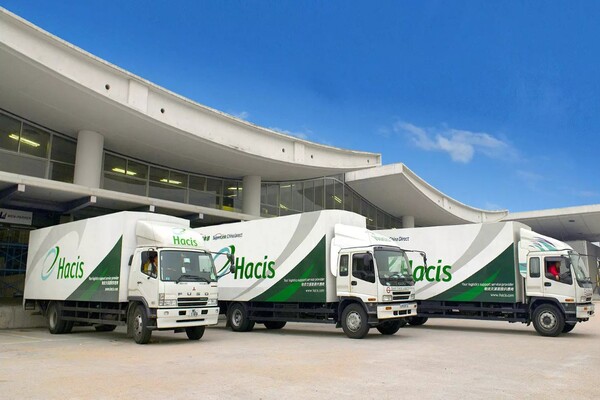
Building on the pilot shipment from Hanoi, Hacis is developing its Vietnam–Hong Kong road feeder service to offer exporters greater routing flexibility and access to Hong...
Container spot freight rates on Asia–Europe routes have rebounded after three consecutive months of decline, ahead of new Freight All Kinds (FAK) rate increases scheduled...
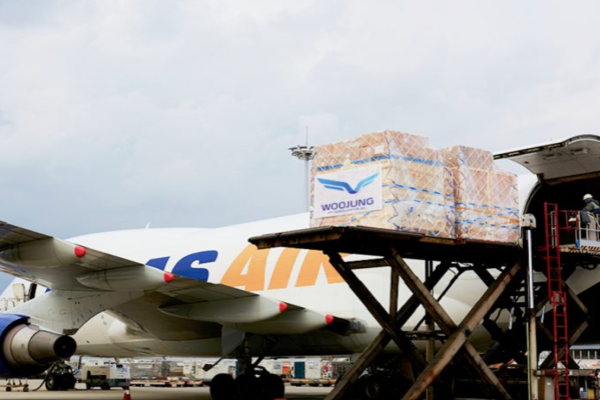
Samsung SDS is expanding its airfreight operations through the acquisition of South Korean cargo consolidator Woojung Air. The deal will strengthen Samsung SDS’s access to...
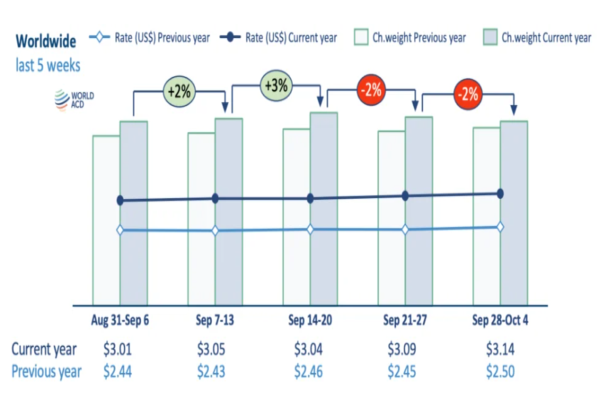
Worldwide air cargo tonnages bounced back strongly in September following their August lull, with volumes rising +3% compared with the previous month and growing +9%, year...

The rapid growth in demand for artificial intelligence (AI-related) goods that has consumed air cargo capacity out of Asia has also helped insulate global trade against tariffs...

Samsung SDS – the IT solutions and logistics arm of Samsung – is expanding its presence in air cargo through the acquisition of Korean airfreight consolidator Woojung Air...
Geopolitical uncertainty and digital transformation are reshaping global logistics, making supply chain resilience a strategic priority. FIATA emphasises the need for diversified...

 ALS
ALS