


According to The Mordor Intelligence, the ASEAN freight and logistics market size is projected to be USD 288.24 billion in 2025, USD 305.98 billion in 2026, and reach USD 406.10 billion by 2031, growing at a CAGR of 5.82% from 2026 to 2031.
Five forces reshape the region’s logistics DNA: accelerated infrastructure spending on ports, rail, and bonded zones; platform-enabled orchestration that raises asset utilization; consumer-driven parcel demand that compresses service windows; regulatory pressure for greener corridors; and mounting climate-related disruptions that test network resilience. Operators that move early on cold-chain capacity, AI load-matching, and cyber-secure control-tower visibility are positioned to convert volatility into margin while laggards face escalating insurance, labor, and compliance costs. Industry consolidation gathers pace following DSV’s EUR 14.3 billion (USD 15.78 billion) purchase of DB Schenker, signaling a premium on scale-based bargaining power with shippers. Digital-native CEP networks such as Ninja Van and Flash Express continue to carve share from asset-heavy incumbents by coupling micro-hub density with variable-cost delivery fleets. Meanwhile, government-backed green-corridor pilots redirect selected long-haul flows from road to coastal shipping and rail, but first-mile and last-mile legs keep road freight dominant through 2031.
Key takeaways:
Besides, drivers impact analysis:
Driver | ~ Impact on CAGR forecast | Geographic relevance | Impact timeline |
| Rapid proliferation of temperature-controlled supply chains for vaccines, biologics and fresh food | +0.9% | Indonesia, Thailand, Vietnam, with urban concentration in Manila, Jakarta, Bangkok | Medium term (2-4 years) |
| Widespread roll-out of cloud-based freight-matching marketplaces lifting vehicle load factors | +0.7% | Regional adoption led by Singapore, Malaysia, expanding to Vietnam, Indonesia | Short term (≤ 2 years) |
| Government-backed green-corridor programs shifting long-haul traffic from road to coastal shipping and rail | +0.6% | Thailand, Malaysia, Indonesia coastal routes, Vietnam rail corridors | Long term (≥ 4 years) |
| Explosive growth of urban middle-class consumption accelerating hyper-local express networks | +0.8% | Metro Manila, Greater Jakarta, Bangkok, Ho Chi Minh City, Kuala Lumpur | Short term (≤ 2 years) |
| Expansion of bonded logistics parks and special economic zones cutting inventory dwell times | +0.5% | Vietnam, Thailand, Philippines gateway cities, Indonesia special economic zones | Medium term (2-4 years) |
| Real-time cross-border payment rails enabling SMEs to plug into regional e-export channels | +0.4% | ASEAN-wide with early adoption in Singapore, Malaysia, Thailand | Medium term (2-4 years) |
Rapid Proliferation of Temperature-Controlled Supply Chains for Vaccines, Biologics and Fresh Food
Cold-chain lanes are scaling multiples faster than general freight as vaccine distribution and fresh-food e-commerce converge on 2–8 °C integrity. A USD 500 million World Bank facility announced in 2024 underwrites resilient refrigeration nodes across Southeast Asia. Thailand’s National Food Institute foresees 12% annual cold-storage growth through 2027, while Indonesia’s pharma cold-chain spend topped USD 1.2 billion in 2024, catalyzing solar-powered warehouses that meet WHO pre-qualification thresholds. Ultra-low-temperature lanes for mRNA therapies push complexity to –80 °C, positioning certified operators for premium margins as GDP and HACCP audits tighten across member states.
Cross-Border E-Commerce Drives International Growth
Domestic parcels represent 64.37% of volume in 2025, but international CEP races ahead at 7.30% CAGR, fueled by Lazada and Shopee cross-border storefronts. J&T Express inaugurated dedicated flights linking the big four ASEAN economies in 2024, cutting delivery lead times to 3-5 days.
ASEAN Single Window waives formal entry on parcels below USD 150, slashing clearance from 48 hours to under 4 hours. Return logistics complexity mounts, spurring new circular networks for cross-border exchanges. Domestic CEP counters with micro-fulfillment expansion; Ninja Van’s 250 hubs process 2.5 million parcels daily.
Air Freight Gains Share Despite Road Dominance
Road held 67.33% of ASEAN freight and logistics market share in 2025, yet air freight’s 7.95% CAGR through 2031 reflects premium electronics, semiconductors, and biologics relying on 24-hour cycle times. Changi Airport processed 1.85 million tons cargo in 2024, 12% up year-on-year.
Sea freight remains cost staple but battles 22% rate erosion in 2024 as capacity overshot demand. Rail wins bulk and green-corridor business where infrastructure upgrades land, with ASEAN Rail Masterplan envisioning USD 18 billion track modernization. Electric trucks and alt-fuels support decarbonizing road fleets under Thailand’s 30% EV target by 2030.
Air Forwarding Gains on Sea Dominance
Sea and inland waterways still deliver 75.75% of forwarding value in 2025, yet air forwarding climbs 6.85% CAGR through 2031 as semiconductor and pharma clients prize speed. Kuehne+Nagel booked 22% regional air-freight growth in 2024.
Digital-first forwarders like Flexport scale 35% by offering unified dashboards across modes, while alliance-driven ocean schedules create reliability gaps that steer shippers toward multimodal blends. Rail and barge forwarding unlocks cost-green hybrids where corridors mature, but asset availability still lags demand.
Countries' point of view:
Indonesia commands nearly half of ASEAN freight and logistics market share due to archipelagic trade lanes, 275 million population scale, and manufacturing on Java and Sumatra. The nation’s logistics performance index improved to 3.28 in 2024 after port, toll-road, and customs digitalization, and its National Logistics Ecosystem reduced Tanjung Priok dwell time by more than a day. Americold’s USD 80 million Surabaya cold store underscores surging vaccine and fresh-food demand. Persistent 150,000 driver shortfall lifts wages and narrows operator margins.
Vietnam is the region’s fastest climber at 6.6% CAGR. Exports hit USD 371 billion in 2024 and logistics cost-to-GDP fell to 17.2% as customs and warehouse automation took hold. Hai Phong’s 8.5 million TEU throughput and deep-water berth upgrades trim transshipment fees, while USD 2.1 billion FDI pours into distribution real estate.
Thailand and Malaysia consolidate hub status with Laem Chabang and Port Klang expansions elevating combined capacity above 34 million TEU by 2026. Singapore maintains air-cargo supremacy through Changi’s 1.85 million tons flow, whereas the Philippines and Cambodia lure niche bonded-park investors targeting reduced customs dwell and just-in-time assembly.
Source: https://www.mordorintelligence.com/industry-reports/asean-freight-and-logistics-market

Việt Nam’s semiconductor exports grew at a compounded annual rate of 31.8 per cent between 2006 and 2025, while imports grew by 30 per cent a year during the same period.

Airfreight rates appear strong as the peak season draws near, with year-on-year gains on transpacific lanes robust while Asia-Europe rates start to recover following the end...
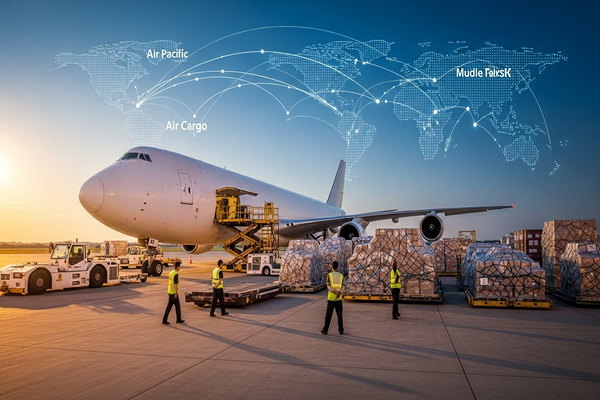
Data-centre investment is reshaping trade flows and putting new pressure on the industry's capacity balance, with hi-tech now the main engine of air cargo growth, according...
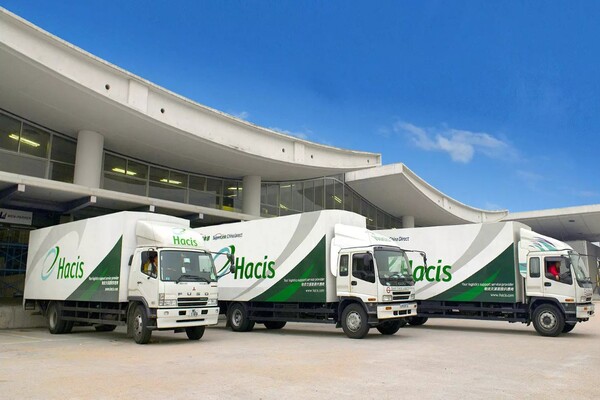
Building on the pilot shipment from Hanoi, Hacis is developing its Vietnam–Hong Kong road feeder service to offer exporters greater routing flexibility and access to Hong...
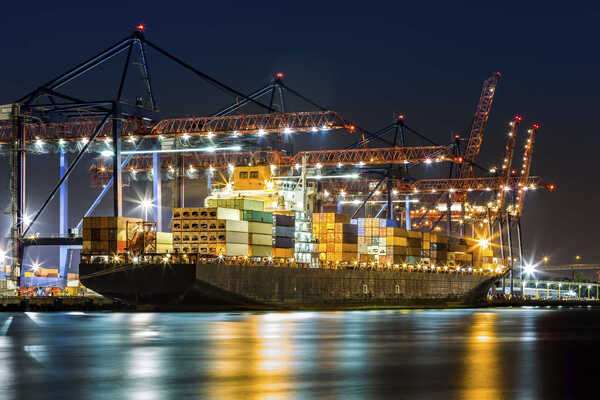
Container spot freight rates on Asia–Europe routes have rebounded after three consecutive months of decline, ahead of new Freight All Kinds (FAK) rate increases scheduled...
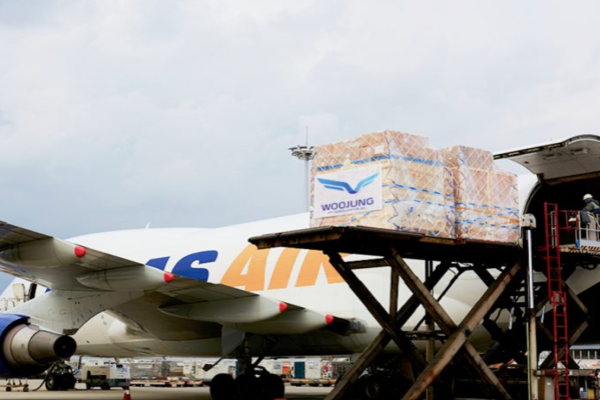
Samsung SDS is expanding its airfreight operations through the acquisition of South Korean cargo consolidator Woojung Air. The deal will strengthen Samsung SDS’s access to...
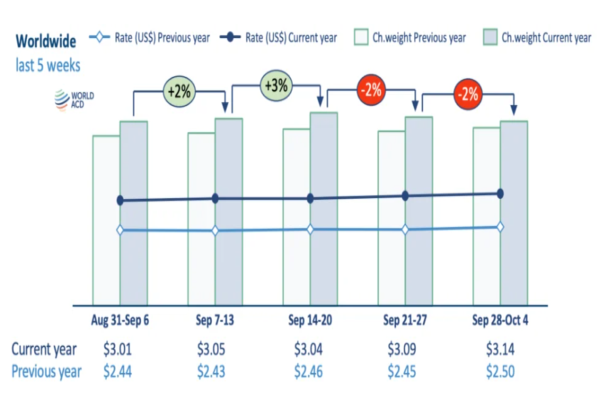
Worldwide air cargo tonnages bounced back strongly in September following their August lull, with volumes rising +3% compared with the previous month and growing +9%, year...

The rapid growth in demand for artificial intelligence (AI-related) goods that has consumed air cargo capacity out of Asia has also helped insulate global trade against tariffs...

Samsung SDS – the IT solutions and logistics arm of Samsung – is expanding its presence in air cargo through the acquisition of Korean airfreight consolidator Woojung Air...
Geopolitical uncertainty and digital transformation are reshaping global logistics, making supply chain resilience a strategic priority. FIATA emphasises the need for diversified...

 ALS
ALS