


The trade body is confident that consumer thirst for e-commerce will remain firm, despite challenges including a global crackdown on import rules and the need for increased airfreight industry efforts to embrace digitalisation.
Andre Majeres, head of e-commerce and cargo operations at IATA, says: “E-commerce will remain one of the strongest drivers of air cargo demand in 2026. We expect global air cargo volumes to grow by around 2.4%, reaching over 71.6m tons, and a significant share of that will be linked to cross-border e-commerce.”
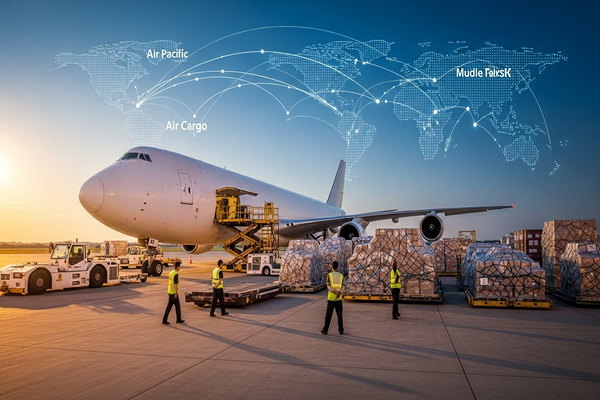
He adds that air cargo demand growth within and out of e-commerce hotspot Southeast Asia is particularly strong: “Asia Pacific will continue to lead the way, with robust growth of 6%.”
“While overall cargo growth is moderating compared with the pandemic boom, e-commerce is still a structural growth engine for our industry,” he continues.
Southeast Asia has been growing as a trade hub for over a decade and is benefiting from a continued shift of production away from China in line with the China+1 diversification strategy utilised by shippers to reduce costs and reliance on the country.
This shift was accelerated by the most recent US-China trade war, which saw airlines move capacity from China to Southeast Asia. There was also a supply chain shift away from the transpacific trade lane to Asia-Europe, as businesses responded to uncertain trade conditions caused by US tariff policy. FedEx, for example, reduced its own-controlled transpacific capacity by 25% last year.
But alongside Southeast Asia’s boost to e-commerce, there have also been difficulties.
The US government’s decision in April last year to end the de minimis exemption for imports from China valued at less than $800 resulted in increased costs and a drop in demand on the route. The policy was extended to apply to all countries of origin from the end of August last year.
China’s e-commerce export volumes shifted from China-US to China-Europe, although volumes to the US have now recovered to around 90% of what they were previously, according to air cargo consultancy Aevean.
While volumes from China to Europe were boosted by de minimis changes, they are also now under threat. European Union (EU) member states have agreed to introduce a €3 customs duty charge per item on e-commerce parcels valued below €150 from July 2026. This is intended to bridge the gap until the EU Customs Data Hub is launched in 2028. The UK also plans to end the de minimis exemption by March 2029 at the latest.
Airfreight rate analytics platform Xeneta has also predicted slower e-commerce growth this year due to increased shipper costs, tax reporting requirements in China and declining consumer purchasing power.
Majeres stresses that while the Asia-US trade lane remains soft, overall e-commerce trade is strong and supply chains have adjusted: “The removal of de minimis led to an initial drop in low-value e-commerce shipments on the Asia-North America trade lane and that softness has persisted, with the lane now in contraction for six consecutive months,” he remarks.
However, highlighting business resilience, Majeres says the decrease in Asia-North America e-commerce trade “hasn’t meant a collapse in e-commerce demand”.
He explains: “IATA data show that in October, other corridors recorded double-digit or near double-digit growth – including within Asia, between the Middle East and Europe and between Europe and Asia.
“This points to a redistribution of flows rather than a loss of demand. Growth is normalising but e-commerce remains resilient, and air cargo continues to play a critical role for high-value and time-sensitive shipments.”
Despite continued robust e-commerce flows, IATA has identified several obstacles to growth.
Regulatory complexity represents one such challenge – despite successful supply chain and air cargo industry adaptations – as demonstrated by the de minimis changes. “Changes to customs rules and tax thresholds, like the de minimis adjustments, create friction for cross-border flows for small parcels,” says Majeres.
He adds that the composition of e-commerce parcels also creates operational challenges. “E-commerce shipments are often smaller and more fragmented, which puts pressure on handling, and agility is required in optimising freighter and belly capacity planning.”
Capacity management is always a careful balancing act, but with potential widebody freighter capacity shortages ahead, finding enough of the right kind of capacity may be a challenge.
Meanwhile, although sustainability may have been somewhat overshadowed by geopolitical turmoil last year, it continues to pose a third major challenge.
Lastly, Majeres says suitable infrastructure is also a must. “Airports and ground handlers need to keep pace with the surge in express and last-mile requirements, looking into new technologies and innovative solutions which we described in our ‘2025 Vision for the Future of Air Cargo Facilities’ white paper,” (see below).
IATA is advocating five strategies for the air cargo industry to optimise e-commerce business. These include focusing on e-commerce products and services to build market share; digitalisation to increase speed; system compliance with common standards for customs clearance; investing in air cargo products to address crisis and capacity risks; and competing through responsiveness and value-added services to reduce processing times.
Majeres is championing digitalisation and service innovation as tools to better support e-commerce operations: “Digitalisation is key; we need to standardise data sharing. IATA’s ONE Record data sharing standard has now been endorsed by the air cargo industry as the preferred way forward and is critical to speeding up operations, planning, and improving visibility,” he explains.
“Service innovation is another area: offering tailored products and services for e-commerce, such as track and trace, prioritisation, first/last mile networks, and as described in our white paper on ‘Cargo Operations Efficiency and Excellence’ (see below), where IATA standards form the minimum baseline for seamless operations and innovative tools and solutions lead organisations to excellence.”
‘2025 Vision for the Future of Air Cargo Facilities’ white paper
IATA’s Vision for the Future of Air Cargo Facilities white paper highlights the need for investment in air cargo facilities to cater for e-commerce volumes efficiently.
In fact, says the association, the e-commerce boom has already significantly contributed to developing new technological solutions for air cargo, as e-retailers focus on optimising processes and increasing visibility and digitalisation.
The rapid expansion of e-commerce has fundamentally changed the requirements for cargo facilities worldwide, with rising consumer demand for fast deliveries driving investment in automated sorting, tracking and processing capabilities. Some European airports have expanded their express cargo facilities to accommodate the surge in online retail shipments and have developed integrated advanced sorting systems, digital tracking and strategic partnerships with e-commerce logistics providers to ensure a streamlined, high-speed cargo operation. Similar developments are seen in North America, where some airports have scaled up operations to meet the demands of major e-commerce players, says IATA.
The need for efficiency and sustainability means facilities that once relied on manual processes and outdated infrastructure now need to focus on emerging technologies. Demand is growing for specialised infrastructure, such as automated high-speed sorting hubs. Technological advancements will help air cargo facilities become smarter and more adaptable, improve operational performance, enhance transparency and reduce the industry’s carbon footprint.
Cargo facilities are attracting significant investment from private equity firms, infrastructure funds and public-private partnerships. Yet the successful adoption of new technologies requires significant hurdles to be overcome, including legacy infrastructure constraints, workforce adaptation, integration complexities and regulatory compliance. These challenges must be addressed through proactive investments, workforce training and collaborative industry-wide standards, stresses IATA.
‘Cargo Operations Efficiency and Excellence’ white paperIn its Cargo Operations Efficiency and Excellence white paper, IATA focuses on how operational efficiency and operational excellence underpin successful air cargo operations, which is key to supporting e-commerce growth.
IATA says operational efficiency is about how an organisation achieves its objectives of higher productivity and reduced costs. It describes the processes involved, such as preventing bottlenecks, automating manual tasks and improving workflows.
According to the IATA Cargo Handling Council (ICHC), operational efficiency can be measured by various metrics, including throughput, dwell time of processes and error rates. In comparison, operational excellence involves streamlining processes, optimising resource allocation and leveraging technology to enhance performance.
By concentrating on these areas, industry players can ensure more dependable, efficient and resilient operations, says IATA.
Focusing on excellence involves considering how to add value to operations, how a company can grow overall and how it can operate at the highest level possible. Looking beyond standards, excellence involves developing initiatives to prepare for the future, such as utilising tools for better resource planning and adopting artificial intelligence technology.
Adopting IATA standards and ensuring compliance helps achieve operational efficiency and operational excellence within the air cargo industry, says the association. Standards provide a consistent framework that enhances the reliability and quality of operations across all stakeholders, including carriers, GHAs and freight forwarders.
By adhering to IATA standards, organisations can streamline their processes, reduce inefficiencies, and ensure that safety protocols are rigorously followed. This leads to higher productivity and reduced costs, key components of operational efficiency. These standards further foster a culture of continuous improvement and excellence, points out IATA.
Source: https://www.aircargonews.net/iata-wcs/2026/03/positive-outlook-for-e-commerce/

Việt Nam’s semiconductor exports grew at a compounded annual rate of 31.8 per cent between 2006 and 2025, while imports grew by 30 per cent a year during the same period.

Airfreight rates appear strong as the peak season draws near, with year-on-year gains on transpacific lanes robust while Asia-Europe rates start to recover following the end...
Data-centre investment is reshaping trade flows and putting new pressure on the industry's capacity balance, with hi-tech now the main engine of air cargo growth, according...
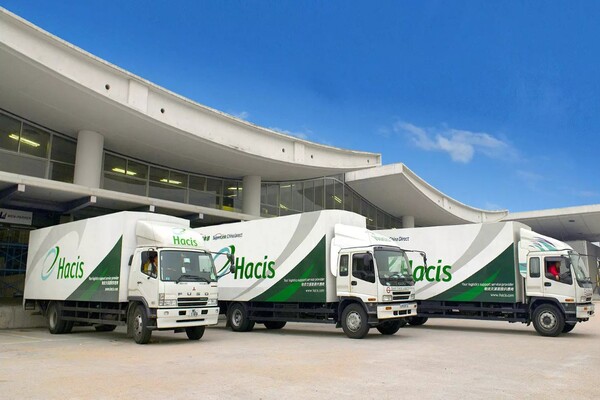
Building on the pilot shipment from Hanoi, Hacis is developing its Vietnam–Hong Kong road feeder service to offer exporters greater routing flexibility and access to Hong...
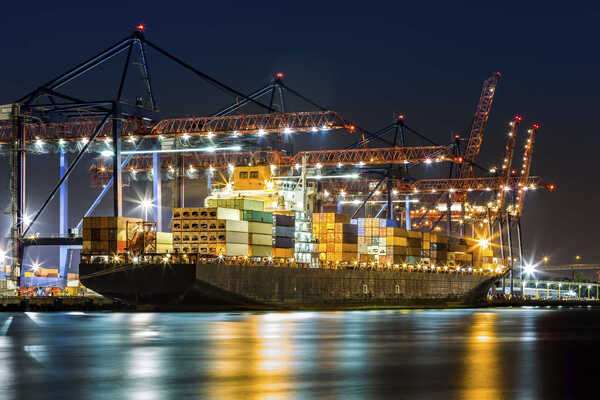
Container spot freight rates on Asia–Europe routes have rebounded after three consecutive months of decline, ahead of new Freight All Kinds (FAK) rate increases scheduled...
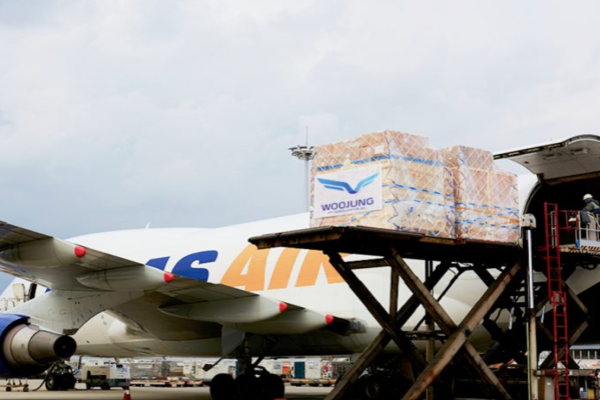
Samsung SDS is expanding its airfreight operations through the acquisition of South Korean cargo consolidator Woojung Air. The deal will strengthen Samsung SDS’s access to...
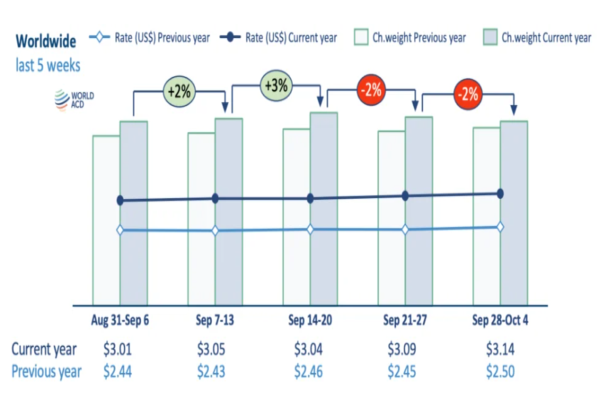
Worldwide air cargo tonnages bounced back strongly in September following their August lull, with volumes rising +3% compared with the previous month and growing +9%, year...

The rapid growth in demand for artificial intelligence (AI-related) goods that has consumed air cargo capacity out of Asia has also helped insulate global trade against tariffs...

Samsung SDS – the IT solutions and logistics arm of Samsung – is expanding its presence in air cargo through the acquisition of Korean airfreight consolidator Woojung Air...

Geopolitical uncertainty and digital transformation are reshaping global logistics, making supply chain resilience a strategic priority. FIATA emphasises the need for diversified...

 ALS
ALS