


This year marks a turning point for the EU Emissions Trading System. After a two-year phase-in, maritime transport will face full compliance under the EU ETS, alongside an expanded scope covering additional greenhouse gases and a tighter emissions cap.
These changes reinforce the EU’s climate ambition while significantly raising the stakes for affected sectors.
EU ETS performance and 2025 Carbon Market Report
The 2025 Carbon Market Report, published by the European Commission in December, shows that the EU Emissions Trading System (EU ETS) continued to drive significant emissions reductions in the power and industrial sectors throughout 2024. The system has played a key role in incentivizing decarbonization while generating substantial revenues to support investment in the clean energy transition.
The EU ETS is a cornerstone of the EU’s climate policy. Built on the “polluter pays” principle, it places a cap and a price on emissions from the energy, industrial and maritime transport sectors, as well as parts of the aviation sector. Emissions covered by the EU ETS represent approximately 40% of the EU’s total greenhouse gas emissions.
Emissions reductions and progress towards 2030 targets
According to the report, emissions from power and industrial installations covered by the EU ETS are now around 50% below 2005 levels. The system remains on track to achieve its 2030 emissions reduction target of –62%.
Notably, 2024 marked the first year that CO₂ emissions from maritime transport were included in the EU ETS, representing a major expansion of the system’s scope.
Maritime transport coverage and compliance
The EU ETS now covers:
Compliance in the first year was high. By the 30 September deadline, shipping companies surrendered allowances covering more than 99% of their required emissions, demonstrating a smooth introduction of the maritime component of the EU ETS.
In 2025, shipping companies were required to surrender allowances for 40% of their verified 2024 emissions, with a permitted 5% reduction for ice-class ships. To safeguard the environmental integrity of the system, any shortfall between verified emissions and surrendered allowances for 2024 and 2025 will be cancelled by Member States from future auction volumes.
Greenhouse gases covered under the EU ETS
Beyond CO₂, the EU ETS also covers other greenhouse gases from specific sectors, including:
EU ETS revenues and clean transition funding
EU ETS revenues remain a major source of funding for Europe’s clean transition. In 2024, the system generated €38.8 billion, bringing total revenues since inception to over €250 billion.
These funds are primarily distributed to Member States to support climate action, clean energy deployment and innovation. Additional funding is channeled to the Innovation Fund, the Modernisation Fund, and the Recovery and Resilience Facility, including the REPowerEU plan.
Phase-in of maritime compliance costs
Maritime transport has been introduced with a gradual phase-in of compliance obligations:
Allowance cancellation and auction adjustments
Under Articles of the ETS Directive, when fewer allowances are surrendered than verified emissions during the phase-in period, the corresponding number of allowances must be cancelled from auctioning.
For 2024, a total of 54,243,768 allowances will be cancelled in 2026 through an amendment to the auction calendar.
Increase in allowances for non-co₂ maritime emissions
Article 9 of the ETS Directive provides that, from January 2026, the total quantity of allowances will be increased to reflect the inclusion of non-CO₂ greenhouse gas emissions from maritime transport. These additional allowances will be auctioned in 2026 and allocated to the Innovation Fund via an updated auction calendar.
Adjustments to the EU ETS Cap in 2026
The report also outlines key adjustments to the EU ETS cap effective from 2026, driven by:
In 2026, the cap will be:
What the EU ETS Extension means for maritime transport
The extension of the EU ETS to maritime transport builds on existing ETS rules and the Maritime Monitoring, Reporting and Verification (MRV) Regulation. During 2024 and 2025, only CO₂ emissions were covered, with CH₄ and N₂O included from 2026.
Shipping companies reported 89.8 million tonnes of verified CO₂ emissions in 2024. The surrender obligation is phased in, requiring:
Review of the maritime EU ETS
The European Commission will conduct a review of the EU ETS for maritime transport in 2026. This review will assess:
Source: https://www.iims.org.uk/new-eu-ets-rules-take-effect-from-january-2026/

Việt Nam’s semiconductor exports grew at a compounded annual rate of 31.8 per cent between 2006 and 2025, while imports grew by 30 per cent a year during the same period.

Airfreight rates appear strong as the peak season draws near, with year-on-year gains on transpacific lanes robust while Asia-Europe rates start to recover following the end...
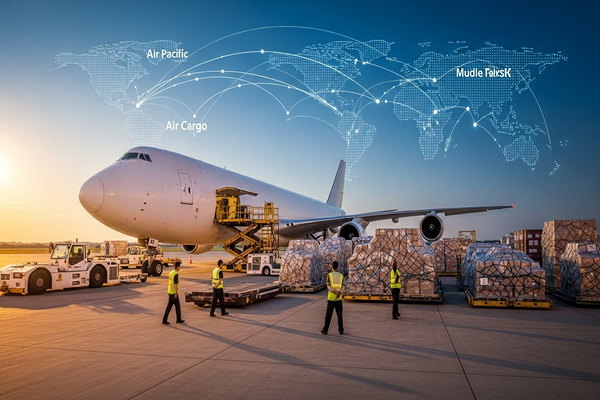
Data-centre investment is reshaping trade flows and putting new pressure on the industry's capacity balance, with hi-tech now the main engine of air cargo growth, according...
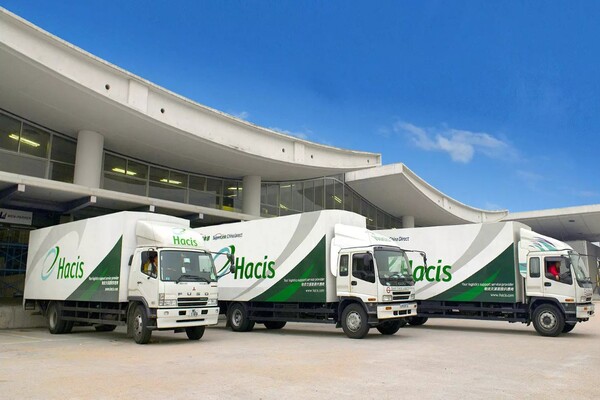
Building on the pilot shipment from Hanoi, Hacis is developing its Vietnam–Hong Kong road feeder service to offer exporters greater routing flexibility and access to Hong...
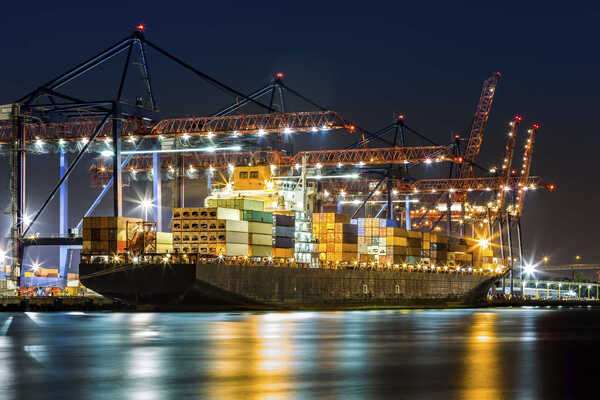
Container spot freight rates on Asia–Europe routes have rebounded after three consecutive months of decline, ahead of new Freight All Kinds (FAK) rate increases scheduled...
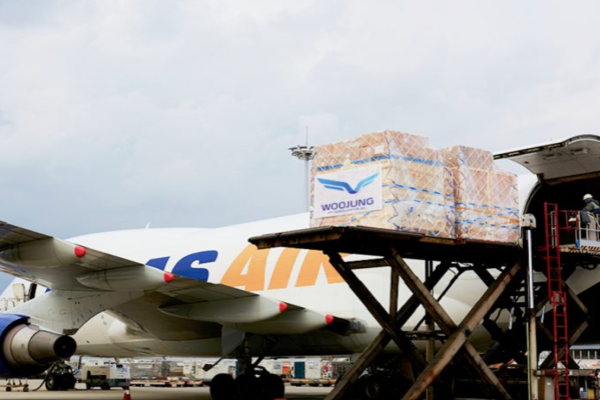
Samsung SDS is expanding its airfreight operations through the acquisition of South Korean cargo consolidator Woojung Air. The deal will strengthen Samsung SDS’s access to...
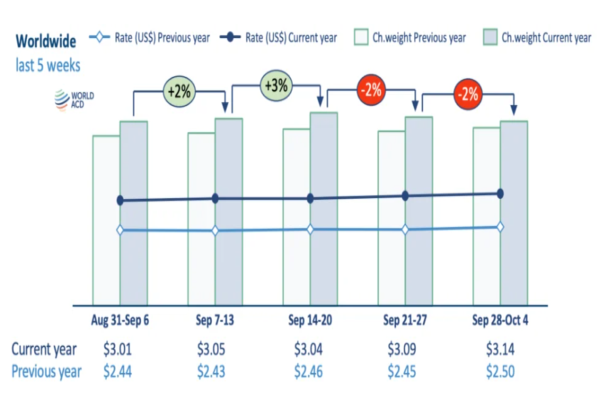
Worldwide air cargo tonnages bounced back strongly in September following their August lull, with volumes rising +3% compared with the previous month and growing +9%, year...

The rapid growth in demand for artificial intelligence (AI-related) goods that has consumed air cargo capacity out of Asia has also helped insulate global trade against tariffs...

Samsung SDS – the IT solutions and logistics arm of Samsung – is expanding its presence in air cargo through the acquisition of Korean airfreight consolidator Woojung Air...
Geopolitical uncertainty and digital transformation are reshaping global logistics, making supply chain resilience a strategic priority. FIATA emphasises the need for diversified...

 ALS
ALS