


Europe will enter 2026 with a market in strategic recalibration regarding air cargo. After a year marked by unpredictable demand trends, shifting trade lanes and increasing regulatory scrutiny, operators are not grappling with a temporary disruption, but with a more structural shift in the way cargo networks are built and operated.
Seasonal planning and operational planning models are ceding to an almost non-stop, responsive approach driven by geopolitical changes, ongoing trade policies and increased compliance demands. Instead of a recovery from volatility, 2025 reaffirmed a new operating reality: volatility has become embedded in the market.
Throughout Europe, carriers, forwarders and logistics providers are having to balance agility and responsibility while reacting to fragmented demand and the rising demands for disclosure and reporting. Delivering logistics services that are merely “good enough” is no longer sufficient. “The sector will see heightened competition and more selective customers, challenging traditional service models. ‘Good enough’ is quite simply no longer the case,” said Marion Simpson, managing director of Rhenus Road UK.
Cost pressure, capacity limitations and regulatory requirements have increasingly combined, Simpson says, and the definition of what constitutes value for the logistics business has changed. “As we look ahead to next year, logistics businesses are facing a complex landscape of rising costs, capacity pressures, sustainability targets and evolving environmental reporting and compliance requirements,” she said.
Trade flows in 2025 have redrawn the map in much the same way. Much of the strategic direction of 2025 was determined by the remodelling of global trade flows. With the cooling of China–US volumes, demand turned to other countries, prompting European operators to turn away from the old method of operating.
Euro Cargo Aviation’s shift opened up new prospects, especially e-commerce. “Strong e-commerce growth and declining China–US volumes shifted demand towards South America and Africa to compensate for reduced US demand,” said Hubert van der Laaken, chief executive of Euro Cargo Aviation. He said the broader market environment was unstable, but dynamic. “Chaotic and very dynamic, due to all the turmoil in the world, airlines have shown maximum flexibility in creating new routes and markets,” van der Laaken said.
And while these shifts have created new corridors, they have also brought volatility, with demand frequently mismatched with available capacity and with traditional planning cycles becoming less effective.
Regulation and sustainability are front and centre. With changes to trade patterns and shifting demand patterns, European regulators were also exerting pressure in 2025. Environmental compliance, especially, shifted from being a goal for the future to a pressing operational concern. “Sustainability will remain a major driver of investment and operational decision making, influencing fleet upgrades, energy efficiency and businesses’ carbon reporting obligations,” Simpson said.
For logistics providers, this has broadened the reach of competition beyond pricing and transit times. “Businesses that rethink value, reliability and transparency, especially around compliance and carbon reporting, will differentiate themselves in what could prove a difficult market,” she said.
For Rhenus and Euro Cargo Aviation, this becomes increasingly important over the long term. Today, as a compliance-driven industry, companies must address compliance as an activity that affects long-term customer retention and competitive advantage, requiring continuous oversight rather than a month-by-month approach. They must expand selectively, not steadily.
Nevertheless, both Rhenus and Euro Cargo Aviation foresee growth in 2026. “We predict that 2026 will also be a year of strategic expansion, with companies exploring new markets, something we’ve embraced as a business ourselves this year, with expansion into the Asia-Pacific region. Investment and innovation will prove critical to success too, even as costs rise in some areas. Digital platform investment, infrastructure upgrades and cross-border gateways should be key priorities for all businesses,” Simpson said.
For Euro Cargo Aviation, the outlook is heavily based on geopolitical developments. Two key inflection points are in evidence: expected increases in e-commerce import taxes in Europe and the end of the war in Ukraine.
For van der Laaken, the China–US relationship is the largest factor in shaping such capacity dynamics in global business. “The US–China relationship, when this improves and both do business with each other again, capacities will shift – especially in the freighter market – and overcapacity on China–Europe routes will disappear as capacity demand becomes better balanced globally,” he said.
Such a change would compel European operators to reassess fleet deployment, pricing strategies and network priorities once again.
As the air cargo sector in Europe looks towards 2026, the outlook remains contingent rather than optimistic. Opportunities for new growth do exist, but only if operators are able to navigate regulatory complexity, fragmented demand and constant geopolitical uncertainty. “Companies that anticipate pressures, adapt to sustainability imperatives and innovate in service delivery will reinforce customer loyalty and strengthen market share,” Simpson said.
“Never a dull moment – and always challenging.”
Source: https://aircargoweek.com/regulation-and-fragmented-demand-for-air-cargo-in-europe-to-pressure-in-2026/

Việt Nam’s semiconductor exports grew at a compounded annual rate of 31.8 per cent between 2006 and 2025, while imports grew by 30 per cent a year during the same period.

Airfreight rates appear strong as the peak season draws near, with year-on-year gains on transpacific lanes robust while Asia-Europe rates start to recover following the end...
Data-centre investment is reshaping trade flows and putting new pressure on the industry's capacity balance, with hi-tech now the main engine of air cargo growth, according...
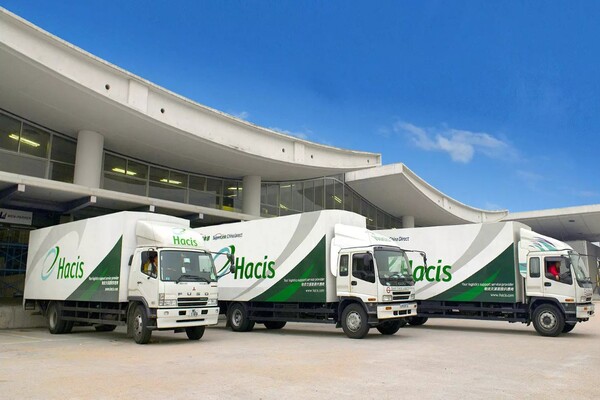
Building on the pilot shipment from Hanoi, Hacis is developing its Vietnam–Hong Kong road feeder service to offer exporters greater routing flexibility and access to Hong...

Container spot freight rates on Asia–Europe routes have rebounded after three consecutive months of decline, ahead of new Freight All Kinds (FAK) rate increases scheduled...
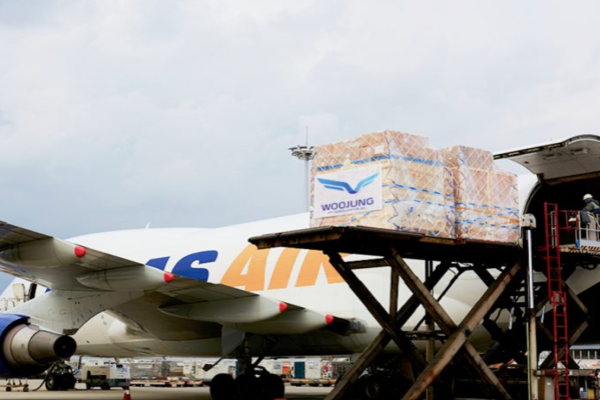
Samsung SDS is expanding its airfreight operations through the acquisition of South Korean cargo consolidator Woojung Air. The deal will strengthen Samsung SDS’s access to...
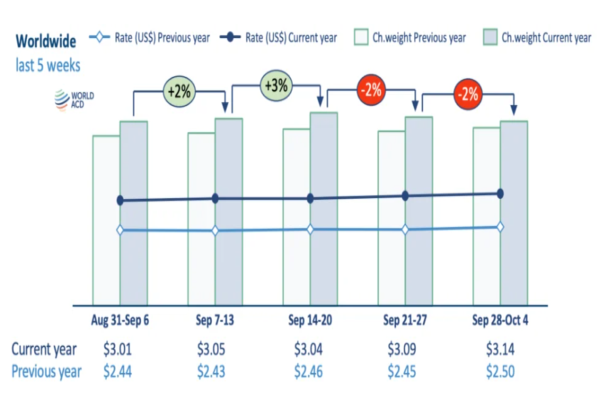
Worldwide air cargo tonnages bounced back strongly in September following their August lull, with volumes rising +3% compared with the previous month and growing +9%, year...

The rapid growth in demand for artificial intelligence (AI-related) goods that has consumed air cargo capacity out of Asia has also helped insulate global trade against tariffs...

Samsung SDS – the IT solutions and logistics arm of Samsung – is expanding its presence in air cargo through the acquisition of Korean airfreight consolidator Woojung Air...
Geopolitical uncertainty and digital transformation are reshaping global logistics, making supply chain resilience a strategic priority. FIATA emphasises the need for diversified...

 ALS
ALS