


For years, Latin America has been spoken of primarily as a supplier, a hub for perishables, electronics, and auto parts feeding the U.S. and Europe. Fast forward to 2025 and something is unmistakably clear: the region is no longer merely sourcing for the world. It is becoming one of the most strategically viable air cargo growth engines, driven by nearshoring, rising consumer markets, and accelerated infrastructure investment.
Across three days at Transport Logistic Americas in Miami, one constant emerged: Latin America is entering a long-term ascendant phase, reshaping trade lanes and making carriers rethink network design for 2026 and beyond.
“Trade is like water, it finds a way. And it’s finding its way into new markets across Latin America.” – Tom Crabtree, Managing Director – Transport Research Advisory
From nearshoring myths to “nearsourcing” reality
Several speakers at the event pushed back against the idea that a “nearshoring boom” is underway. What is truly happening is more precise.
Diego Rodriguez of Americas Market Intelligence put it bluntly: “Nearshoring hasn’t necessarily happened…the more accurate term would be nearsourcing.” Rather than international manufacturers relocating en masse to Mexico, Mexican and Latin American companies themselves have scaled production to supply U.S. demand.
Mexico’s labour cost advantage, roughly 25 percent cheaper than China, has supercharged this shift. Domestic firms have expanded capacity and modernised export operations to feed U.S. consumption with faster lead times.
This local-first sourcing model is spreading across Central America, the Dominican Republic, and Colombia, where manufacturers are stepping into supply chain gaps opened by tariff volatility and geopolitics.
South America’s rise as a consumer market
One of the most overlooked developments of the past year is the emergence of Latin American nations as high-consumption markets, not just export platforms. There is a huge consumer base there.
Direct flights from Asia to Latin America, once considered niche, are now prevalent, with 777Fs and 747Fs flying into São Paulo, Santiago, Bogotá, Quito, and secondary markets. The region’s appetite for electronics, pharmaceuticals, fashion, and e-commerce has rewritten east–west demand models.
In 2026, expect Latin America’s largest economies to play dual roles as both manufacturing hubs for exports and expanded import destinations for global brands.
Keeping pace infrastructurally
But growth alone is not enough. The region must solve its biggest structural bottlenecks: inland transportation costs, digitisation gaps, and customs inefficiencies.
Robert Barcelo, Senior Business Development Manager of Port Everglades, who spoke at the event, captured the reality: “Nine times out of ten, the cost of processes is more expensive than the cost of freight.”
The region still relies disproportionately on trucking, with limited rail connectivity outside Mexico. Customs processes remain paper-heavy. First-mile transport can exceed the cost of ocean freight.
With a lack of public information on the cost of domestic transport, digitisation is emerging as a regional priority.
That said, investment is well underway, but unevenly. The most ambitious project, Mexico’s Interoceanic Corridor of the Isthmus of Tehuantepec, aims to tie Pacific and Gulf ports via rail while developing industrial parks across the south. While it will not replace the Panama Canal, it could meaningfully boost southern Mexico’s integration into U.S.-Mexico supply chains.
Miami: The other transatlantic relationship
FDI panellists emphasised: Miami is no longer just the gateway to Latin America, it is fast becoming the strategic anchor for the “other transatlantic relationship, the one between Latin America and Europe.”
European manufacturers, especially in Spain, Germany, and Italy, are looking to Latin America not just as a supplier but as an alternative market as the EU diversifies. Miami’s role as the routing, warehousing, and financial centre of this triangle continues to strengthen.
A region coming into its own
Latin America’s rise is not hype, it is a structural reordering of global production and consumption.
Expect 2026 to bring:
-More Asia–LATAM direct freighter routes
-Greater Mexican influence on nearshoring flows
-New sourcing nodes in the Dominican Republic, Central America, and northern Brazil
-Investment in southern Mexico and industrial corridors
-Priority on digitisation and first-mile transparency
-Miami-centred expansion of LATAM–EU trade
A region that once sat downstream of global manufacturing is becoming a centre of gravity in its own right. For airlines, forwarders, and integrators, the opportunity is not just to serve Latin America, but to be strategically embedded within its rise.
Source: https://aircargoweek.com/latin-america-ascending-global-airfreight-power-heading-into-2026/

Việt Nam’s semiconductor exports grew at a compounded annual rate of 31.8 per cent between 2006 and 2025, while imports grew by 30 per cent a year during the same period.

Airfreight rates appear strong as the peak season draws near, with year-on-year gains on transpacific lanes robust while Asia-Europe rates start to recover following the end...
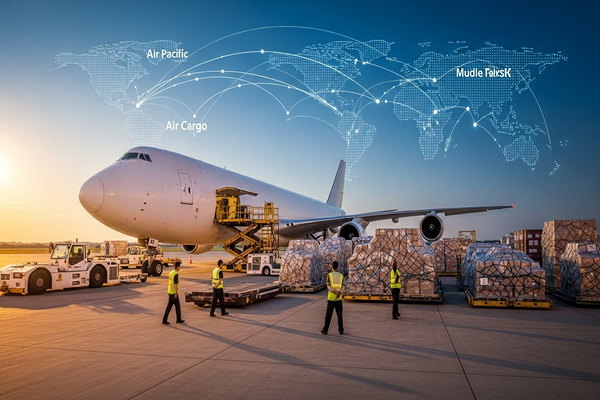
Data-centre investment is reshaping trade flows and putting new pressure on the industry's capacity balance, with hi-tech now the main engine of air cargo growth, according...
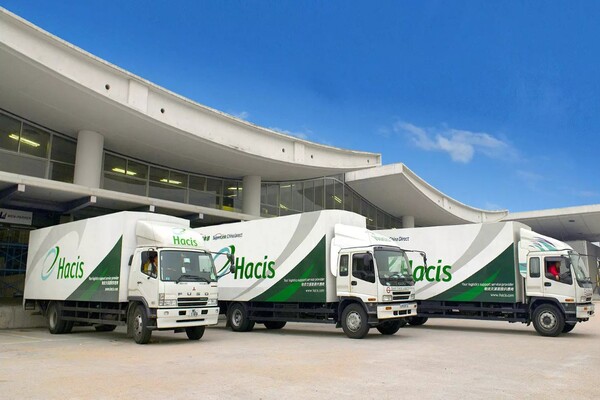
Building on the pilot shipment from Hanoi, Hacis is developing its Vietnam–Hong Kong road feeder service to offer exporters greater routing flexibility and access to Hong...
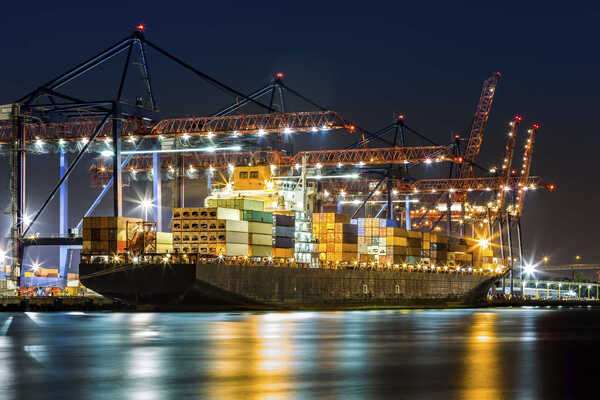
Container spot freight rates on Asia–Europe routes have rebounded after three consecutive months of decline, ahead of new Freight All Kinds (FAK) rate increases scheduled...
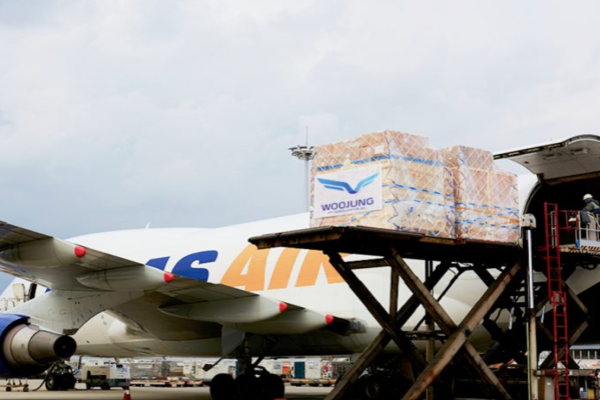
Samsung SDS is expanding its airfreight operations through the acquisition of South Korean cargo consolidator Woojung Air. The deal will strengthen Samsung SDS’s access to...
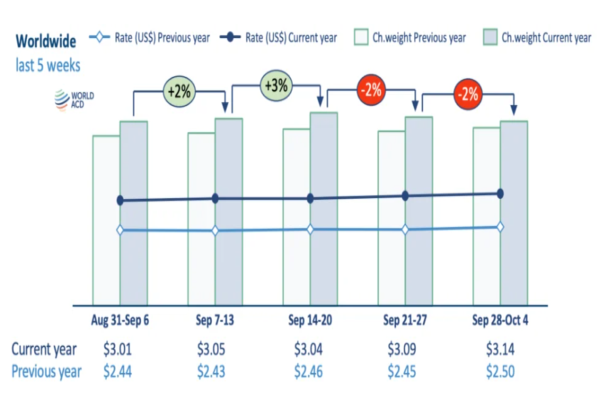
Worldwide air cargo tonnages bounced back strongly in September following their August lull, with volumes rising +3% compared with the previous month and growing +9%, year...

The rapid growth in demand for artificial intelligence (AI-related) goods that has consumed air cargo capacity out of Asia has also helped insulate global trade against tariffs...

Samsung SDS – the IT solutions and logistics arm of Samsung – is expanding its presence in air cargo through the acquisition of Korean airfreight consolidator Woojung Air...

Geopolitical uncertainty and digital transformation are reshaping global logistics, making supply chain resilience a strategic priority. FIATA emphasises the need for diversified...

 ALS
ALS