


Climate change: Climate change is and will continue to disrupt lives, livelihoods, and productivity around the globe. Extreme weather, commodity price swings, supply chain stresses, etc., can affect agriculture, infrastructure, global trade, and investment flows. A successful energy transition requires stable policies and reliable financing. In an unstable environment, assets can be left stranded, and opportunities can be missed, slowing progress and harming growth in some regions. Associated risks include greater food and water insecurity, and increased migration.
Policy fragmentation: The International Peace Institute and the Institute for Economics and Peace (IPI-IEP) produce a Multilateralism Index which shows declines across all five domains measured in the 2024 edition. In global civil aviation we can see an increase in national and regional policy initiatives that depart from ICAO’s 80 years of global harmonization. Competing frameworks for addressing CO2 emissions from air transport limit progress in this area, and fragmented taxation introduces competitive distortions and threatens the maintenance of the global network. IATA finds many similarities between the current geopolitical fragmentation and the interwar period (1918-1939), characterized by slowing trade, rising debt, and increased nationalism.
Debt and financial instability: Total global debt (including sovereigns, corporates, and households) is estimated by the IMF at just above 235% of global GDP in 2024, the highest ever barring the covid years of 2020 and 2021. With the average global fiscal deficit at 5% of GDP, public debt continues to rise. In countries that together represent 80% of global GDP, the pace of debt accumulation is increasing. Global debt has risen faster than GDP over the decade to 2024, at around 49% versus a 46% gain in GDP. Such historically high debt levels expose the world economy to greater interest rate sensitivity and debt-service burdens. This also limits the room for conducting a mix of fiscal and monetary policy that countries’ specific economic conditions might warrant. High public debt tends to crowd out investment. Corporates and households are more prone to bankruptcies and defaults on debt payments, which risk contagion across financial systems. In the US, the market-capitalization-toGDP shows that equity valuations are high compared to overall economic output. The high degree of market concentration, particularly in the US, also has significant implications for risk and volatility. The “magnificent Seven”, i.e., Apple, Microsoft, Nvidia, Alphabet, Amazon, Tesla, Meta) have driven over 50% of S&P 500 gains since 2020. Large and persistent current account imbalances add to dependencies on cross-border capital flows. While these factors converge to lift risks in 2026, the probability of a global financial crisis in 2026 remains low to medium.
The US mid-term election on 3 November 2026 possibly would curtail the legislative capacity of the Trump administration. The risk of turmoil around the election and it possibly being contested is present.
US government shutdown: US government shutdown logically would be less likely in 2026, though the risk is present.
China’s property crisis: This risk is abating as the property sector is likely to transition from crisis to partial stabilization.
Military spending: Global military spending reached USD 2.7 trillion in 2024. That is an increase of 9.4% in real terms from 2023, which is the steepest year-on-year rise since at least the end of the Cold War. The spending increase occurred across all regions but was especially pronounced in Europe and in the Middle East. While security is unambiguously a necessity, such spending represents an opportunity cost that limits progress in other areas.
The external value of the US dollar is important to the global economy because of its dominant share in invoicing and cross-border payments. A weaker US dollar tends to benefit all non-USD-based countries. This is of course important for air transport where not only fuel but also a wide range of other major costs, including aircraft purchases, lease payments, maintenance, certain airport and navigation charges, global distribution systems, IT services, and more, are typically invoiced in US dollars.
Oil: The oil market is undergoing major structural change as demand is shifting in response to electrification and to greater use of liquefied natural gas (LNG) in road transport. While lower oil prices tend to support global economic activity, and reduce the fuel bill for airlines, the structural shifts in the global oil market poses some potentially counterintuitive risks of lack of supply of fossil jet fuel at certain airports.
The risks of higher inflation are moderate going into 2026, thanks to the modest GDP growth outlook, benign oil prices, and a depreciating US dollar. Moreover, deflationary pressure in China allows the rest of the world to import disinflation.
Cyber threats are growing in both frequency and importance. The airline industry’s reliance on critical infrastructure makes the global air transport network particularly exposed, along with all other network industries. AI adds risks related to misinformation, loss of privacy, and
erosion of trust, on top of those that might generate economic disruption, job displacement, and greater inequality.
Higher unemployment would only be natural to expect in a world where global GDP seems to be stuck in the “average” zone. However, rather surprisingly, unemployment rates remain near historic lows in many
economies.
Pandemic risk is no longer limited to a once-in-a-century event, though the chance of such a crisis is estimated at a low 2% in any given year. Nearly 10% of global land area is currently classified as being at high risk for disease outbreaks.
The risk of a severe economic slowdown in 2026 seems limited unless we have underestimated the potential combined effect of the above converging risks and vulnerabilities. However, the current situation spells a period of weakening growth prospects which could come to characterize this century. Positive surprises could come in the form of more widespread peace, a successful energy transition that leverages on all its multiple avenues for growth, and increased global collaboration and harmonization.
Source: https://www.iata.org/en/publications/economics/reports/an-assessment-of-risks-in-2026-brief/

Việt Nam’s semiconductor exports grew at a compounded annual rate of 31.8 per cent between 2006 and 2025, while imports grew by 30 per cent a year during the same period.
Airfreight rates appear strong as the peak season draws near, with year-on-year gains on transpacific lanes robust while Asia-Europe rates start to recover following the end...
Data-centre investment is reshaping trade flows and putting new pressure on the industry's capacity balance, with hi-tech now the main engine of air cargo growth, according...
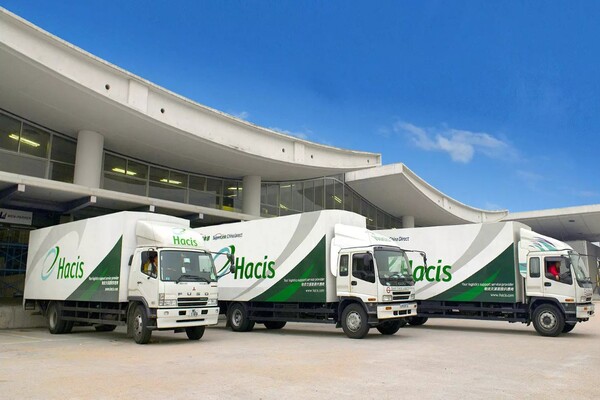
Building on the pilot shipment from Hanoi, Hacis is developing its Vietnam–Hong Kong road feeder service to offer exporters greater routing flexibility and access to Hong...
Container spot freight rates on Asia–Europe routes have rebounded after three consecutive months of decline, ahead of new Freight All Kinds (FAK) rate increases scheduled...
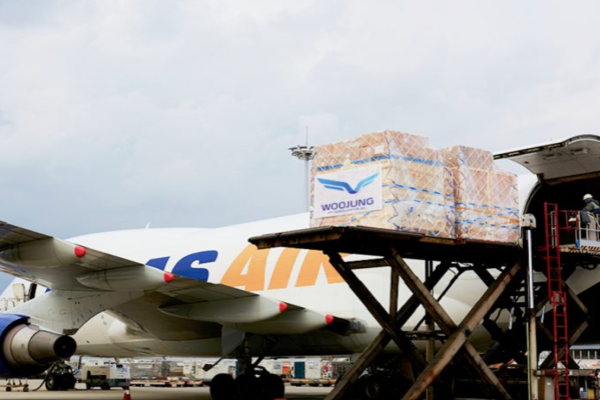
Samsung SDS is expanding its airfreight operations through the acquisition of South Korean cargo consolidator Woojung Air. The deal will strengthen Samsung SDS’s access to...
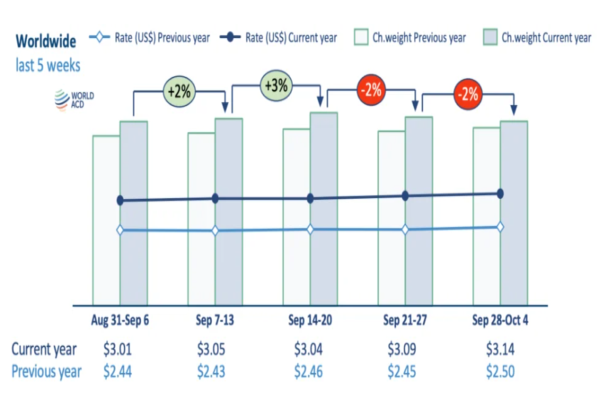
Worldwide air cargo tonnages bounced back strongly in September following their August lull, with volumes rising +3% compared with the previous month and growing +9%, year...

The rapid growth in demand for artificial intelligence (AI-related) goods that has consumed air cargo capacity out of Asia has also helped insulate global trade against tariffs...

Samsung SDS – the IT solutions and logistics arm of Samsung – is expanding its presence in air cargo through the acquisition of Korean airfreight consolidator Woojung Air...
Geopolitical uncertainty and digital transformation are reshaping global logistics, making supply chain resilience a strategic priority. FIATA emphasises the need for diversified...

 ALS
ALS