


By almost any metric, the global semiconductor industry has experienced impressive growth during the 2020s. In 2019, total global sales stood at around $412 billion, according to the Semiconductor Industry Association (SIA). Jump ahead five years, to 2024, and worldwide revenue topped $630 billion. This represented an increase of over 50% in just half-a-decade. And that growth is showing few signs of plateauing. The SIA projects that 2025 will serve as another record-busting year for the industry, with sales projected to eclipse $700 billion—yet another first for the sector, and an 11% increase from 2024 figures.
The spotlight shifts to semiconductor assembly and packing
Much of the money and prestige tied to semiconductor manufacturing has long been associated with chip fabrication. (This is often referred to as “front-end manufacturing” and its accompanying processes.) But the stratospheric growth and emerging geopolitical importance of the chip industry is now raising the profile of other aspects of the manufacturing process, too.
The back-end processes of assembly, testing, and packaging (ATP) are becoming more attractive avenues to high-tech manufacturing for many countries, offering nations not historically integral to the semiconductor supply chain the chance to participate in this lucrative sector.
Because of this, we’re now seeing a growing contingent of countries investing in ATP, as national governments see the potential for their populations to seize a piece of the $700-billion global chipmaking pie.
What are the world’s “most important” semiconductors?
The data was obtained by narrowing down all semiconductor commodity types to the 10 most essential categories. These chips are foundational to various critical industries, including consumer electronics, automotive, medical technology, aerospace and defense, and Artificial Intelligence (AI). The scope of the analysis focused on key criteria, including global sales, breadth of application, and manufacturing complexity. Each category was then assessed based on its Country of Assembly (COA)—the location where chips are assembled, tested, and packaged—to map today's global ATP (Assembly, Test, and Packaging) footprint.
Top 10 most important semiconductors include:
Understand dependencies with greater precision and clarity
Executives and the sourcing professionals who are now highly focused on identifying critical dependencies in their supply chains, whether they be countries, geographical regions, suppliers, or even specific manufacturing sites. For organizations that source chips in the 10 commodity categories examined here, this report makes clear that Asia is a massive dependency for back-end manufacturing.
Western countries, including the U.S. and much of Europe, rely heavily on China, Taiwan, and increasingly the ASEAN bloc for semiconductor ATP. And while the global ATP market share is certainly evolving, it’s not drifting far from its fulcrum in Asia: the countries experiencing the fastest growth in this sector include Malaysia, Thailand, the Philippines, and other South Asian nations. The West’s disproportionate reliance on this region for back-end manufacturing may carry implications for onshoring and nearshoring prospects, jeopardizing the U.S.’s aim to cultivate a domestic semiconductor manufacturing ecosystem with fewer ties to Asia. Europe, meanwhile, remains far behind other regions, and there are few clear mitigation strategies for its dependencies in nations like Taiwan, China, and Malaysia.
Recognize Emerging Opportunities in Both ATP and Fabrication
The nations that are emerging as crucial manufacturing hubs for ATP today may experience a comparable rise in front-end manufacturing over the next decade. The ASEAN countries mentioned repeatedly in this report—Malaysia, Thailand, the Philippines—are actively developing the manufacturing infrastructure, human capital, and institutional expertise necessary to assemble, test, and package the world’s most in-demand chips. Those developments could one day serve as the foundation for getting fabrication operations off the ground as well. Perhaps most importantly, these emerging national players are solidifying relationships with leading global chipmakers like Intel, Infineon, GlobalFoundries, and Texas Instruments, laying the groundwork for further development in the years to come.
Source: www.z2data.com
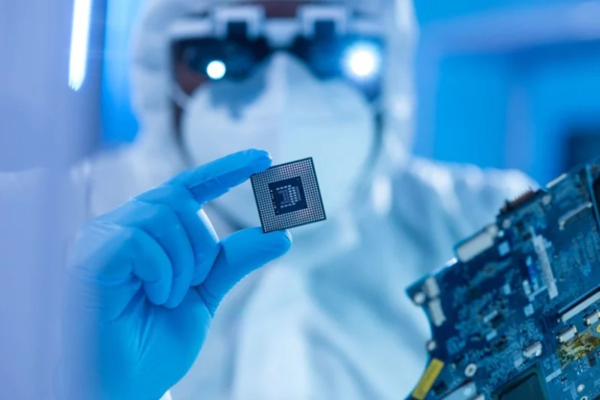
Việt Nam’s semiconductor exports grew at a compounded annual rate of 31.8 per cent between 2006 and 2025, while imports grew by 30 per cent a year during the same period.

Airfreight rates appear strong as the peak season draws near, with year-on-year gains on transpacific lanes robust while Asia-Europe rates start to recover following the end...
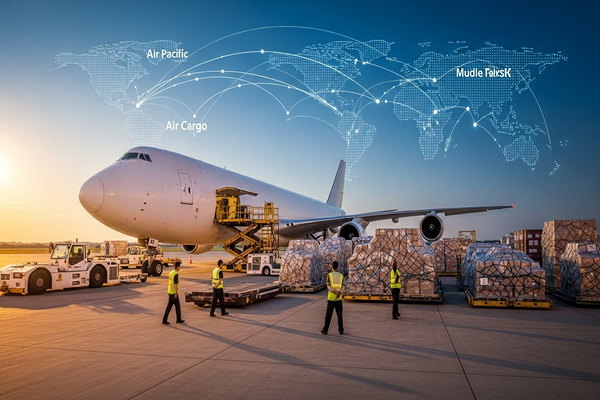
Data-centre investment is reshaping trade flows and putting new pressure on the industry's capacity balance, with hi-tech now the main engine of air cargo growth, according...
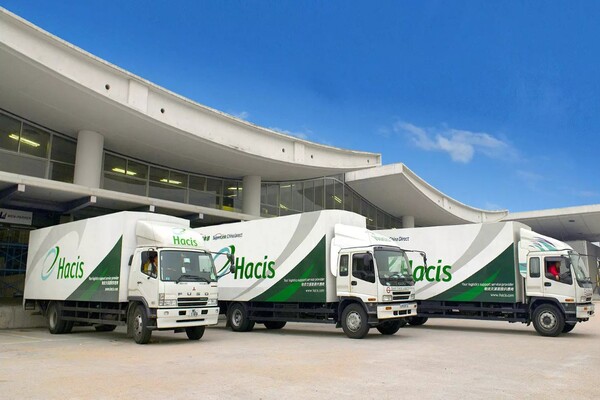
Building on the pilot shipment from Hanoi, Hacis is developing its Vietnam–Hong Kong road feeder service to offer exporters greater routing flexibility and access to Hong...

Container spot freight rates on Asia–Europe routes have rebounded after three consecutive months of decline, ahead of new Freight All Kinds (FAK) rate increases scheduled...
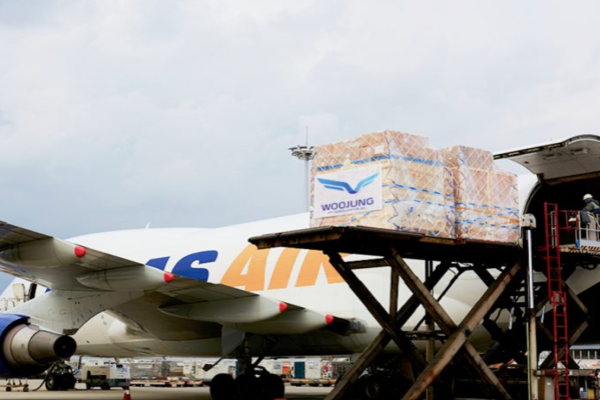
Samsung SDS is expanding its airfreight operations through the acquisition of South Korean cargo consolidator Woojung Air. The deal will strengthen Samsung SDS’s access to...
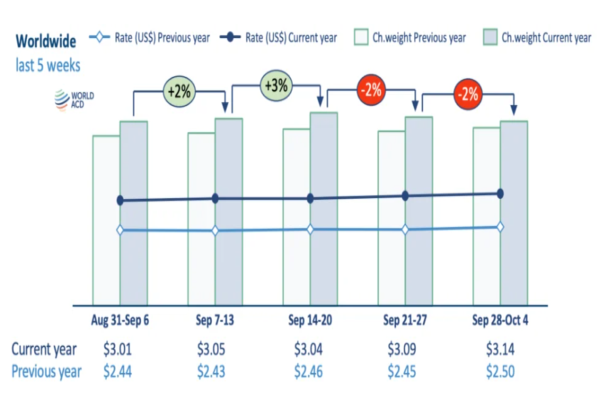
Worldwide air cargo tonnages bounced back strongly in September following their August lull, with volumes rising +3% compared with the previous month and growing +9%, year...

The rapid growth in demand for artificial intelligence (AI-related) goods that has consumed air cargo capacity out of Asia has also helped insulate global trade against tariffs...

Samsung SDS – the IT solutions and logistics arm of Samsung – is expanding its presence in air cargo through the acquisition of Korean airfreight consolidator Woojung Air...
Geopolitical uncertainty and digital transformation are reshaping global logistics, making supply chain resilience a strategic priority. FIATA emphasises the need for diversified...

 ALS
ALS