


A reduction in scope of the European Union’s sustainability disclosure rules may cut red tape for businesses but investors say less transparency will make it harder to identify which companies are genuinely moving toward lowcarbon operations.
After months of pressure from companies and governments, the European Union agreed on Tuesday to sharply scale back two flagship sustainability disclosure laws.
The changes affect the Corporate Sustainability Reporting Directive (CSRD) the EU’s rule book that requires large companies to publish detailed information on their environmental, social and governance performance, and the Corporate Sustainability Due Diligence Directive (CSDDD), which requires firms to check supply chains for human right sabuses and environmental harm.
The CSDDD had also required companies to have and implement a plan to cut emissions to net zero, but that obligation has now been dropped.
Less reliable
Watering down the rules means investors will have less reliable, comparable information on companies’ sustainability efforts, making it harder to tell which businesses are serious about cutting emissions, managing climate risks and environmental, social and governance standards.
Eleanor FraserSmith, Head of Sustainability at investor Victory Hill Capital Partners, said the weakening of the rules would “leave investors with poorer information for decisionmaking”.
“Yes, EU reporting has become overly complex, but the solution is clearer guidance and better structure, not dilution. Stepping back from requirements doesn’t make the system easier,it just makes it less coherent.” Some investors highlighted the scrapping of climate transition plans in the EU’s due diligence law as a major concern.
“Without credible transition plans, Europe could lose comparability, visibility on progress and a potentially useful tool to access transition finance. Investors rely on these plans to assess climate risks and opportunities,” said CarlotaGarciaManas, head of climate transition at British investor Royal London Asset Management, which manages around £180 billion ($239.53 billion).
Hortense Bioy, Head of Sustainable Investing Research at industry tracker Morningstar Sustainalytics, said the changes would put the onus on investors to assess whether companies follow through on their promises.
“The responsibility will increasingly fall on asset managers offering these strategies to hold companies accountable.”
Pressure on thresholds
Under the changes to CSRD, only companies with more than 1,000 staff making more than €450 million would report, with financial firms excluded.
For CSDDD, the threshold was even higher at 5,000 staff and €1.5 billion in net turnover, with a delayed startdate and breaches dealt with at the national rather than EU level, with added flexibility for companies on what to report.
Hans Stegeman, chief economist at sustainabilityfocused lender Triodos Bank, said the moves represented a “significant weakening of essential sustainability rules”.
“Legislation meant to combat child labour, environmental pollution, and exploitation in supply chains is being hollowed out. The socalled ‘antilookingaway law’ has had its scope drastically limited,” he said.
Debated since February, the cuts to the EU laws follow months of pressure from companies and governments, including the U.S. and Qatar, who warned Brussels that the rules risked disrupting their gas supplies to Europe. Industry groups welcomed the move as relief from Europe’s complex sustainability regime.
Source: https://www.pressreader.com/india/the-hindu-international-9BN2/20251211/282162182540968

Việt Nam’s semiconductor exports grew at a compounded annual rate of 31.8 per cent between 2006 and 2025, while imports grew by 30 per cent a year during the same period.

Airfreight rates appear strong as the peak season draws near, with year-on-year gains on transpacific lanes robust while Asia-Europe rates start to recover following the end...

Data-centre investment is reshaping trade flows and putting new pressure on the industry's capacity balance, with hi-tech now the main engine of air cargo growth, according...
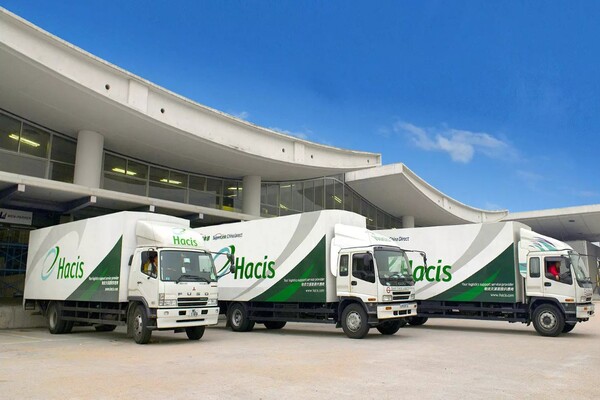
Building on the pilot shipment from Hanoi, Hacis is developing its Vietnam–Hong Kong road feeder service to offer exporters greater routing flexibility and access to Hong...

Container spot freight rates on Asia–Europe routes have rebounded after three consecutive months of decline, ahead of new Freight All Kinds (FAK) rate increases scheduled...

Samsung SDS is expanding its airfreight operations through the acquisition of South Korean cargo consolidator Woojung Air. The deal will strengthen Samsung SDS’s access to...
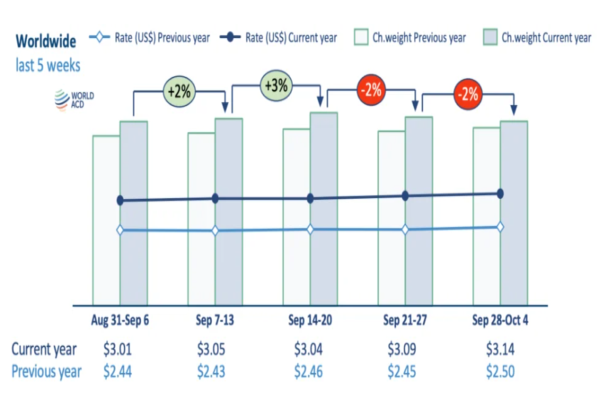
Worldwide air cargo tonnages bounced back strongly in September following their August lull, with volumes rising +3% compared with the previous month and growing +9%, year...

The rapid growth in demand for artificial intelligence (AI-related) goods that has consumed air cargo capacity out of Asia has also helped insulate global trade against tariffs...

Samsung SDS – the IT solutions and logistics arm of Samsung – is expanding its presence in air cargo through the acquisition of Korean airfreight consolidator Woojung Air...
Geopolitical uncertainty and digital transformation are reshaping global logistics, making supply chain resilience a strategic priority. FIATA emphasises the need for diversified...

 ALS
ALS