


Global supply chains face persistent disruption risk in 2026 as logistics operators adopt artificial intelligence and new security models, according to senior executives at Infios.
The sector is emerging from several years of climate volatility and trade friction. It is also adapting to higher online and seasonal retail spending.
Infios executives expect logistics networks to rely more on automation, while keeping humans in charge of complex judgement calls. They also see companies changing how they manage cyber security and regulatory risk.
AI in daily operations
Richard Stewart, Executive Vice President, Product and Industry Strategy at Infios, said artificial intelligence will sit at the centre of logistics planning and execution.
"In 2026 and beyond, logistics will move decisively into a new era of precision and autonomy - powered by artificial intelligence. The question will no longer be whether AI has a role to play, but how deeply it can be embedded into everyday operations and decision-making," said Stewart, Executive Vice President, Product and Industry Strategy, Infios.
He said companies will move from experimentation to specific applications.
"Clearly defined use cases will emerge as intelligent systems anticipate needs, optimise workflows, and manage complexity quietly in the background. Humans will remain in the loop - where their insight or approval truly adds value. This collaborative model between people and technology will make problem-solving faster, more accurate, and less reactive," said Stewart.
Industry analysts expect logistics firms to combine AI with existing transport management and warehouse systems. Many operators already use predictive tools for demand planning and routing.
Augmenting workers
Steve Blough, Chief Supply Chain Strategist at Infios, expects a shift in how businesses frame automation.
"In 2026, supply chain automation enters its next phase: the rise of augmentative intelligence. Automation is no longer about replacing people - it's about amplifying them. AI-driven agents are taking on repetitive, transactional workloads like ETA updates and document verification, freeing human teams to focus on exceptions, critical decisions and higher-value analysis. This marks a major shift: technology that enhances human judgment rather than eliminates it. AI won't replace people in 2026 - it will elevate them, allowing supply chains to scale without burning out the workforce and ensuring human nuance stays exactly where it matters most," said Blough.
Many logistics companies already use chatbots and robotic process tools for customer updates and document handling. The comments point to broader use of software agents in areas such as shipment tracking, compliance checks and carrier coordination.
Security beyond IT
Cyber risk remains a central concern for supply chain operators. Logistics networks hold large stores of operational data and financial information across multiple partners.
Chad Hicks, Chief Information Security Officer at Infios, expects boards and senior leaders to expand their role in digital risk management.
"In 2026, forward-thinking companies will increasingly adjust their organisational structures, so security is no longer confined to IT. Product, legal, security, and finance leaders will play a larger role in shaping AI strategy, helping ensure it's deployed safely and responsibly," said Hicks, Chief Information Security Officer, Infios.
He said day-to-day discipline will still matter more than advanced tools.
"While attention often focuses on the next shiny platform or tool, most breaches still stem from basic lapses - phishing, weak passwords or missed patches. I call this "eating your security vegetables." It may not be glamorous, but it's essential. I expect a renewed focus on these fundamentals, applied to the new threats, in the year ahead," said Hicks.
Large transport operators have faced several ransomware and data theft incidents in recent years. Many also connect legacy operational technology to newer cloud systems, which increases complexity.
Disruption as normal
Infios forecasts suggest that weather events, shifting tariffs and social-media-driven demand spikes will continue. They see volatility as a baseline condition rather than a short-term shock.
"In 2026, supply chain disruption becomes the baseline, not the exception. The year won't deliver fewer shocks - just smarter responses. Whether triggered by shifting tariffs, extreme weather or viral demand spikes born on social platforms, volatility is now a permanent operating condition. The conversation is shifting from reacting to anticipating," said Eugene Amigud, Chief Innovation Officer, Infios.
Companies are investing in tools that track shipments, inventory and external events in near real time. Executives aim to shorten detection and response times when disruptions occur.
"The supply chain leaders of 2026 will run networks that sense, decide and act before disruptions cascade downstream. And that's the real differentiator: resilience isn't about avoiding shocks, it's about recovering faster, learning continuously and turning instability into strategic foresight," said Amigud.
Infios expects logistics operators, retailers and manufacturers to increase spending on AI-led planning and execution systems over the next two years. The company also expects security and governance teams to sit earlier in technology and supply chain decisions.
Source: https://itbrief.co.uk/story/ai-reshapes-supply-chains-as-disruption-becomes-the-norm

Việt Nam’s semiconductor exports grew at a compounded annual rate of 31.8 per cent between 2006 and 2025, while imports grew by 30 per cent a year during the same period.

Airfreight rates appear strong as the peak season draws near, with year-on-year gains on transpacific lanes robust while Asia-Europe rates start to recover following the end...
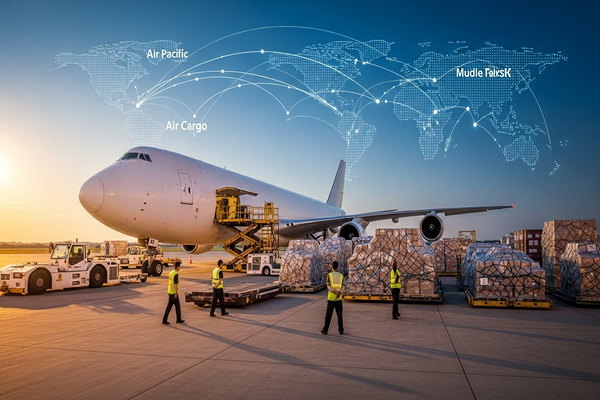
Data-centre investment is reshaping trade flows and putting new pressure on the industry's capacity balance, with hi-tech now the main engine of air cargo growth, according...
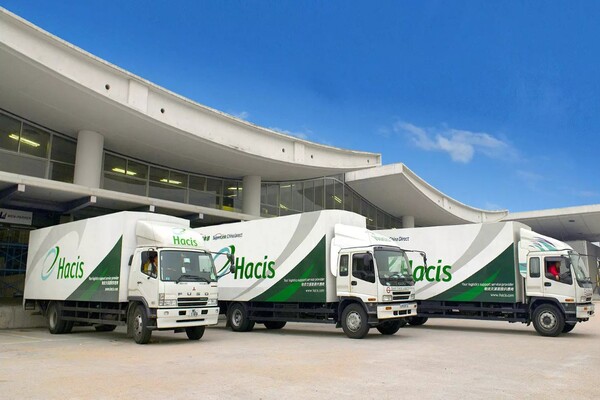
Building on the pilot shipment from Hanoi, Hacis is developing its Vietnam–Hong Kong road feeder service to offer exporters greater routing flexibility and access to Hong...
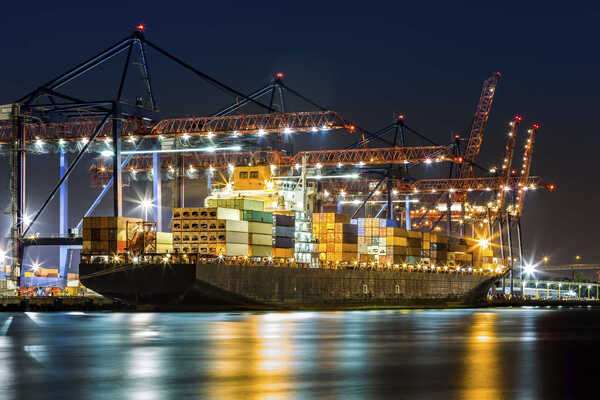
Container spot freight rates on Asia–Europe routes have rebounded after three consecutive months of decline, ahead of new Freight All Kinds (FAK) rate increases scheduled...
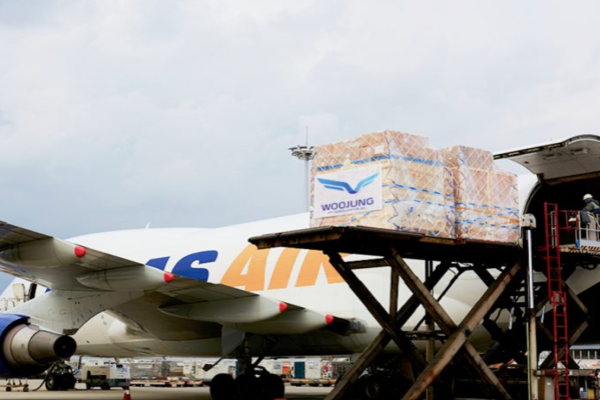
Samsung SDS is expanding its airfreight operations through the acquisition of South Korean cargo consolidator Woojung Air. The deal will strengthen Samsung SDS’s access to...
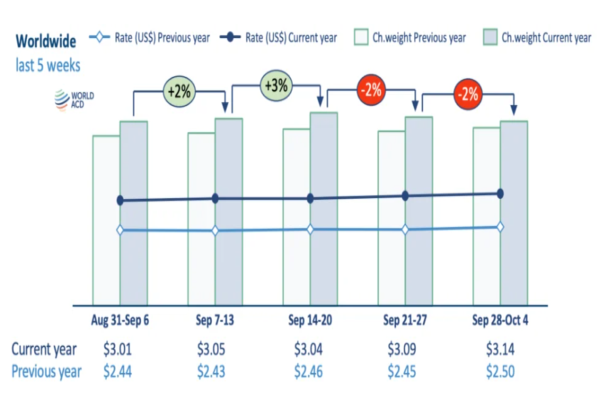
Worldwide air cargo tonnages bounced back strongly in September following their August lull, with volumes rising +3% compared with the previous month and growing +9%, year...

The rapid growth in demand for artificial intelligence (AI-related) goods that has consumed air cargo capacity out of Asia has also helped insulate global trade against tariffs...

Samsung SDS – the IT solutions and logistics arm of Samsung – is expanding its presence in air cargo through the acquisition of Korean airfreight consolidator Woojung Air...
Geopolitical uncertainty and digital transformation are reshaping global logistics, making supply chain resilience a strategic priority. FIATA emphasises the need for diversified...

 ALS
ALS