


Annual 3.7% airfreight growth will drive fleet expansion from 2,405 to 3,776 units, with large widebodies growing fastest at 3.2% yearly rate.
Large widebody freighters will leapfrog mid-sized widebody cargo planes over the coming two decades, but a lot of new developments are beckoning in the mid-sized segment, according to Transport Research Advisory (TRA).
”At an annual growth rate of 3.7%, global airfreight traffic is set to more than double over the period to 2044, and the worldwide jet freighter fleet will expand by 50%,” says TRA managing director Tom Crabtree, who used to author Boeing’s 20-year freighter forecast before setting up his own company.
His outlook is level with Boeing’s forecast from the summer on traffic growth, but envisages 200 fewer planes entering the market.
“The market share of freighters-carried cargo traffic has come down from its Covid-induced spike of nearly 70% in 2020, but it will remain around the 56% mark over the long term," says Crabtree.
By TRA projections, the global fleet will grow from 2,405 jet freighters at the end of last year to 3,776 by 2044.
While narrowbody planes will nearly double from 833 units to 1,511, the medium-sized widebody contingent will rise from 815 to 1,031 and the large widebody segment will grow from 657 planes to 1,234, expanding at a rate of 3.2% a year.
The count for large widebodies includes 29 An-124 and IL-96 freighters, a segment that TRA has not made projections for. Of the western-built units, 346 will be retired over the coming 20 years and 952 will join the fleet.
Crabtree points out that the widebody segment has been hobbled by several factors, above all the lack of competition, while the single provider – Boeing – has been distracted by internal problems.
Gaining momentum
With Boeing 777F production gathering momentum (he points out that the type is going to outnumber the Boeing 747F within the coming weeks), the entry of the Airbus A350F and the long-awaited start of 777 conversion programmes, output will rise significantly, although conversion of the 777-300ER will remain hamstrung until the market entry of the 777-9 frees up feedstock and lower residual values of conversion candidates.
Demand for large widebodies will remain strong as globalisation continues, despite rising trade friction and nearshoring, predicts Crabtree.
That said, he does foresee strong growth in some regional markets, such as intra-Asia, which will fuel expansion of the medium widebody fleet.
However, TRA projects 409 of the 725 mid-sized western-built freighters currently in service to retire over the period, a reduction of 56%.
In the main, these will be Boeing 767 and Airbus A300Fs. The first 767-300F and A300-600F entered the market 30 years ago, Crabtree notes.
He predicts 715 medium widebodies to enter service during the period, of which 306 will be required for growth in demand.
Crabtree remarks that large widebodies will be fielded in some regional markets.
“Some intra-Asia sectors are eight, nine hours, which is stretch for medium widebodies,” he says, adding that overall, large freighters represent the most effective capacity with the lowest unit costs.
The explosive growth of e-commerce has tilted the mix in volume versus weight, expanding the range of mid-sized planes, but Crabtree expects this to shrink, as e-commerce providers are increasingly looking to reduce empty space in packaging.
While mid-sized fleet growth will lag the pace of expansion in the large sector – partly as a result of up-gaging – the former segment offers the prospect of new entrants coming into the market.
A330s to the fore
In the near term Crabtree sees a bright future for A330 freighters – both the production version and converted units. He notes that Israel Aerospace Industries has been working on its A330 conversion programme, which is targeting certification by mid-2026.
“They may choose to work on these more than on 777s,” he reflects, pointing to less competition and the tight feedstock situation in the 777 segment.
767s and A300s, which still dominate the medium widebody market, are headed for the exits over the period, which leaves the field to A330s, which have gained traction with DHL and, more recently, Amazon.
Crabtree sees a strong case for an all-cargo version of the A330neo, noting that it would be well received by operators for its longer range and lower fuel costs.
Moreover, when the A350F enters the market, the engineering team that has been working on it would be free to embrace a new programme, and an A330neo freighter would be a logical candidate, he says.
There is speculation about when Boeing will start a freighter programme for the 787.
“A 787 production freighter is possible, but not in the next five years,” comments Crabtree. He views the 787-9 version as the most likely platform, which would have a good range. It would face strong competition from an A330neo, which would give Boeing “a pretty good run for its money,” he says.
In the narrowbody segment, which faces the retirement of 619 planes over the coming 20 years and 1,281 coming into the market, he expects the Boeing 737NG and the Airbus A321P2F to do well, possibly flanked by an A321neo version. However, that variant – like a 737 MAX conversion, would not arrive until late in the period “probably closer to 2040,” he adds.
Source: aircargonews.net/freighter-operators/large-widebodies-to-surge-over-coming-decades

Việt Nam’s semiconductor exports grew at a compounded annual rate of 31.8 per cent between 2006 and 2025, while imports grew by 30 per cent a year during the same period.

Airfreight rates appear strong as the peak season draws near, with year-on-year gains on transpacific lanes robust while Asia-Europe rates start to recover following the end...
Data-centre investment is reshaping trade flows and putting new pressure on the industry's capacity balance, with hi-tech now the main engine of air cargo growth, according...
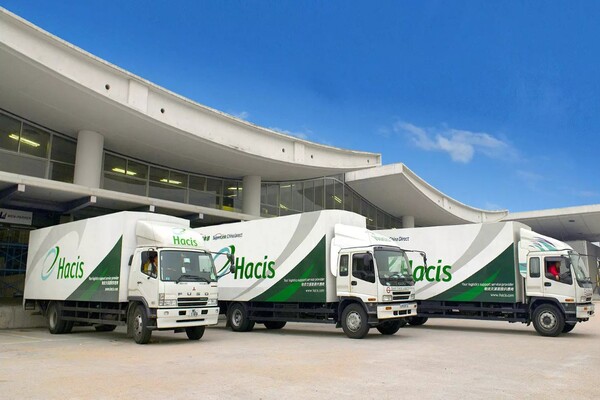
Building on the pilot shipment from Hanoi, Hacis is developing its Vietnam–Hong Kong road feeder service to offer exporters greater routing flexibility and access to Hong...

Container spot freight rates on Asia–Europe routes have rebounded after three consecutive months of decline, ahead of new Freight All Kinds (FAK) rate increases scheduled...
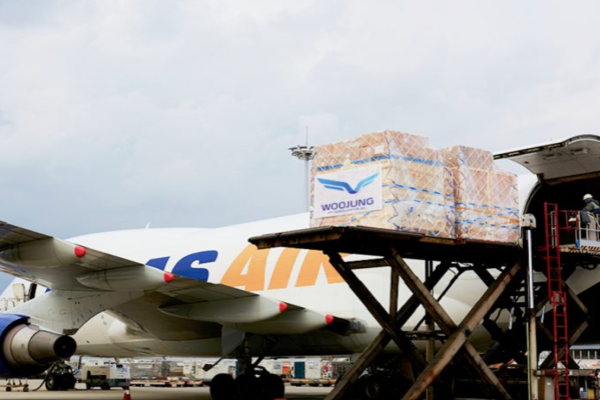
Samsung SDS is expanding its airfreight operations through the acquisition of South Korean cargo consolidator Woojung Air. The deal will strengthen Samsung SDS’s access to...
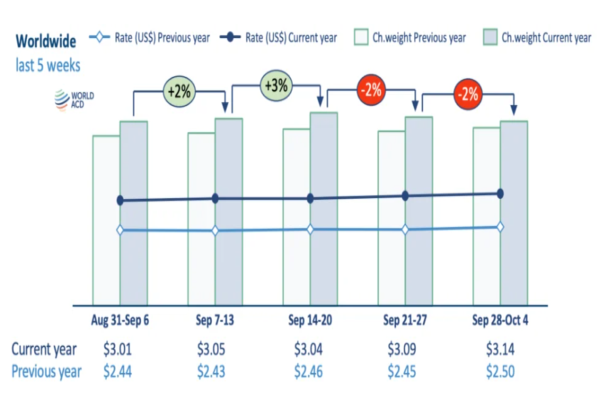
Worldwide air cargo tonnages bounced back strongly in September following their August lull, with volumes rising +3% compared with the previous month and growing +9%, year...

The rapid growth in demand for artificial intelligence (AI-related) goods that has consumed air cargo capacity out of Asia has also helped insulate global trade against tariffs...

Samsung SDS – the IT solutions and logistics arm of Samsung – is expanding its presence in air cargo through the acquisition of Korean airfreight consolidator Woojung Air...

Geopolitical uncertainty and digital transformation are reshaping global logistics, making supply chain resilience a strategic priority. FIATA emphasises the need for diversified...

 ALS
ALS