


Remember when 2025 was supposed to be a down year for air freight? That’s not how it turned out. What we got instead was resilience.
Freight buyers spent 2025 adapting at speed. Strategy, sourcing, and mode decisions shifted fast in response to political uncertainty and changing tariffs. Sean Dolan, CEO of NorthLink Aviation, put it simply during The Freight Buyers’ Club podcast: air cargo thrives in chaos. That chaos shaped everything from supplier selection to gateway choices, and it is a clear signal to stay nimble in 2026.
The forecast said soft. Reality said otherwise.
At the start of 2025, most market watchers forecast 2 to 5 percent airfreight growth. Instead, global tonnages were up 6 percent year-on-year by November. Some regions outperformed even more. Southeast Asia to the US surged over 25 percent, while China-to-Europe volumes rose 8.4 percent.
E-commerce demand held up and then accelerated. US-bound shipments from China dropped due to tariff changes, but volumes quickly shifted toward Southeast Asia, Europe, and other stable trade lanes.
Policy panic triggered pre-emptive shipping
The end of de minimis exemptions in the US hit hard. Air cargo became a tactical workaround. Some shippers front-loaded cargo to beat tariff changes. Others flew goods into more stable trade hubs or rerouted flows to dodge uncertainty altogether.
Glyn Hughes, Director General of TIACA, said the industry responded with great agility in 2025. Capacity shifted, demand flows adapted, and e-commerce volumes were redeployed almost overnight in response to tariff changes.
The Freight Buyers’ Club podcast heard directly from brokers and carriers who faced regulation changes with just hours’ notice. Andrea Nicole Wilson, VP at the Florida Customs Brokers & Forwarders Association, described how her team’s job had been multiplied by four. In many cases, buyers paid duty levels they never anticipated.
Jaime Alvarez, Director of Cargo at Copa Airlines, said the rule changes around small packages created a mess for regional carriers. He explained that the disruption reached beyond the US and caused confusion across Latin American trade flows that depend on multi-stop transit points like Miami and Panama.
Air freight is agility in an unpredictable world
When politics and policy become unpredictable, air freight becomes the fastest way to adapt. That lesson played out repeatedly in 2025.
US airports like Miami International Airport (MIA) and Anchorage (ANC) posted strong volumes.
Jimmy Nares, Section Chief of Cargo Development at Miami International Airport, said cargo volumes at MIA grew in 2025 despite early concerns. He shared that the airport’s role as a major transit hub helped insulate it from disruption and that e-commerce now accounts for around 20 percent of its air cargo.
Latin American gateways thrived. Vietnam and India became key sourcing regions as trade flows shifted from China. With regulatory uncertainty and shifting trade flows, carriers and airports adjusted quickly to meet demand.
Source: https://dimerco.com/blog-post/why-air-cargo-beat-the-forecasts-in-2025/

Việt Nam’s semiconductor exports grew at a compounded annual rate of 31.8 per cent between 2006 and 2025, while imports grew by 30 per cent a year during the same period.

Airfreight rates appear strong as the peak season draws near, with year-on-year gains on transpacific lanes robust while Asia-Europe rates start to recover following the end...
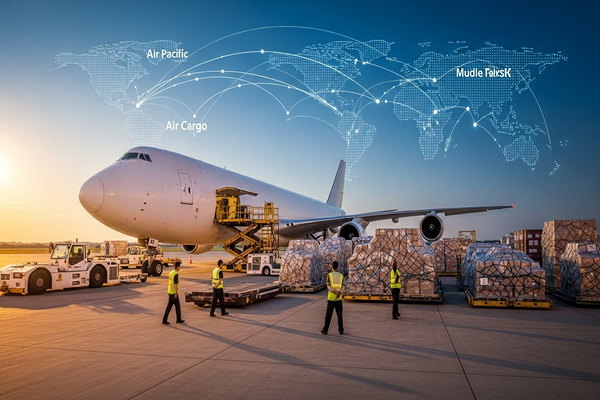
Data-centre investment is reshaping trade flows and putting new pressure on the industry's capacity balance, with hi-tech now the main engine of air cargo growth, according...
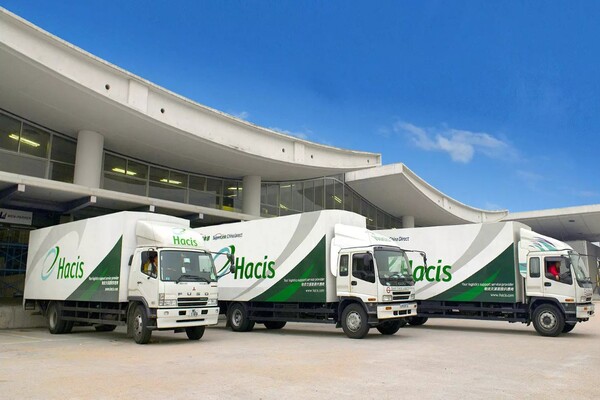
Building on the pilot shipment from Hanoi, Hacis is developing its Vietnam–Hong Kong road feeder service to offer exporters greater routing flexibility and access to Hong...
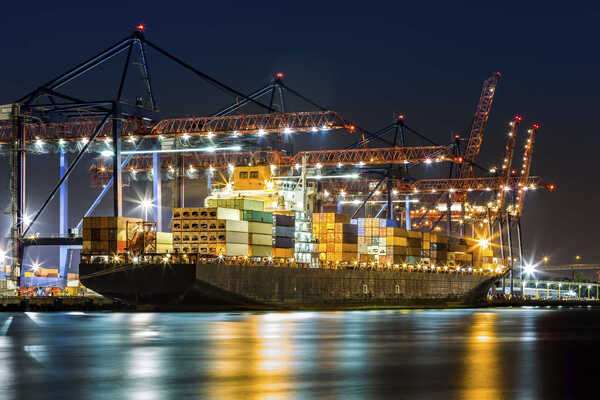
Container spot freight rates on Asia–Europe routes have rebounded after three consecutive months of decline, ahead of new Freight All Kinds (FAK) rate increases scheduled...
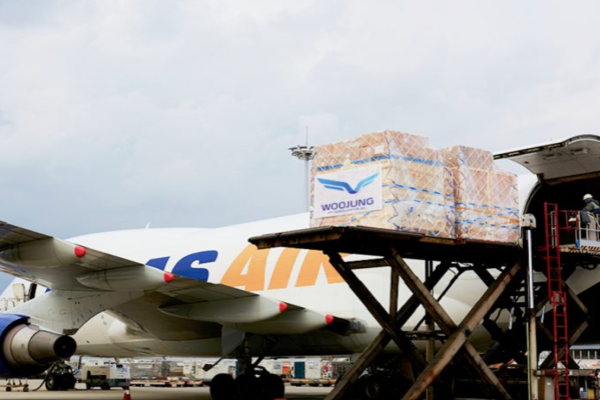
Samsung SDS is expanding its airfreight operations through the acquisition of South Korean cargo consolidator Woojung Air. The deal will strengthen Samsung SDS’s access to...
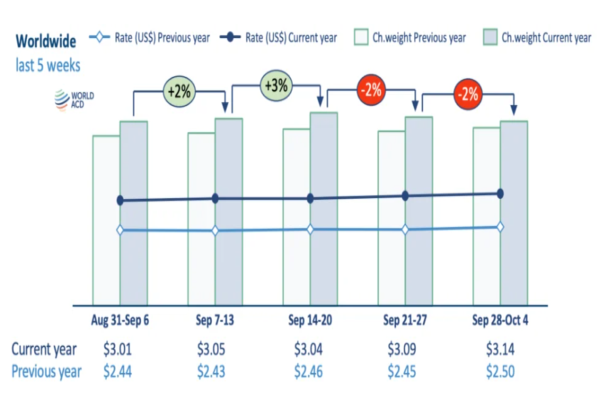
Worldwide air cargo tonnages bounced back strongly in September following their August lull, with volumes rising +3% compared with the previous month and growing +9%, year...

The rapid growth in demand for artificial intelligence (AI-related) goods that has consumed air cargo capacity out of Asia has also helped insulate global trade against tariffs...

Samsung SDS – the IT solutions and logistics arm of Samsung – is expanding its presence in air cargo through the acquisition of Korean airfreight consolidator Woojung Air...
Geopolitical uncertainty and digital transformation are reshaping global logistics, making supply chain resilience a strategic priority. FIATA emphasises the need for diversified...

 ALS
ALS