


2025 transformed air cargo with rising e-commerce demand, uneven belly-freight recovery, infrastructure friction, and heightened freight theft, forcing carriers and handlers to rethink operations and security.
Near-sourcing and evolving Americas markets reshaped supply chains, with increased domestic shipments from Mexico and expanded direct Asia–LATAM freighter links, while partnerships emerged as critical enablers for reliability, digitisation, and compliance.
The industry enters 2026 more agile, collaborative, and tech-enabled, positioned to convert volatility into opportunity despite ongoing policy uncertainty, infrastructure constraints, and evolving security challenges.
Air Cargo Americas carried a sentiment that defined the event: 2025 wasn’t just another volatile year for the airfreight industry, it was a transformational one. Capacity distortions, infrastructure strain, freight theft concerns, and the relentless rise of e-commerce forced the sector to rethink long-held assumptions about how it operates. Yet the tone in Miami was crystal clear: air cargo is entering 2026 more adaptive, more digitised, and more regionally interconnected than at any point since the pandemic.
Uneven recovery and structural distortions
While passenger travel strengthened, cargo operators were reminded that belly freight has not fully recovered, and likely won’t for some time. One panelist observed that while not always discussed, the continued exclusion of many carriers from Russian airspace remains a “silent capacity drag on trans-Pacific long-haul operations.”
The result? A year marked by unpredictable capacity swings, where carriers serving Asia–Americas and Asia–LATAM flows absorbed demand spikes at short notice.
A new e-commerce baseline
If 2024 reintroduced volume after a sluggish period, 2025 redefined expectations. Amazon Air’s Business Development Director Kes Nielsen stated that customers have now normalised accelerated convenience.
The company’s 98.9 percent on-time performance became a benchmark referenced throughout the conference. Nielsen framed the stakes succinctly:
“Customer expectations aren’t static, they compound.”
For airfreight, that means rising demand for late cut-offs, rapid uplift, online booking, and tighter first-mile/last-mile integration across the supply chain.
Infrastructure strain: A frontline issue
2025 did expose a few infrastructure cracks, not in headline disasters but in daily operational friction. Alliance Ground International CEO Jared Azcuy drew attention to what some view as a strain: workforce onboarding.
“It can take six to eight weeks to badge a new employee at some airports,” Azcuy says.
For handlers already stretched thin, that delay directly reduces ramp efficiency. AGI reported meaningful progress in digitising processes, but the industry remains uneven. Some airports are testing 15–30 minute truck-turn targets, while others maintain paper-based workflows and personalised service.
While Latin America has taken a few strides, inland transport costs and outdated customs procedures still add friction.
Rewired American supply chains
2025 saw a decisive shift in how the Americas think about supply chains. Brazil, Chile, and Colombia continued their evolution from “export-centric” economies to major e-commerce consumer markets, changing flow patterns and encouraging new widebody freighter services.
Mexico has remained the centre of gravity, but experts emphasised that 2025 was the year of “near-sourcing” rather than large-scale nearshoring. Domestic producers increased US shipments, yet FDI inflows were dominated by reinvestment rather than new factory projects.
Speakers highlighted new momentum in the Dominican Republic, Costa Rica, and Guatemala, which are becoming part of the extended North American production base. More direct Asia–LATAM freighter links, including 777 and 747 routes into São Paulo, Santiago, and Bogotá, have helped diversify sourcing options and reduce reliance on US transhipment.
Safety, security and theft concerns
Freight theft resurfaced as a major concern in 2025, particularly in Mexico, Brazil, and parts of the US. In response, carriers and handlers are expanding camera-based AI safety monitoring, hardening high-value storage facilities, and relying more heavily on bonded trucking networks.
The concern isn’t just limited to high-value electronics or pharmaceuticals. Speakers noted that even general cargo can be a target, with organised groups using increasingly sophisticated tactics. In May, for example, bandits posing as police officers stopped a truck carrying sound equipment for cumbia band Los Ángeles Azules on the Mexico–Puebla highway, drew weapons, and drove off with the cargo—a high-profile example of the fake checkpoint schemes becoming more common on major routes. Such incidents exploit gaps in visibility during air-to-ground handoffs and highway transit.
Security was repeatedly identified as a top-five industry concern for 2026, with operators calling for greater collaboration between carriers, handlers, and law enforcement.
Partnerships: The new infrastructure
Partnerships are the new infrastructure, and the next decade will reward companies that align early with strategic partners. This was clear in air carriers deepening ties with handlers, tech firms, and forwarders, and in growing recognition that no actor can meet demand, digitise, comply with shifting rules, and maintain service reliability alone.
2026: A year that will reward preparedness
Looking ahead, executives agreed that 2026 will naturally bring election-year policy risk, USMCA review uncertainty, shifting Asia–LATAM demand, continued freighter reliance, and deeper scrutiny of customs and compliance across the region.
That said, the tone was optimistic. The industry enters 2026 more agile, more collaborative, and more technologically capable than at any time prior to the pandemic.
If 2025 was the year the industry learned to move through disruption, 2026 may be the year it turns volatility into opportunity.
Source: https://aircargoweek.com/disruption-to-reinvention-what-2025-taught-air-cargo-and-whats-in-line-for-2026/

Việt Nam’s semiconductor exports grew at a compounded annual rate of 31.8 per cent between 2006 and 2025, while imports grew by 30 per cent a year during the same period.

Airfreight rates appear strong as the peak season draws near, with year-on-year gains on transpacific lanes robust while Asia-Europe rates start to recover following the end...
Data-centre investment is reshaping trade flows and putting new pressure on the industry's capacity balance, with hi-tech now the main engine of air cargo growth, according...
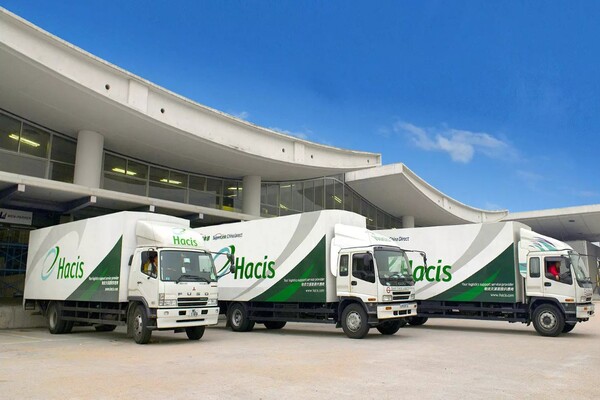
Building on the pilot shipment from Hanoi, Hacis is developing its Vietnam–Hong Kong road feeder service to offer exporters greater routing flexibility and access to Hong...

Container spot freight rates on Asia–Europe routes have rebounded after three consecutive months of decline, ahead of new Freight All Kinds (FAK) rate increases scheduled...
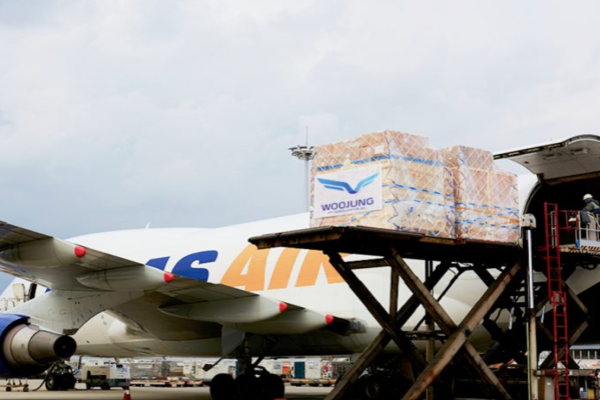
Samsung SDS is expanding its airfreight operations through the acquisition of South Korean cargo consolidator Woojung Air. The deal will strengthen Samsung SDS’s access to...
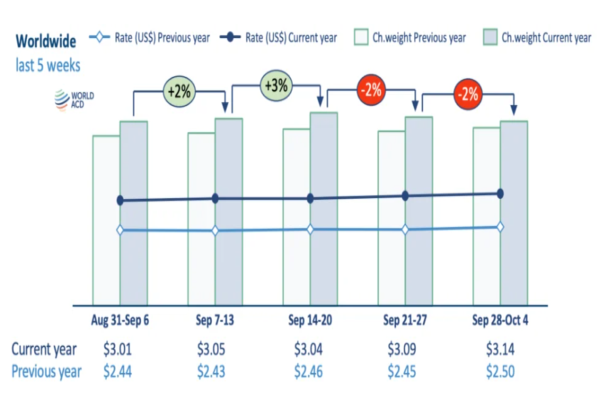
Worldwide air cargo tonnages bounced back strongly in September following their August lull, with volumes rising +3% compared with the previous month and growing +9%, year...

The rapid growth in demand for artificial intelligence (AI-related) goods that has consumed air cargo capacity out of Asia has also helped insulate global trade against tariffs...

Samsung SDS – the IT solutions and logistics arm of Samsung – is expanding its presence in air cargo through the acquisition of Korean airfreight consolidator Woojung Air...

Geopolitical uncertainty and digital transformation are reshaping global logistics, making supply chain resilience a strategic priority. FIATA emphasises the need for diversified...

 ALS
ALS