


Global air cargo demand and prices have broadly stabilized in the third full week of 2026 after completing their recovery from the annual end-of-year slump, ahead of a brief expected further uplift in demand from Asia Pacific origins prior to the Lunar New Year (LNY) period in the second half of February, according to the latest weekly figures and analysis from WorldACD Market Data.
Meanwhile, demand from flower shipments has been building ahead of Valentine’s Day on 14 February, particularly from Central & South America (CSA) and Kenya, and there have been some severe weather-related disruptions in traffic to and from North America, and further flight disruptions in parts of the Middle East due to heightened tensions between the US and Iran.
Worldwide chargeable weight rose by a further +1% in week 4 (19 to 25 January), mainly thanks to a +2% additional week-on-week (WoW) increase in traffic from Asia Pacific origins and a +10% spike from CSA, although the gains were partially offset by a -9% WoW fall in traffic from North America origins as severe weather disrupted airports and flights. The winter storm led to thousands of flight cancellations in North America and affected large parts of the US, leading to steep drops in cargo tonnages of between -14% from the US Midwest to -17% in the US Northeast, -15% in western Canada and -19% from the US South, based on the more than 500,000 weekly transactions covered by WorldACD’s data.
Nevertheless, total worldwide tonnages in week 4 have continued to exceed their equivalent levels a year ago, standing +3% up, year on year (YoY), although that demand growth has failed to match a YoY capacity increase of +6%, placing downwards pressure on rates – at least on a YoY basis (-1%, YoY).
Compared with the previous week, average global rates are slowly picking up again after bottoming out in week 2, edging up by a further +2%, WoW, to US$2.43 per kilo – although that WoW recovery in rates is slightly slower than last year, most likely due to the aforementioned +6% YoY capacity rebound.
Asia Pacific to US and Europe volumes plateau
Following two weeks of strong WoW tonnage recovery for Asia Pacific to US and Europe markets, overall WoW growth came to a halt in week 4 with flat volumes for both trade lanes, WoW. Compared with last year, volumes to the US are now even slightly below last year (-1%), although volumes to Europe are still up +7%, YoY. Meanwhile, the rate dynamics for both markets are very similar, when averaged across the whole Asia Pacific region, with spot rates slightly up on a WoW basis (by +2% to the US and by +3% to Europe), while both are -9% lower compared with the same period last year.
Within those average spot rate figures, the biggest WoW rises in week 4 were from China origins, where spot rates to the US rose by +6%, WoW, to US$4.02 per kilo, and to Europe they rose by +7% to $3.80 per kilo. Forwarders report that from southern China, demand is picking up as the market moves into the pre-Lunar New Year peak period, while capacity continues to tighten, but from northern China there are few signs currently of a pre-LNY peak.
The significant flight cancellations due to severe winter storms in the US and Canada have added to space constraints from some Asia Pacific markets to certain US destinations, placing upwards pressure on rates from markets such as southern China, Vietnam and Taiwan. The constraints on capacity, combined with possible backlogs and building demand ahead of LNY on 17 February, is likely to add to upwards pressure on spot rates in week 5 and beyond, on Asia Pacific to US lanes.
MESA growth
One origin region recording significant YoY tonnage growth since last July is the Middle East & South Asia (MESA), and that has continued into 2026, including in week 4, in which ex-MESA tonnages were up by +10%, YoY, including a +11% rise to the US and +7% increase to European markets. Despite higher tariffs imposed on India by the US in the second half of 2025, the biggest origin market within that region, India, recorded strong YoY growth in tonnages to the US in the final two months of 2025, and that growth has continued into January, including a +15% YoY increase in week 4.
Source: World ACD Weekly news

Việt Nam’s semiconductor exports grew at a compounded annual rate of 31.8 per cent between 2006 and 2025, while imports grew by 30 per cent a year during the same period.

Airfreight rates appear strong as the peak season draws near, with year-on-year gains on transpacific lanes robust while Asia-Europe rates start to recover following the end...

Data-centre investment is reshaping trade flows and putting new pressure on the industry's capacity balance, with hi-tech now the main engine of air cargo growth, according...
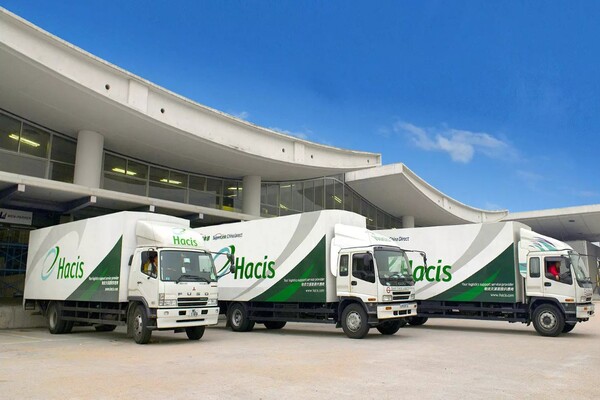
Building on the pilot shipment from Hanoi, Hacis is developing its Vietnam–Hong Kong road feeder service to offer exporters greater routing flexibility and access to Hong...

Container spot freight rates on Asia–Europe routes have rebounded after three consecutive months of decline, ahead of new Freight All Kinds (FAK) rate increases scheduled...
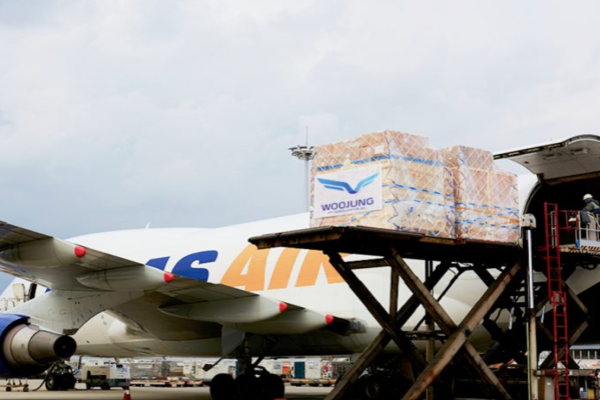
Samsung SDS is expanding its airfreight operations through the acquisition of South Korean cargo consolidator Woojung Air. The deal will strengthen Samsung SDS’s access to...
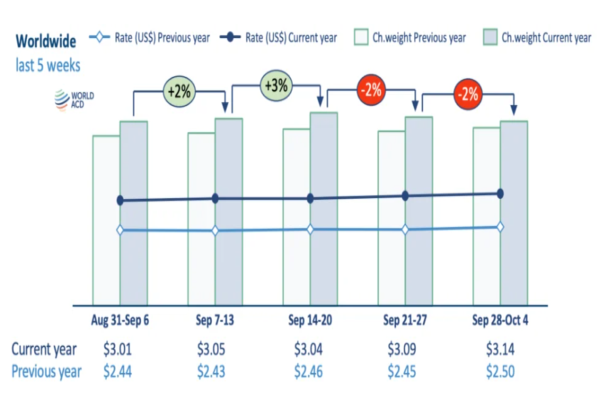
Worldwide air cargo tonnages bounced back strongly in September following their August lull, with volumes rising +3% compared with the previous month and growing +9%, year...

The rapid growth in demand for artificial intelligence (AI-related) goods that has consumed air cargo capacity out of Asia has also helped insulate global trade against tariffs...

Samsung SDS – the IT solutions and logistics arm of Samsung – is expanding its presence in air cargo through the acquisition of Korean airfreight consolidator Woojung Air...
Geopolitical uncertainty and digital transformation are reshaping global logistics, making supply chain resilience a strategic priority. FIATA emphasises the need for diversified...

 ALS
ALS