


The 2026 update to IATA’s Live Animals Regulations (LAR) represents a further tightening of standards governing the air transport of live animals, with changes spanning training, equipment, documentation, and operational compliance across global airfreight networks.
Training requirements have been strengthened, with all personnel involved in acceptance, handling, and loading now expected to demonstrate formal competency aligned with updated LAR modules. This shifts training away from periodic or site-specific instruction towards a more structured, standardised framework. The intent is to reduce variability in handling practices between stations, particularly at outstation airports where consistency has historically been uneven. In practical terms, this increases the compliance burden on operators, who must now maintain ongoing training records, refresher cycles, and demonstrable audit readiness across their networks.
Container standards and acceptance criteria have also been refined. The underlying principles remain unchanged: adequate ventilation, secure construction, and appropriate sizing for the species being transported. However, the revision places greater weight on performance-based expectations rather than purely dimensional compliance. Containers are increasingly expected to demonstrate suitability under operational conditions, including endurance across multi-leg journeys and varying environmental exposures. This shift effectively raises the threshold for acceptable equipment quality and is expected to drive greater use of higher-specification containers, particularly on long-haul routings or complex interline movements.
Documentation and booking processes have been further standardised to reduce ambiguity during acceptance. A notable change is the wider replacement of the term reservation with booking across guidance material, aligning live animal logistics terminology more closely with general air cargo systems. While largely procedural in appearance, this reflects a broader effort to integrate live animal transport more fully into mainstream operational frameworks. More materially, documentation requirements around species classification, routing approvals, and special handling instructions have been tightened.
The regulatory update reinforces an existing welfare-led direction that has been developing over several regulatory cycles. There is increased scrutiny of high-risk categories, including brachycephalic breeds, alongside more explicit temperature exposure thresholds and environmental control requirements. Journey planning is now more directly linked to welfare outcomes, with greater emphasis on routing decisions that minimise stress, transit time, and environmental variability.
Although the LAR remains a voluntary framework, its operational influence continues to expand. It functions as the de facto global benchmark for live animal air transport due to its integration into airline acceptance systems and its alignment with external regulatory regimes, including veterinary authorities and CITES-related controls. In Europe, this alignment is reinforced by tightening animal transport regulations, which introduce additional requirements around journey duration, rest intervals, and transporter authorisations.
From an operational standpoint, the cumulative impact of these changes is most visible in capacity management and cost structure. More stringent welfare and container requirements typically result in increased space allocation per animal and reduced effective load factors. This, in turn, raises unit transport costs and reduces scheduling flexibility, particularly on long-haul or multi-sector routings where environmental conditions and handling constraints are more difficult to control consistently.
Compliance risk has also shifted more firmly upstream. Airlines and ground handlers are applying stricter pre-acceptance checks and are increasingly prepared to reject shipments that fail to meet documentation or equipment standards in full. This places greater responsibility on forwarders and shippers to ensure that all regulatory, veterinary, and operational requirements are fully satisfied before cargo arrives at the airport environment.
Source: https://aircargoweek.com/raising-the-bar-for-animal-welfare-standards/

The launch of a dedicated air cargo route between Ezhou Huahu Airport in China’s Hubei province and Lahore marks the first time a direct freight air link has been established...

Although global sustainable aviation fuel (SAF) production is expected to increase by more than 26% in 2026 compared to the previous year, it will comprise just 0.8% of jet...

Freight forwarders are expected to see profitability remain under pressure despite a peace deal being reached by the US and Iran.
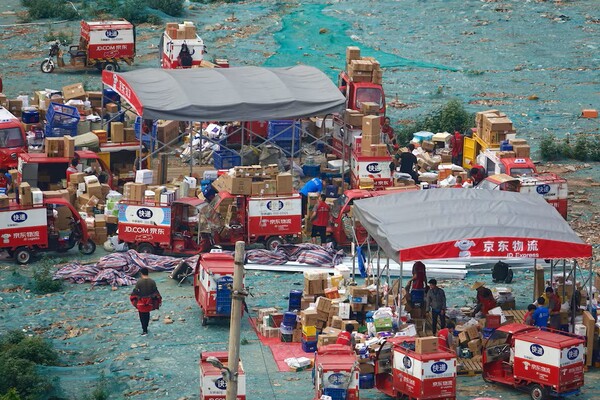
Promotions began in mid-May and run through June 20 to June 21. May retail sales fell 0.6% year-on-year. This year's event may provide clues on popularity of AI shopping tools
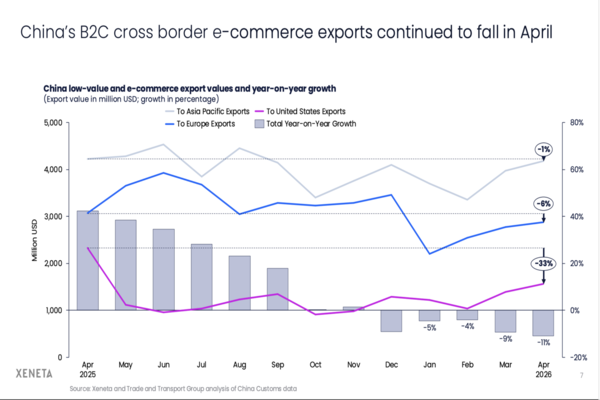
Chinese cross-border e-commerce exports continue to decline following regulatory changes in the US and increased scrutiny in Europe
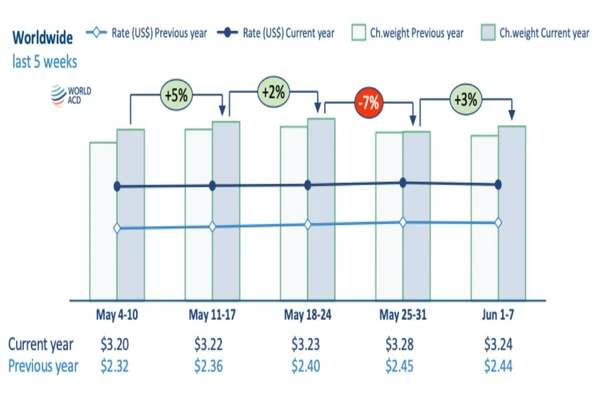
Air cargo activity stepped up a gear and airlines redeployed capacity after a slowdown in the previous week caused by a convergence of public holidays in Europe (Pentecost),...
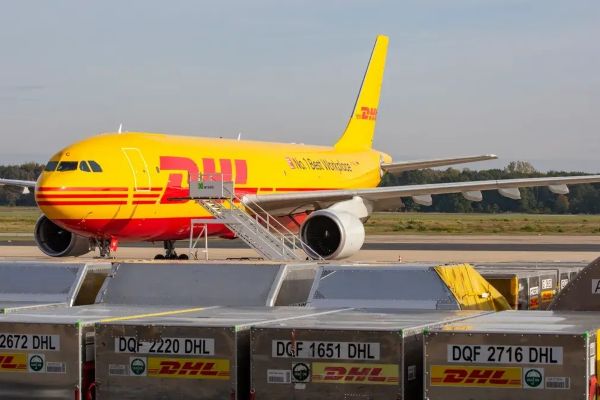
TIGHTENING capacity, earlier peak season demand and rising rates are putting increasing pressure on air and ocean supply chains in the strong Asia Pacific region, according...
The airline association said that this year SAF production is expected to reach around 2.4m tonnes, up 25% from 2025 levels. However, the growth rate is down from the 90%...
Transport logistic Southeast Asia and air cargo Southeast Asia 2027 will focus on supply chain resilience as global trade faces growing disruption from geopolitical tensions,...
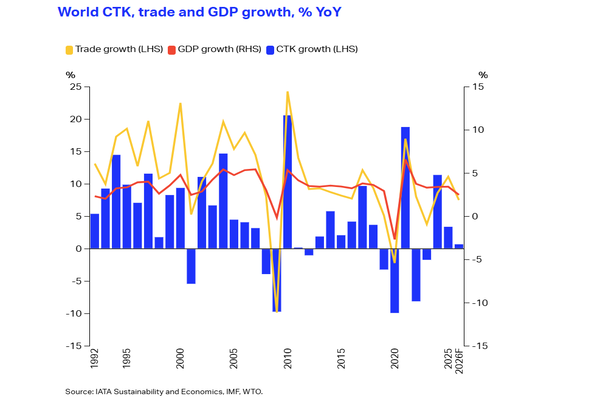
After a strong start to the year, cargo demand is now expected to grow by just 0.7% in 2026. Capacity shortages, especially in passenger bellyhold, are tightening the market...

 ALS
ALS