


As artificial intelligence scales at breakneck speed, it is transforming air cargo into the high-stakes backbone of a new infrastructure race in the compute economy.
One of the world’s largest networking solutions and AI infrastructure companies by market capitalisation maintained cargo flows with minimal disruption, even during disruptions. The reason is an air cargo solution designed with multiple routing options by Flexport. Alexis Boutet, Vice President, Global Head of Airfreight at Flexport, explained this shipment strategy in a recent company webinar.
The customer ships cargo from Hanoi, Vietnam, to a regional distribution centre in Guadalajara, Mexico. Flexport structured three separate execution chains. The first involved direct shipments from Nội Bài International Airport (HAN), Hanoi, to Guadalajara International Airport (GDL) using freighter operators like Qatar Airways Cargo via Doha and Cargolux via Luxembourg. A second routing moved cargo from Hanoi to Los Angeles International Airport (LAX) using Nippon Cargo Airlines, Cathay Cargo and United Airlines before bonded trucking carries it onward to Guadalajara.
The third option routed cargo from Hanoi to Shanghai Pudong International Airport (PVG) on China Eastern Airlines before transferring shipments onto Flexport’s own chartered Boeing 747 freighter operating between Shanghai and Los Angeles.
The network was tested when geopolitical tensions affected Middle Eastern airspace. “Suddenly, Cargolux and Qatar Airways can’t operate anymore.” Despite the disruption, the alternate routes allowed cargo flows to continue. “We were also facing the threat of jet fuel shortages in Hanoi. I could still truck all the way to Shanghai and move it to my charter,” he said.
Boutet says, “Make sure that no matter what happened in the world, you have multiple options to route your freight.”
The compute economy
The artificial intelligence (AI) boom hit the world like a shockwave. OpenAI’s ChatGPT launch in late 2022 made it the fastest-growing consumer application in history, reaching 100 million users in just two months. Overnight, AI shifted from experimental technology to mass-market utility.
Chipmaker NVIDIA’s valuation doubled to $2 trillion on what was called “insatiable demand” for AI hardware. Data centres strained under the surge, with vacancy rates in key hubs plunging below 1 percent and new capacity locked up years ahead.
The global AI market, valued at roughly $200–250 billion in 2023, is projected to cross $4 trillion by 2030, driven largely by enterprise adoption, according to Citi. Hyperscalers such as Microsoft, Amazon, Meta, Oracle and Google are collectively expected to spend more than $600 billion in 2026 alone on AI infrastructure, while total investment in data centres, power, and compute capacity could approach $7 trillion by the end of the decade.
Julian Rudolph, Cloud AI Solution Lead at Microsoft, describes the current landscape as a “compute economy,” where the real foundation of AI is not software, but infrastructure. “If you look below the software layer, it’s infrastructure.” Rudolph was recently speaking at the Innovation Insights Live webinar organised by DHL Europe Innovation Centre on data centre logistics.
Air cargo: The artery of the AI economy
That surge is now flowing directly into global logistics networks, with air cargo emerging as a critical artery of the AI economy. According to the International Air Transport Association (IATA), more than two-thirds of the value of AI-related trade was moved by air in 2025.
Air cargo consignments of AI-linked goods grew by around 20 percent year-on-year. They accounted for 53 percent of the total value of air-transported trade, while representing just 7 percent of its volume. “Equipment, which accounts for 31 percent of AI-related trade, is transported by air at rates of 66 percent, including key products such as data storage units and servers, which rely on air cargo for 68 and 56 percent of their trade, respectively,” the IATA report reads.
The rapid growth of high-value AI server racks, GPUs, and advanced chips has significantly shifted tech-sector cargo mixes toward more security-sensitive and mission-critical shipments, confirms Alicia Voto, Global Vice President for Technology at CEVA Logistics. In response, according to Voto, CEVA has made targeted investments across our global security framework and end-to-end operations to meet the increasingly complex requirements from both our large existing customers and new customers. “These profiles range from finished-goods shippers to large data centre owners, all of whom demand absolute reliability and precision,” she added.
For Julian Rudolph, the backbone of the compute economy is a supply chain. “It’s key for us to have a very resilient and transparent solution,” he says, pointing to the complexity of moving critical components across continents.
Priorities: Speed to security
Much of this flow begins in Asia and feeds into major markets in the US and Europe. “If we ship chips from Asia to the US or Europe, where we are building sites, we need to rely on speed,” Rudolph explains. But speed alone is not enough. “It’s also about the quality of the supply chain, the transparency and temperature control,” he adds, drawing a parallel with pharma logistics.
On the same line, Brinthavani Ehanantharajah-Przybilla, Senior Manager Industry Development – Semiconductors at Lufthansa Cargo, thinks that speed is important, but reliability, security, capacity planning, and shipment integrity are equally critical. “These goods are often high-value, sensitive and linked to strict deployment timelines. That means secure processes, special robust handling standards, accurate documentation, and proactive monitoring are essential throughout the transport chain - from origin handling to final delivery across our global network.”
Voto points out that security is priority number one for every AI hardware transport, and “we deployed enhanced security measures for these types of shipments.” “The second major challenge is handling expertise, as these highly sensitive and valuable assets allow zero margin for damage. Capacity is also critical, as fully assembled server racks typically require direct routes on full freighter aircraft to ensure integrity and time certainty,” she added.
Moving AI hardware presents a distinct set of operational challenges that go beyond speed or capacity, argues Toby Griffiths, Head of Cargo Global Sales and Customer Solutions at Cathay Cargo. “The most critical challenge is preserving physical integrity throughout the journey. Much of this cargo, for example, lithography machines, is highly sensitive to mechanical shock and micro-vibrations. Even minor jolts during ground handling or loading can compromise calibration and performance.”
To mitigate these risks, according to Griffiths, they apply highly controlled handling procedures across the shipment journey. “This includes strict movement protocols such as limiting forklift to low-speed handling, maintaining a strict blade height control to prevent sudden jolts, and reinforcing ULD restraint with tie-down straps well above standard requirements to eliminate unnecessary movement.”
Beyond physical handling, planning and coordination are equally critical. Griffiths notes, “AI hardware often moves in odd-sized, non-standard shapes with tight delivery windows linked to manufacturing schedules. This requires early engagement, precise space planning, and close coordination across engineering, ground handling, and flight operations.”
From Asia to the world
AI infrastructure demand is strengthening flows between technology manufacturing regions and major data centre markets. According to Ehanantharajah-Przybilla, they see continued relevance of Asia on the origin side (e.g. China, Taiwan, South Korea, Japan, Singapore, Malaysia, Indonesia) and North America and Europe (e.g. Germany, UK, Ireland, Netherlands, France), but also India and Saudi Arabia on the destination side. “The demand is without doubt shaped by where chips, components and systems are produced, assembled and deployed, as well as where data centres are growing,” she said.
Griffiths also points out that APAC has entrenched its position as a central hub for semiconductor manufacturing, and also, more recently, for AI hardware assembly, testing, and downstream integration. “This has driven stronger cargo flows into and within the region, particularly supporting time-critical and handling-sensitive shipments linked to facility expansion, equipment deployment, and technology upgrades,” he said.
For instance, in 2024, Taiwan’s semiconductor industry generated $168.73 billion in output, underscoring its outsized role in powering everything from AI to high-performance computing. At the core is Taiwan Semiconductor Manufacturing Company (TSMC), which alone commands more than 55 percent of the global foundry market, alongside key players such as UMC, ASE Group, and MediaTek spanning manufacturing, packaging, and chip design.
Taiwan’s edge lies in its deeply integrated ecosystem, highly skilled workforce, and leadership in 3‑nanometer and 5-nanometer process technologies, making it indispensable to AI, automotive, and advanced computing supply chains.
However, to avoid overdependence on any single geography, semiconductor companies are dispersing their footprint, building fabs, test and assembly plants, and packaging hubs across the U.S., Europe, Southeast Asia, and beyond.
No firm illustrates this shift more clearly than TSMC. The world’s largest contract chipmaker has launched an investment wave spanning Asia, North America, and Europe. In Japan, its subsidiary Japan Advanced Semiconductor Manufacturing (JASM) began production in Kumamoto in late 2024, while construction is already underway on a second fab aimed at producing 6‑nanometer chips.
On the same line, according to Voto of Ceva Logistics, AI-driven infrastructure investments are generating demand across virtually all global trade lanes, rather than concentrating flows in a few corridors. “Our customer base now includes a broader mix of technology manufacturers, hyperscalers, and data centre operators shipping equipment to multiple regions simultaneously. This global footprint reinforces the need for consistent standards and execution across markets,” she said.
The movement right now is concentrated on a few lanes, and the US is the dominant destination. However, according to Konstantina Georgaki, General Manager, Northwest, Flexport, what drives the build-out of the sites is the suitability of the sites, specifically access to behind-the-meter electricity and water.
“A lot of countries are putting incentives in place to attract data centre build-out investments, but I expect this to take at least a couple of years before you see Taiwan to the US, or Thailand to the US, being dethroned,” adds Georgaki.
Short-term or structural change
The growing requirement for AI‑enabling products continues to drive sustained demand for specialised logistics solutions. Thus, the question is, is AI cargo a temporary surge or a long-term structural shift for the air cargo industry? Or will it move to sea freight in future?
There are two kinds of thought on this topic, according to Georgaki. “One says AI is here to stay, which is the one I subscribe to. The other says this is a lot of excessive investment that will decrease in the future.” “But for now, she argues, “given how quickly the infrastructure needs to be deployed, I do see it being air freight dominant.” However, because it is so expensive, there is already a lot of push to move parts of the supply chain into ocean freight. “The ocean itself has a certain amount of fast-boat options that help bridge the gap. So there is already some infrastructure going to the ocean, but not the sensitive cargo. That is way too risky,” she said.
Voto sees this as a long-term structural shift. She explains, “The continuous evolution of processors, networking equipment, and computing power means replacement cycles are shortening. This creates sustained demand for high-value, time-critical air cargo well beyond the current expansion phase.”
“We see AI cargo as more than a short-term spike,” says Ehanantharajah-Przybilla. “The current investment cycle may fluctuate, but the underlying demand for computing power, data centres, and advanced electronics points to a structural role for air cargo.”
For air cargo, this creates new opportunities, but also new expectations, according to Griffiths. “To stay relevant and competitive, the air cargo industry must adapt quickly by investing in specialised solutions, enhancing operational discipline, and building expertise in this sector. Airlines which align their services with these emerging needs will be best positioned to support the next phase of digital and AI-driven growth,” he said.
In this new reality, air cargo is stitching together a global network where every delayed shipment risks slowing the pace of innovation itself.
Source: https://www.stattimes.com/logistics/flying-compute-economy-how-air-cargo-carries-ai-infrastructure-1359088
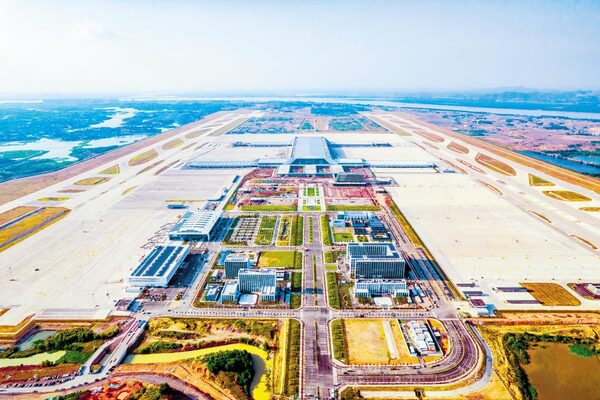
The launch of a dedicated air cargo route between Ezhou Huahu Airport in China’s Hubei province and Lahore marks the first time a direct freight air link has been established...

Although global sustainable aviation fuel (SAF) production is expected to increase by more than 26% in 2026 compared to the previous year, it will comprise just 0.8% of jet...

Freight forwarders are expected to see profitability remain under pressure despite a peace deal being reached by the US and Iran.
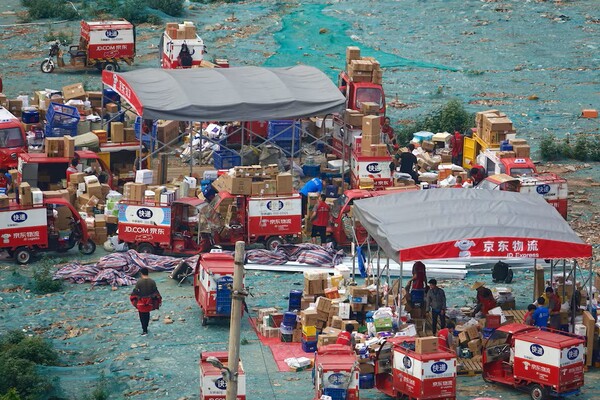
Promotions began in mid-May and run through June 20 to June 21. May retail sales fell 0.6% year-on-year. This year's event may provide clues on popularity of AI shopping tools
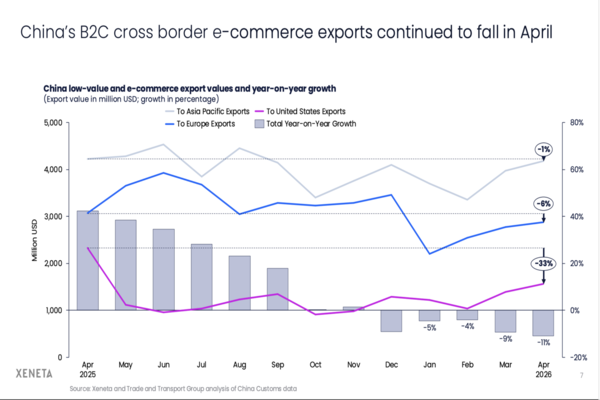
Chinese cross-border e-commerce exports continue to decline following regulatory changes in the US and increased scrutiny in Europe
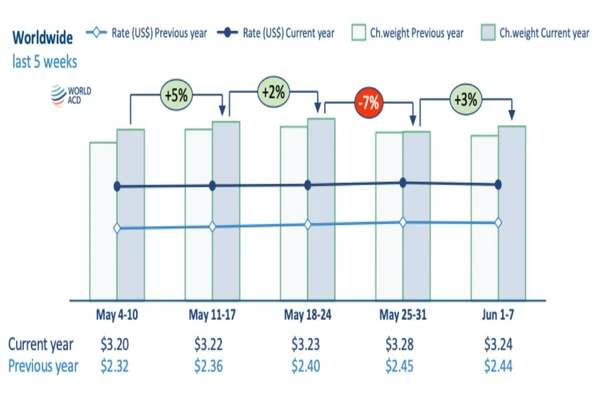
Air cargo activity stepped up a gear and airlines redeployed capacity after a slowdown in the previous week caused by a convergence of public holidays in Europe (Pentecost),...
TIGHTENING capacity, earlier peak season demand and rising rates are putting increasing pressure on air and ocean supply chains in the strong Asia Pacific region, according...
The airline association said that this year SAF production is expected to reach around 2.4m tonnes, up 25% from 2025 levels. However, the growth rate is down from the 90%...
Transport logistic Southeast Asia and air cargo Southeast Asia 2027 will focus on supply chain resilience as global trade faces growing disruption from geopolitical tensions,...
After a strong start to the year, cargo demand is now expected to grow by just 0.7% in 2026. Capacity shortages, especially in passenger bellyhold, are tightening the market...

 ALS
ALS