


DHL, FedEx, and UPS have written to European Union finance ministers calling for a phased approach to the 27-member bloc’s new customs rules for low-value parcels to be introduced this summer.
They focus on the abolition of the de minimis rule, the customs exemption currently applied to parcels worth less than €150, which will be replaced by a flat-rate tax of €3 per item from non-EU countries, effective on 1 July.
Secondly, a processing fee of €2 is set to be added later in the year, probably in November.
The aim of the customs reform is to discourage impulse purchases of very cheap products, notably marketed on Chinese online marketplaces such as Shein, Temu, and AliExpress, particularly in fast-fashion.
In the letter, the three integrators – members of industry body the European Express Association (EEA) – say the EU should proceed with the tax, but recommend a deferral of the “more complex and unresolved elements until they are legally certain and operationally viable”."
"These include new data requirements, among other aspects of the new rules, which according to the express delivery giants, constitute a level of complexity that cannot be feasibly implemented by 1 July.
In the letter, Mike Parra, CEO of DHL Express Europe, Wouter Roels, president of FedEx Europe, and Daniel Carrera, president of UPS EMEA, said that “without a stable and workable legal framework”, they anticipated a “real risk” of shipments being held up at EU borders.
“Such disruption could affect medical supply availability, delay industrial production, and create bottlenecks across European supply chains – all risks that are particularly significant in the current geopolitical context,” it added.
The European Union has yet to respond, at least publicly, to the integrators’ request.
When the US suspended its de minimis exemption for goods under $800 in August 2025, it led to an immediate and significant decline in cross-border ecommerce volumes, while also triggering a shift in freighter capacity from the transpacific to the China-Europe tradelane, as Chinese online marketplaces saw an increase in business from European consumers."
"For example, according to Rotate, this year to date, freighter traffic from Asia to Europe is 28% higher than a year ago, while transpacific is up just 1%, and global capacity up 4%.
Is the China-Europe online trade in for a similar fate? One could perhaps look for clues in France where the authorities brought the introduction of the €2 parcel tax forward to 1 March.
By 3 March, customs declarations for small parcels at Paris CDG Airport had fallen 92% as goods were shifted to foreign rivals in Liège, Schiphol, and Frankfurt, parcels for France forwarded by truck. CDG was estimated to have lost about 50 freighter flights in the first week after the tax.
Italy, which also brought in the tax early, suffered similar consequences and decided on a temporary postponement of the levy.
France’s director-general of Customs, Florian Colas, told the National Assembly’s Economic Affairs Committee this month: “We have gone from approximately 500,000 [small parcel] declarations a day to around 50,000 today.”"
"At a webinar in the spring, Henk Venema, DHL GF’s EVP global airfreight, said: “We are waiting to see what the response is going to be from the market to these new European regulations, because cross-border ecommerce from China and Hong Kong is taking up a large amount of freighter capacity at the moment.
“Should it lead to a massive decline in ecommerce volumes going to Europe, a good deal of this freighter capacity would be freed up. But jet fuel prices being what they are today, a lot of the freighters carrying ecommerce goods from China to Europe could well be taken out of the market, because it would not be economical to fly them, especially the older B747-400F models.”
However, Mr Venema speculated that these freighters could also end up having a role to play in supporting what he described as “probably the biggest growth engine of air freight overall in 2026 and beyond” – the shipment of “hyperscale AI”.
Separately, DHL eCommerce has announced a new exclusive multi-year contract with the United States Postal Service (USPS), with an expected value of well over $10bn, for last-mile parcel delivery services in the US."
"And FedEx said this week it was investing €46m to expand its Duiven road hub in the Netherlands, boosting palletised freight capacity by more than 50%, as it prepares for continued growth in European parcel and freight volumes. The move underscores expectations that cross-border trade demand will remain strong even as Europe tightens the rules on low-value ecommerce imports."
Source: https://theloadstar.com/dhl-fedex-ups-warn-eu-parcel-tax-risks-disruption-at-borders/
United Airlines’ cargo revenue increased 22.6% to $527 million in the second quarter as the carrier benefited from a sharp rise in air cargo rates related to disruptions from...
China's biggest airlines enter the peak summer travel season facing a more challenging outlook after warning of heavy first-half losses, with weakening demand raising doubts...
Semiconductor-driven exports keep Korea's cargo jets profitable as LCCs scramble to add freighters despite costly fuel
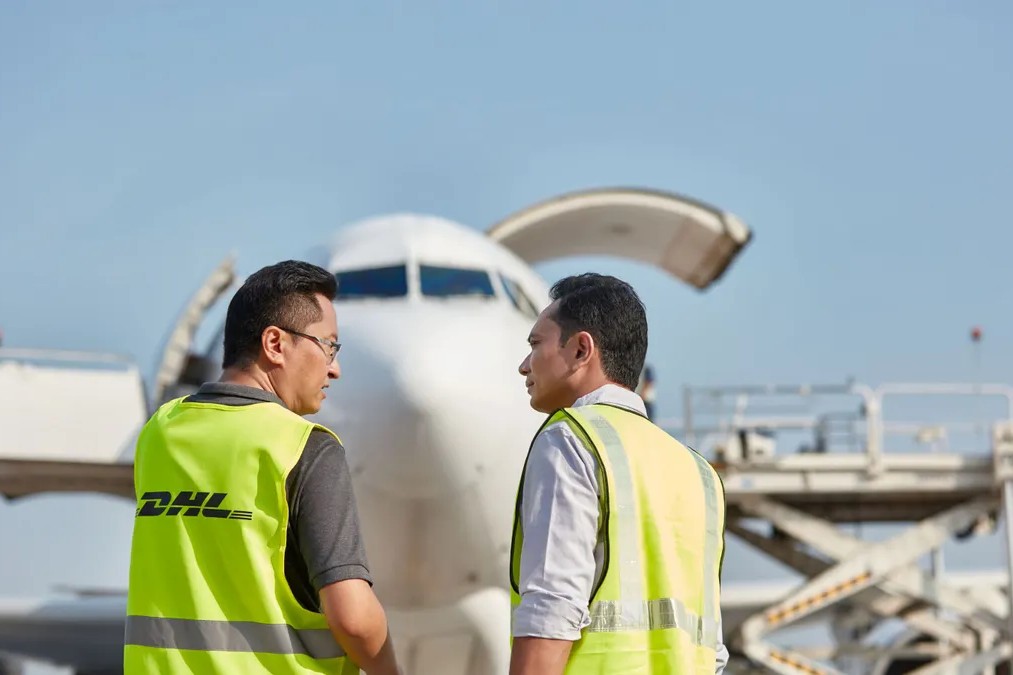
The thrice-weekly Bangkok-Cincinnati service connects manufacturing regions in Southeast Asia to U.S. hubs.

Airfreight rates are expected to rise 5% to 15% this year rather than fall, while air cargo demand expectations have also shifted upwards to the impact of the Middle East...
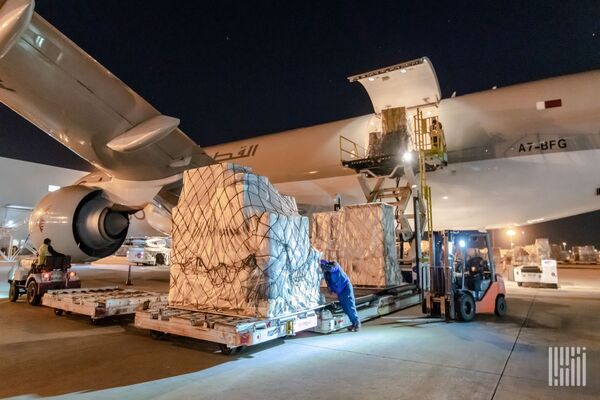
The International Air Transport Association’s revised framework for direct airway bills took effect on July 1. In a statement, IATA said the “rebalancing of benefits and responsibilities...
In this exclusive interview, Jaisey shares how CAG is keeping Changi ahead of the competition from Middle Eastern hubs, capturing regional manufacturing shifts, and welcoming...
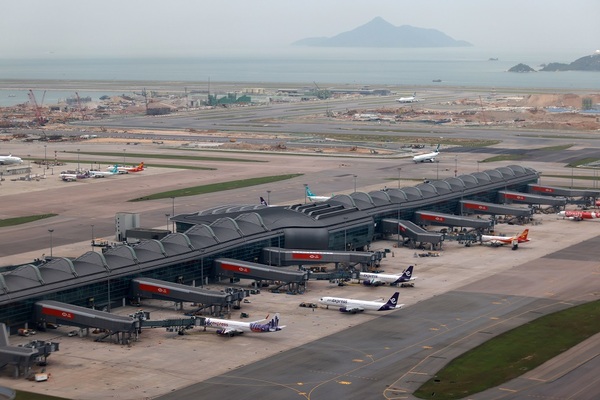
Cargo volumes between Hong Kong and Europe have sharply declined in recent weeks as a result of the European Union’s (EU) introduction of a charge for e-commerce packages.

A trend towards personalised door-to-door pharmaceutical shipments could increase demand for airfreight transportation, finds Cathay Cargo.

The global artificial intelligence (AI) wave has not only supercharged sectors like computing, chips, and hardware devices - it has also quietly ignited a brand-new track:...

 ALS
ALS