


London, I’m Kenza Bryan, the FT’s climate reporter with news of a plan to bring international aviation into the EU’s emissions trading scheme before the end of the decade.
An incomplete plan to price flight emissions
The first half of the year has brought difficult news about the worsening effects of climate change: a rollercoaster of extreme heat, wildfires, flooding and sea-ice lows. Scientists warned that a core global goal to limit the rise in temperatures was slipping out of reach.
So I hope you will forgive me for a hint of relief as I report on an imperfect proposal that the EU published late last week. After musing on the idea for more than a decade, Brussels said it planned to extend its CO₂ pricing scheme to all flights out of the bloc, including private jets.
One tiny caveat: flights must land within 5,000km of a point in central Europe, which conveniently excludes the US. This appears to be the only way to have avoided reigniting explosive trade tensions with Donald Trump’s America. It was a clever compromise.
Making polluters pay
The European Commission has proposed bringing international aviation further into its emissions trading scheme starting in 2029.
It has done so as part of a wide-ranging review of its scheme, which places a cost on carbon of about €80 a tonne.
Aviation makes up about 3 per cent of energy-related CO₂ emissions every year, according to the International Energy Agency. Scientists say that its impact on global warming is higher because of the heat-trapping effects of contrails, clouds that planes can leave in their wake at high altitude.
But making polluters pay in international industries such as aviation and shipping is notoriously difficult. It involves getting countries and companies to agree with each other on the size and shape of a levy or trading scheme.
The EU has previously tied itself in knots trying to work out whether to rely on an international agreement that has so far only priced a fraction of CO₂ emissions from aviation, and done so at a level that may be too cheap to create much of an incentive for change.
Under the EU’s latest proposal, airlines would pay to emit carbon on flights from Paris to Dubai but not from Paris to New York. This is a climbdown from EU efforts in 2012 to price the CO₂ emitted by international flights, which came under immense pressure from the US and China.
Climate officials earlier this year had initially hoped once again to extend the EU’s carbon trading system to all flights leaving the bloc. But sources of my Brussels-based colleague Ian Johnston told him that the proposal faced pushback from many departments within the Commission, including those in charge of transport and industrial policy.
These officials were concerned about the impact on the aviation industry and the trade department, where officials were worried about potential blowback from trade partners such as the US and China.
The 5,000km radius proposal that the Commission has landed on falls conveniently short of reaching the US and China. But the Commission hopes it will tackle the challenge of airlines diverting from major European airports in favour of regional hubs that are not subject to carbon costs, such as those in Turkey or the rest of the Middle East.
Tim Johnson, a director at the Aviation Environment Federation, a UK-based non-profit organisation, told me he believed the commission’s earlier ambitions had been tempered by the geopolitical constraints of the Trump era.
“It’s a measured decision by the Commission that trades what’s the maximum coverage we can get . . . versus the political realities,” he said. “It’s seeking to extend the pricing [as] far as it practically can in the current political environment.”
Missed opportunity
Despite its limitations, the move could go some way towards curbing emissions from the airline industry by creating an added incentive to take routes that are less polluting. But it is worth noting that it still leaves 47 per cent of European aviation exempt from carbon pricing, disappointing some campaigners.
The EU proposal forgoes about €4.2bn in revenues that could have been raised had all departing flights been included, according to modelling by the green transport campaign group T&E.
Its aviation director Diane Vitry said the proposal had been watered down “due to industry pressure” and hoped it would be only a starting point for tougher rules. “Aviation must pay for all its emissions, just like any other sector of the economy.”
One thing to note alongside the proposed change: the Commission also published an assessment of the existing international deal on aviation and climate change, and left the door open to relying on it more heavily in future.
The Carbon Offsetting and Reduction Scheme for International Aviation (Corsia), which countries agreed to in 2016, aims to keep the industry’s net emissions at 85 per cent of a 2019 pre-pandemic peak.
Corsia still only covered about 70 per cent of international aviation emissions and the carbon offsets it relies on may have some methodological “shortcomings”, the report said.
The scheme does not even aim to cut flight numbers, but instead to achieve “carbon-neutral growth” thanks to carbon credits or the use of so-called sustainable aviation fuel. SAF emits the same amount of CO₂ as kerosene at the point of combustion but is not produced from fossil-fuel feedstocks. It is expensive and in short supply.
Another drawback of Corsia is that participation by states is voluntary, and not all those that have joined have written the rules into law for their national airlines. Future participation by US and Chinese airlines is uncertain.
Given all of this, the Commission said it would once again review Corsia’s performance in addressing international aviation emissions in 2032.
This helped raise hopes among some carbon market developers, traders and insurers. They said the possibility of Corsia’s integration with the EU system would unlock confidence in the market for carbon credits, after a recent shortage that has pushed up prices for airlines.
Smart reads
Just in case you thought Brussels had stepped up climate action on all fronts, that is not wholly true when it comes to methane emissions.
This profile of the UK’s new energy secretary suggests that Andy Burnham’s new government does not intend to retreat from Keir Starmer’s green agenda.
Source: https://www.ft.com/content/4bd69ae6-8e8c-4c0b-8e1a-57240d1d1181?syn-25a6b1a6=1
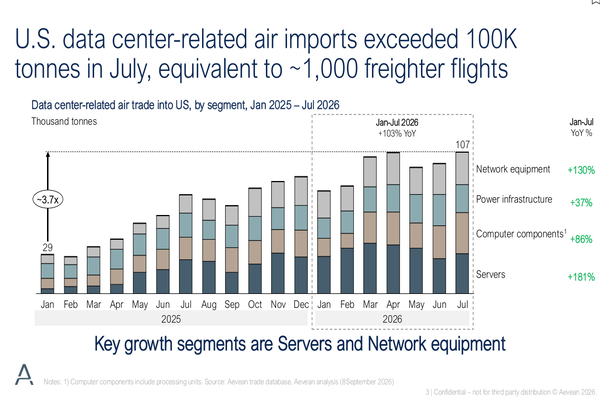
E-commerce and AI data centre-related volumes have been fuelling air cargo demand growth over recent years, but the performance of the two verticals has increasingly diverged...
New Delhi Declaration welcomes urban mobility hub and logistics framework; railway research network proposed
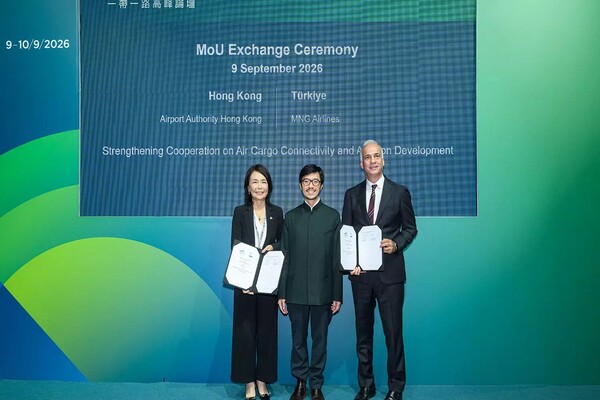
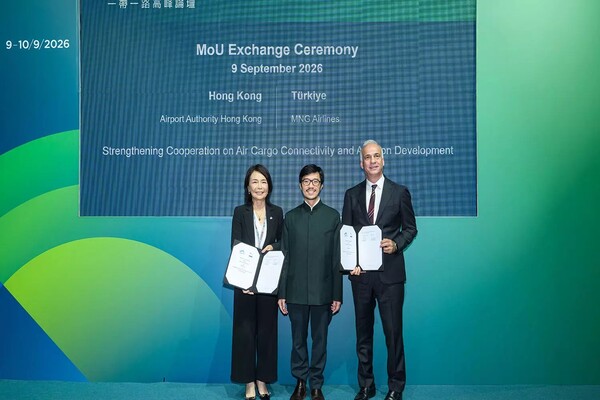
Hong Kong International Airport has signed major agreements with MNG Airlines and Harvest Epoch to expand regional freight and airport development
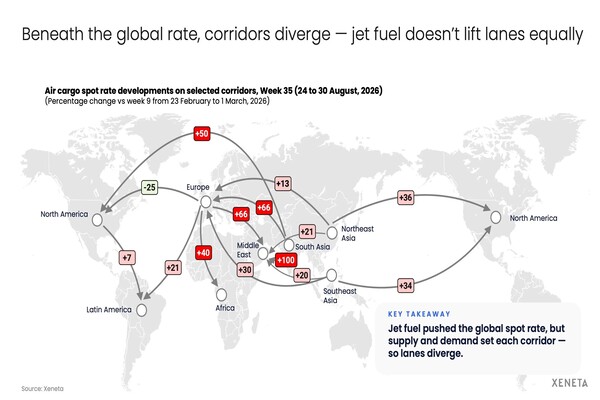
Global air cargo demand remained strong in August, with volumes up +6% year-on-year, meaning shippers must wait a little longer to see a bigger drop in still-elevated freight...
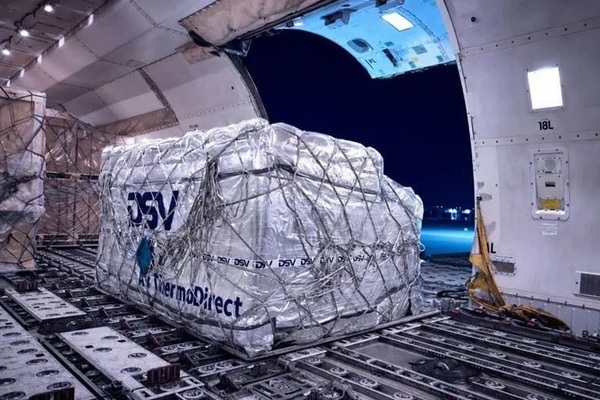
The pharma service is offered on multiple departures on dedicated freighter aircraft, with DSV controlling the scheduling, routing, and cargo handling to ensure greater reliability.
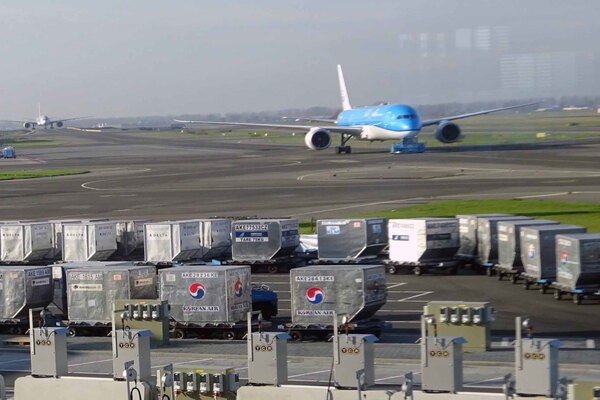
Air freight enters the traditional peak-season build-up with a finely balanced market, as capacity reductions and resilient pricing create the potential for rapid tightening...
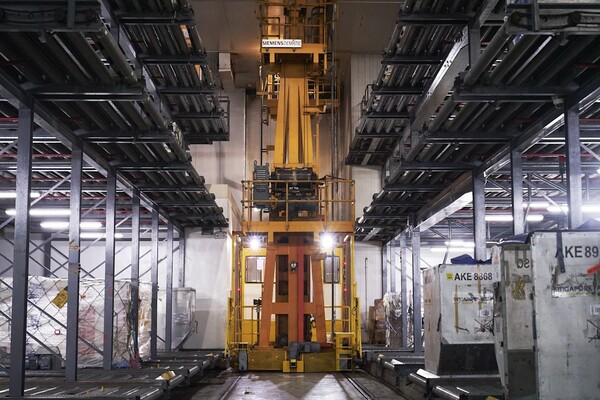
The world’s biggest air cargo handler has reported surging revenues on the back of US companies transporting machinery and materials to the Middle East to help rebuild energy...
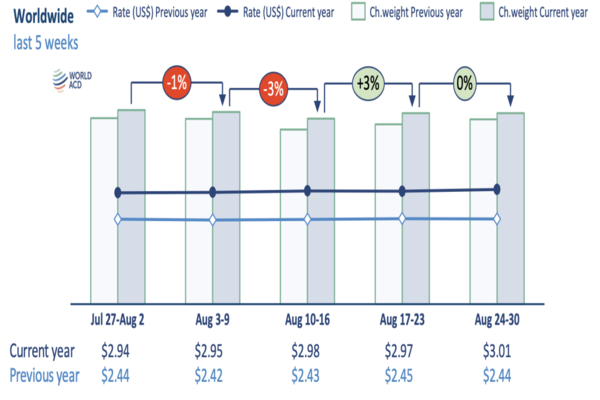
Worldwide air cargo tonnages increased in August +5 percent compared to the same month last year, according to the latest figures from WorldACD Market Data.
AS SHIPPING accelerates its transition towards lower and zero greenhouse gas fuels, the industry is entering one of the most significant periods of operational change in its...
Air cargo rates from China to the United States climbed 30 per cent year-on-year ahead of the peak shipping rush, driven by steady semiconductor and e-commerce shipments.

 ALS
ALS