


Gia Binh International Airport in Bac Ninh City, northern Vietnam, is racing to complete key infrastructure ahead of APEC 2027, with ambitions to become a major aviation, logistics, and trade hub beyond the high-profile summit.
The VND196.38 trillion (US$7.5 billion) project, developed by Masterise Aviation Infrastructure Corporation, covers 1,960 hectares and is designed to meet international Code 4F standards.
Construction began in August 2025, with key facilities scheduled for completion in 2027 and the first phase expected to handle 30 million passengers annually by 2030.
Construction and operational preparations gather pace
Work is being accelerated on the airport's runway, VIP terminal, air traffic control tower, and supporting infrastructure as the project moves toward its first major operational milestone in 2027.
By the end of August 2026, the air traffic control tower had reached its designed height of 127 meters, while construction of other key facilities was advancing alongside equipment installation and operational preparations
A road connecting Gia Binh Airport with Hanoi is also under development to improve access to the capital and surrounding economic centers.
Beyond physical infrastructure, the airport is building its workforce and technological capabilities.
Nearly 90 percent of operational positions have been filled, with recruitment, training, and certification expected to be completed by the end of 2026.
The airport is also working with technology company One Mount to develop core operating systems, including Amanda, an AI-enabled platform that provides real-time flight information and supports airport management and coordination.
Employee applications, surveillance, access control, and cybersecurity systems are being developed alongside the platform.
Together, these preparations are intended to ensure that Gia Binh's initial facilities can serve APEC-related activities in 2027, while laying the groundwork for the airport's longer-term expansion.
Beyond passenger transport: A gateway for high-value industries
Beyond serving passengers, Gia Binh International Airport aims to become a major cargo and logistics gateway, capitalizing on northern Vietnam’s thriving manufacturing and export industries.
Major airports worldwide are increasingly evolving into economic hubs connecting trade, manufacturing, logistics, and services, as seen in Singapore, Amsterdam, Seoul, and Zhengzhou.
Air cargo is central to this model. According to the International Air Transport Association (IATA), air freight accounts for less than one percent of global trade by volume but more than 33 percent by value, equivalent to roughly $8.3 trillion annually.
For high-value, time-sensitive industries such as electronics, semiconductors, and pharmaceuticals, proximity to an international airport offers a significant competitive advantage.
Gia Binh International Airport is well positioned to capitalize on this trend, given its location within one of northern Vietnam's major manufacturing and export hubs.
Bac Ninh Province recorded around $182 billion in combined import-export turnover in 2025, with electronics, computers, and optical products among its leading industries.
The surrounding industrial economy therefore already generates substantial demand for international transport connectivity.
Under the investment policy approved by Vietnam's National Assembly, Gia Binh is planned as a Code 4F airport, capable of accommodating large aircraft.
By 2030, it is expected to handle 30 million passengers and 1.6 million metric tons of cargo annually.
Its planned capacity would increase to 50 million passengers and 2.5 million metric tons of cargo by 2050.
The substantial cargo targets suggest that freight operations will be a major pillar of the airport's development rather than a supporting service.
One potential reference point is Zhengzhou, China, where airport development has helped connect manufacturing, high-value industries, and logistics into a broader economic ecosystem.
The model creates a reinforcing cycle: manufacturing generates cargo demand, growing freight volumes encourage airlines to expand their networks, and stronger connectivity attracts logistics providers, suppliers, and other businesses.
From APEC 2027 to a next-generation aviation economic hub
Beyond APEC 2027, Gia Binh International Airport aims to become the centerpiece of a broader aviation and logistics ecosystem connecting northern Vietnam's major industrial and economic centers.
Bac Ninh is developing a proposal for a free trade zone linked to the airport, integrating manufacturing, logistics, trade, services, and innovation.
Masterise Aviation Infrastructure Corporation envisions the project as a "Next-Generation Aviation Economic Hub 2.0," combining aviation, logistics, technology, commerce, and urban development.
To support this ambition, the airport is developing scalable AI-powered operating systems and seeking partnerships with domestic and international companies, including airport operator daa and Japan's Yamato Group in cargo and logistics.
While APEC 2027 will mark an early operational milestone, the long-term goal is to transform Gia Binh into a gateway for trade, investment, and technology, creating new growth opportunities for Bac Ninh and the wider northern region.
Source: Ngoc Nguyen - Minh Thanh / Tuoi Tre News
https://news.tuoitre.vn/vietnams-gia-binh-airport-races-toward-apec-2027-eyes-future-as-aviation-economic-hub-103261008115118011.htm
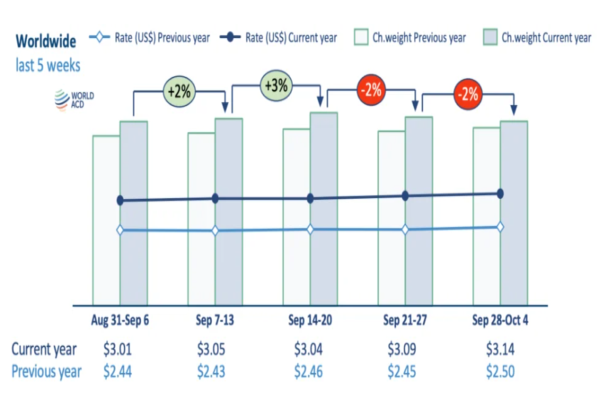
Worldwide air cargo tonnages bounced back strongly in September following their August lull, with volumes rising +3% compared with the previous month and growing +9%, year...

The rapid growth in demand for artificial intelligence (AI-related) goods that has consumed air cargo capacity out of Asia has also helped insulate global trade against tariffs...

Samsung SDS – the IT solutions and logistics arm of Samsung – is expanding its presence in air cargo through the acquisition of Korean airfreight consolidator Woojung Air...
Geopolitical uncertainty and digital transformation are reshaping global logistics, making supply chain resilience a strategic priority. FIATA emphasises the need for diversified...
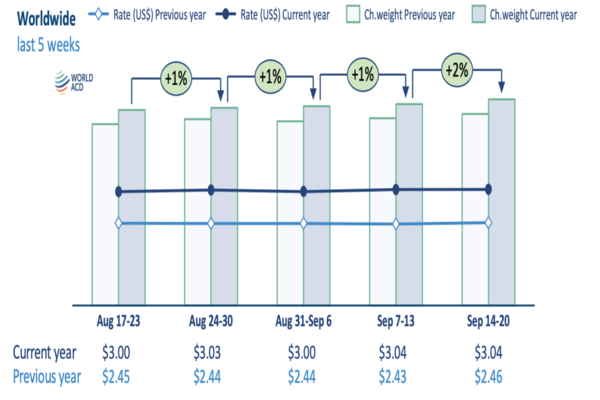
Worldwide air cargo tonnages have rebounded in mid-September following their usual annual dip caused by Labor Day in the US and Canada on 7 September, with chargeable weight...
Technology-related cargo is becoming an increasingly important consideration for air freight planning across Asia Pacific, as investment in artificial intelligence infrastructure...
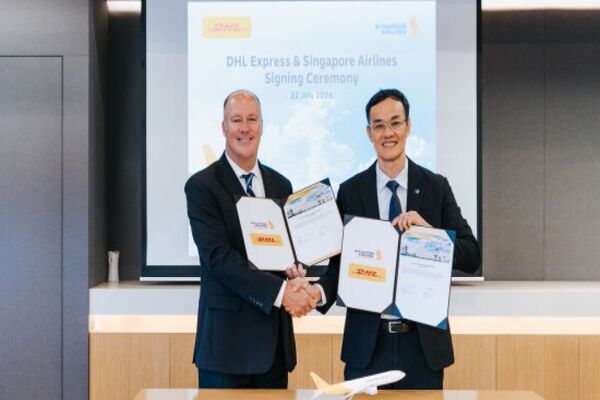
Under the renewed agreement, SIA pilots will continue to operate five Boeing 777 freighters based at Singapore Changi Airport for DHL Express

Air cargo operators could face CORSIA compliance costs sooner than passenger airlines because many have already returned above their 2019 emissions baseline, leaving them...
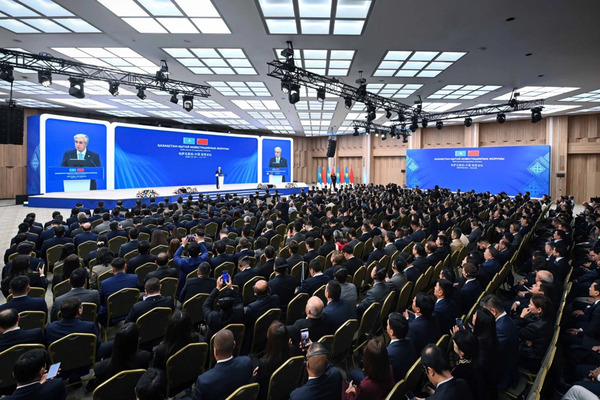
Kazakhstan will strengthen its role as a key transport and logistics hub between China and Europe, President Kassym-Jomart Tokayev stated at the Kazakhstan-China Investment...

 ALS
ALS