


For years, aviation’s sustainability debate has largely centred on passenger airlines, sustainable aviation fuel mandates and long-term fleet renewal. But a quieter pressure point is beginning to emerge in air cargo. The next challenge may not be access to SAF, but access to carbon credits.
As CORSIA moves deeper into its first compliance phase, concerns are growing that the supply of eligible carbon credits may not keep pace with demand, particularly if authorisation bottlenecks and insurance constraints continue to slow the market. For air cargo operators, the implications are potentially more immediate than for passenger carriers.
Freight operators may feel the pressure first
“Air cargo operators faced a different operating dynamic during Covid-19, with activity remaining more resilient than in passenger aviation. As under CORSIA, exposure is determined by emissions relative to the 2019 baseline rather than operator type. Emissions above that baseline must be offset,” Bilal Hussain, CEO and Co-Founder at Artio, said.
Hussain mentioned that because passenger demand dropped sharply during the pandemic, many passenger airlines have not yet exceeded their baseline. In contrast, some cargo operators may already be operating above 2019 levels, particularly heading into Phase One. The implication is more immediate and potentially higher compliance exposure. For cargo operators, this translates into earlier cost pressures as they enter the market for eligible credits sooner, alongside a greater need for proactive operational planning.
“They have less flexibility to delay procurement, making them more exposed to supply constraints, price volatility, and the challenge of securing high-integrity credits in a tightening market.”
Artio’s latest market analysis in conjunction with Allied Offsets shows that the total pool of CORSIA Eligible Emission Units has grown from 15 million tonnes of CO2 equivalent in May 2025 to around 32 million tonnes today. Yet airlines are increasingly discovering that theoretical supply and usable supply are not the same thing.
Under CORSIA rules, carbon credits typically require specific forms of authorisation from host governments, with corresponding adjustments applied to avoid double counting before they are eligible for compliance use. That process has become one of the biggest friction points in the market, complicated further by the growing role of insurance-backed mechanisms designed to guarantee the validity of credits if authorisations fail.
According to Hussain, in practice, availability is less about insurability being the core blocker and more about the process of securing LoAs from host governments, the quality of those LoAs (many are still based on older formats), and operational limitations such as issuance backlogs.
These factors slow the transition from issuance to full market accessibility. As a result, even though overall supply has increased, the portion that is immediately usable by airlines remains constrained, meaning airlines may face tight access early in Compliance Phase 1 (CP1) despite headline supply figures appearing healthy.
That distinction matters because the market’s headline growth masks a narrower pool of immediately accessible credits. Of the roughly 32.7 million eligible units issued so far, only 78.5 percent have received corresponding adjustments, while the remainder depend on insurance-backed Letters of Authorisation.
At present, Guyana’s ART REDD+ programme remains the only project to have secured a corresponding adjustment, leaving much of the market reliant on structures that are still evolving.
For airlines, this creates uncertainty at precisely the moment compliance exposure is beginning to rise.
If supply remains constrained while demand increases, price escalation could be sharp. Current modelling suggests that if the full projected supply of 154 million credits becomes accessible by late 2027, prices could remain relatively contained in lower-emissions scenarios. But if supply remains limited to the market’s current insured capacity of around 90.5 million credits, costs could rise substantially.
Under higher-demand scenarios, projections place prices between US$33.84 and US$50.84 per credit, compared with single-digit pricing in a fully supplied market. That gap is large enough to reshape procurement strategies, network economics and potentially freight pricing itself.
Carbon strategy is becoming operational strategy
What is emerging is a broader shift in how airlines approach emissions compliance. The era of buying spot credits reactively may prove short-lived.
“Down the line we expect airlines to be securing their own supply of credits and investing in projects rather than buying spot,” Hussain says.
“Down the line we expect airlines to be securing their own supply of credits and investing in projects rather than buying spot. We expect them to build diversified portfolios of carbon projects and highly likely they will be interested in insurance as de-risking as we already receive such requests.”
That approach would mirror developments already seen in energy markets and SAF procurement, where long-term supply agreements are increasingly used to reduce exposure to volatility.
Insurance is also expected to become a more embedded part of the carbon ecosystem. As concerns grow over invalidation risks and inconsistent authorisation structures, insurers are moving from peripheral participants to central market enablers.
“It helps structure agreements and contracts in a way that makes them insurable from the outset, which in turn reduces blockers later in the process,” Hussain explains.
Yet he is clear that insurance alone cannot stabilise the system. The larger challenge remains regulatory consistency. Weak or poorly defined Letters of
Authorisation continue to create uncertainty around whether credits will ultimately qualify for compliance. Problems such as “uncapped LoAs, vague revocation clauses, and misalignment between host countries and developers” are already slowing market development.
Network decisions may start to shift
The operational implications could extend beyond procurement. As carbon costs become more material, airlines may begin reassessing network structures, hub selection and aircraft deployment through an emissions lens. Some may favour transit points with lower compliance costs or more favourable tax regimes, though Hussain suggests such advantages may prove temporary.
“We do expect to see increased investment in aviation efficiency and low carbon technologies to minimise exposure.”
Source: https://aircargoweek.com/carbon-costs-may-arrive-sooner-than-expected/
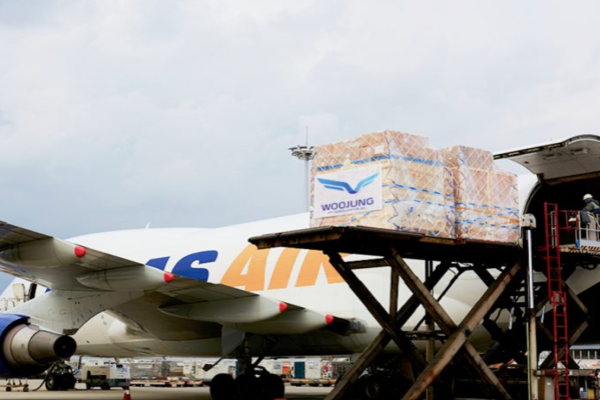
Samsung SDS is expanding its airfreight operations through the acquisition of South Korean cargo consolidator Woojung Air. The deal will strengthen Samsung SDS’s access to...
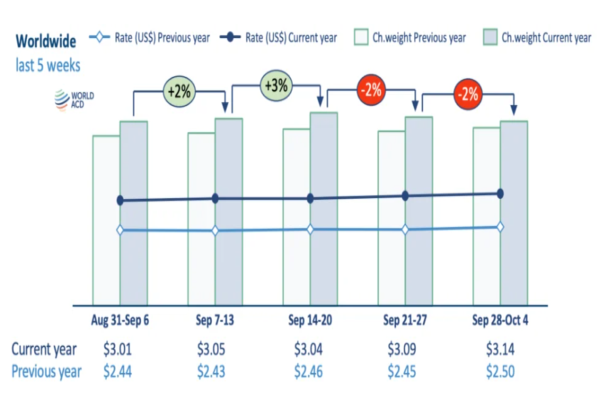
Worldwide air cargo tonnages bounced back strongly in September following their August lull, with volumes rising +3% compared with the previous month and growing +9%, year...

The rapid growth in demand for artificial intelligence (AI-related) goods that has consumed air cargo capacity out of Asia has also helped insulate global trade against tariffs...

Samsung SDS – the IT solutions and logistics arm of Samsung – is expanding its presence in air cargo through the acquisition of Korean airfreight consolidator Woojung Air...

Geopolitical uncertainty and digital transformation are reshaping global logistics, making supply chain resilience a strategic priority. FIATA emphasises the need for diversified...
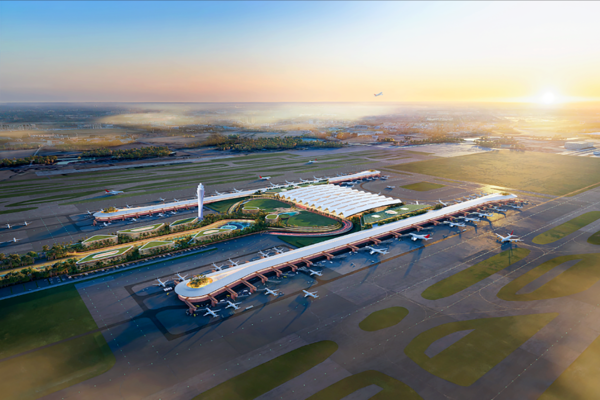
Gia Binh International Airport in Bac Ninh City, northern Vietnam, is racing to complete key infrastructure ahead of APEC 2027, with ambitions to become a major aviation,...
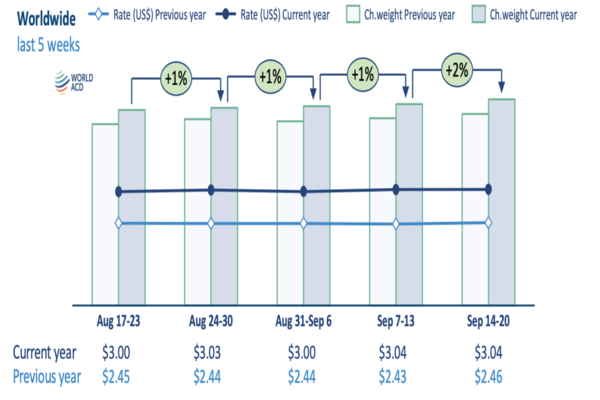
Worldwide air cargo tonnages have rebounded in mid-September following their usual annual dip caused by Labor Day in the US and Canada on 7 September, with chargeable weight...

Technology-related cargo is becoming an increasingly important consideration for air freight planning across Asia Pacific, as investment in artificial intelligence infrastructure...
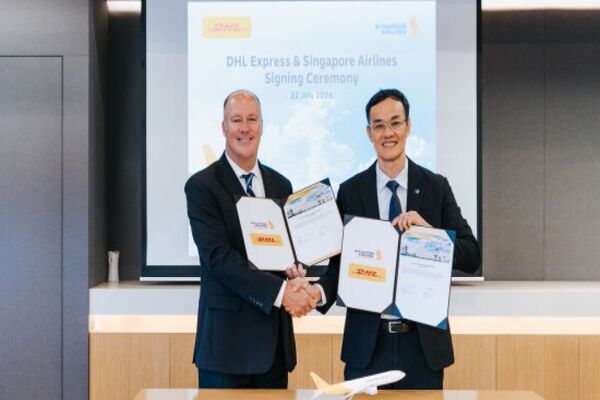
Under the renewed agreement, SIA pilots will continue to operate five Boeing 777 freighters based at Singapore Changi Airport for DHL Express

 ALS
ALS