


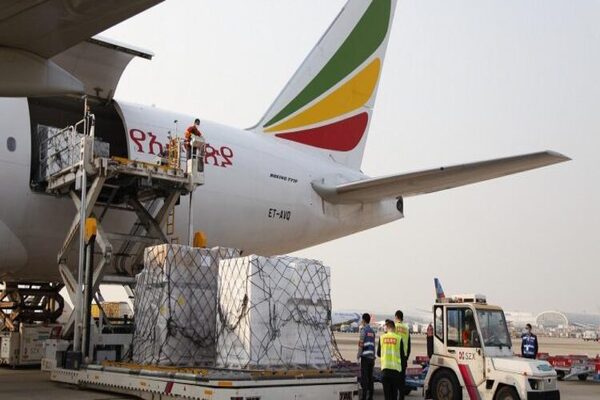
Ezhou Huahu is China’s first airport purpose-built entirely for cargo operations. That its inaugural international route connects to Lahore rather than a more established regional hub reflects the deliberate strategic intent on both sides. CPEC has until now been defined largely by road, port and rail infrastructure, including over 809 kilometres of motorways and highways and the Gwadar Port maritime link. The air cargo route adds a new dimension to that framework, one suited to time-sensitive, high-value goods that roads and railways simply cannot serve at the required speed.
The economic case for Pakistan is harder to ignore than it once was. Air transport already contributes US$2 billion to Pakistan’s gross domestic product (GDP) and supports over 500,000 direct and indirect jobs across airlines, airport operations and supply chain management. The International Air Transport Association (IATA) projects that air transport in Pakistan will grow by
184 percent over the next 20 years, generating roughly 22.8 million additional passenger departures by 2038 and a GDP gain of approximately US$9.3 billion. Pakistan currently ranks 67th out of 124 countries on the Air Trade Facilitation Index. The gap between where the country sits and where it could sit is measurable, and this route begins to address it.
Goods expected to move on the Ezhou-Lahore corridor include textiles, electronics and industrial equipment, categories where fast, reliable delivery directly improves competitiveness. Air cargo as a mode already accounts for approximately 35 percent of global trade value despite representing less than one percent of total volume. Air cargo traffic on the Europe-Asia, Middle East-Asia and Africa-Asia corridors grew by 3.2 percent, 6.6 percent and 10.3 percent respectively in 2023. Pakistan, positioned at the geographic intersection of these routes, has a credible case for becoming a consolidation and transit point rather than purely an origin-destination market.
Realising that potential is not straightforward. Customs coordination, regulatory alignment, security and bureaucratic efficiency all remain areas that need sustained attention. Pakistan’s National Transport Policy has signalled intent to integrate technologies such as real-time tracking and Internet of Things (IoT) sensors into logistics infrastructure, which would meaningfully improve shipper confidence over time.
Source: https://aircargoweek.com/cpecs-air-cargo-potential-can-pakistan-become-western-chinas-gateway/
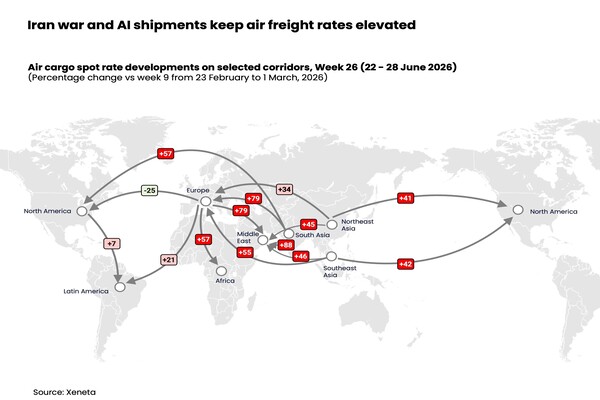
Exceptional demand for semiconductors and AI-related hardware inspired a +7% growth in global air cargo demand in June, but spot rates continue to ease in line with expectations...
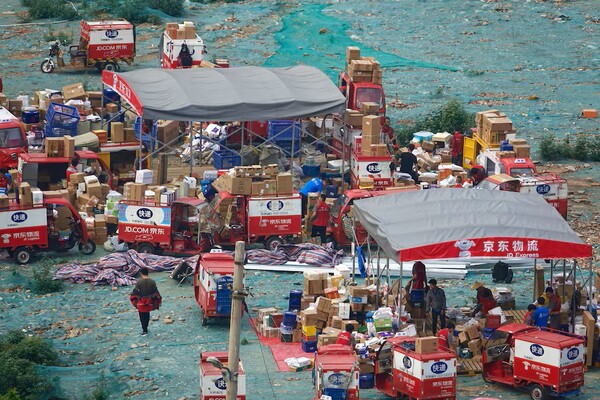
China opened 92 new international air cargo routes in the first half of this year, adding more than 210 round-trip flights per week, the China Federation of Logistics and...
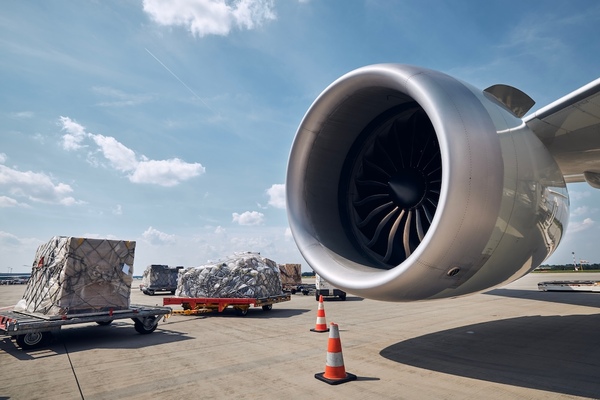
Freight forwarders should review their contracts and insurance cover following the introduction of the International Air Transport Association's (IATA) revised Direct Air...

Organised by Euroavia International, the event will connect exporters, airlines, airports and logistics providers from across the global seafood supply chain.

The CMA CGM Group has agreed to acquire FedEx Supply Chain, a subsidiary of FedEx, in a deal valued at an enterprise value of $1.4 billion. The acquisition is aimed at strengthening...
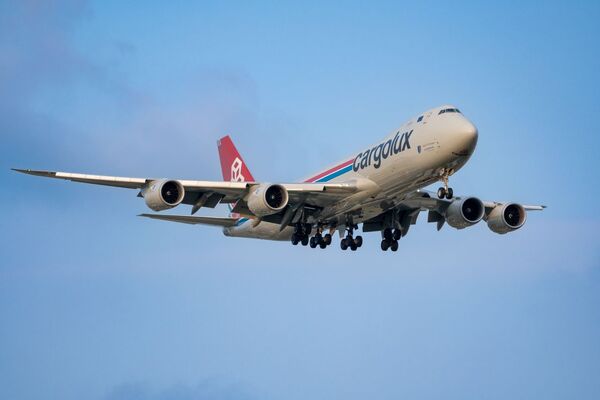
The four engine passenger jet is no longer the future of mainstream aviation. That much is clear. Boeing delivered the final 747 to Atlas Air in 2023, while Airbus handed...
African airlines led global cargo growth in May as Africa-Asia trade expanded despite Middle East disruption
Freight forwarder association FIATA has called for a delay to amendments to the IATA Direct Air Waybill (DAWB) framework to allow for a proper review to be carried out.

Africa has demonstrated its capacity to serve as a critical pillar of the global aviation fuel supply chain following recent disruptions in international energy logistics,...
Beazley says geopolitical tensions, supply chain pressures, infrastructure constraints and policy uncertainty are creating barriers to energy transition investment

 ALS
ALS