


Quadjets lose passengers but keep cargo appeal
The four engine passenger jet is no longer the future of mainstream aviation. That much is clear. Boeing delivered the final 747 to Atlas Air in 2023, while Airbus handed over the last A380 to Emirates in 2021. Airlines have moved toward twin engine widebodies because they burn less fuel, cost less to maintain and can fly most long haul routes safely under modern ETOPS rules.
But aviation rarely moves in a straight line. In cargo, the question is not just how far an aircraft can fly. It is also what it can carry, how quickly it can move and whether it can handle freight that does not fit neatly into standard containers.
That is where the quadjet story still has life.
Heavy freight keeps the 747 relevant
The strongest argument for four engines is not passenger nostalgia. It is heavy lift cargo.
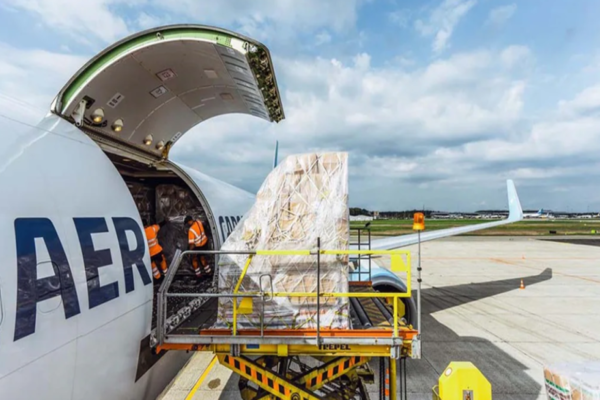
The 747 freighter remains valuable because of its nose loading capability, high payload and ability to move outsized cargo across long distances. For project freight, aerospace parts, energy equipment and urgent relief shipments, those features matter. A turbine blade, satellite component or oversized industrial module cannot always be broken down to suit a conventional bellyhold or standard freighter door.
It is a simple comparison. A twin engine freighter may be more efficient on paper, but if the cargo cannot fit, efficiency is no help.
Atlas Air remains the clearest example. The carrier operates the world’s largest 747 freighter fleet and continues to use the aircraft for heavy and complex global cargo work. That does not mean a new four engine freighter program is around the corner. It does show that the operating case for existing quadjets has not disappeared.
Air cargo demand supports large freighters
The wider market also supports the argument for more large freighter capacity. IATA said global air cargo demand rose 3.4% in 2025, helped by e commerce and resilient trade flows. In April 2026, demand increased 4.0% year on year, while capacity slipped 0.4%.
That is the type of imbalance cargo operators notice. When demand rises and capacity tightens, aircraft with high payload and flexible loading options become more valuable.
Boeing’s long term forecast points in the same direction. The manufacturer expects the global freighter fleet to grow from 2,340 aircraft in 2023 to 3,900 by 2043, a rise of about 66%. It also expects the large widebody freighter fleet to nearly double, driven partly by Asian growth and replacement of older aircraft.
The forecast does not specifically call for a new four engine aircraft. The market has moved toward twin engine types such as the 777 freighter and future A350F. Still, the numbers underline a clear point. Air cargo is growing, and some of that growth sits in cargo categories where size and loading flexibility matter as much as fuel burn.
Passenger return looks limited
For passenger airlines, the case is weaker. The A380 was designed for congested hub to hub routes, but many carriers chose frequency and network flexibility over very large aircraft. Twin engine widebodies allow airlines to connect more city pairs directly without filling 500 seats at a time.
Airport congestion could still protect a niche for very large aircraft. Heathrow, Dubai, Singapore and other slot constrained hubs can benefit from putting more passengers into each movement. But that is not the same as a broad market comeback.
The A380 remains useful where demand is dense and premium traffic is strong. It is less useful where airlines need flexibility across changing seasons, routes and yields.
Remote routes are no longer the main argument
Long oceanic and polar flights were once a stronger reason to choose four engines. Today, advanced twinjets can operate many remote routes under extended range approvals. That has reduced the operational advantage of quadjets.
Four engines still offer redundancy, but redundancy alone does not pay for fuel, maintenance and crew costs. For most airlines, the economic case has already been settled.
The future of four engine commercial aircraft, if there is one, is therefore more likely to be cargo led than passenger led. Not as a return to the jumbo age, but as a niche tool for heavy, awkward and time critical freight that needs more than a standard widebody can offer.
Source: https://breakbulk.news/air-cargo-operators-eye-quadjets-as-heavy-freight-strains-capacity/

The new European Union charge for low-value shipments has “profoundly altered the structure of imports” into Liege Airport.

Qatar Airways Cargo is continuing to target the semiconductor market with an investment in specialist containers to transport shipments related to the industry.
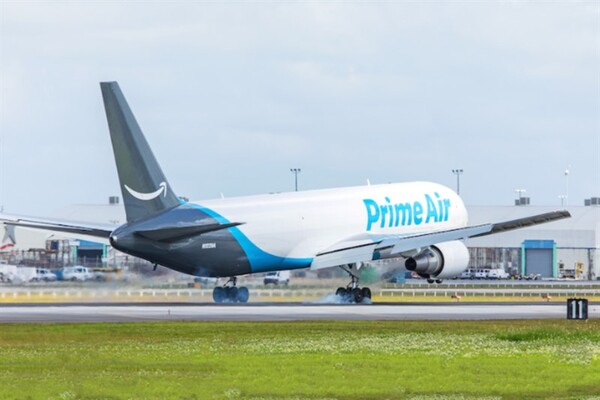
Amazon is bringing its air cargo operation together with its ground transportation and sort centre teams as part of a restructuring of its middle-mile logistics network.
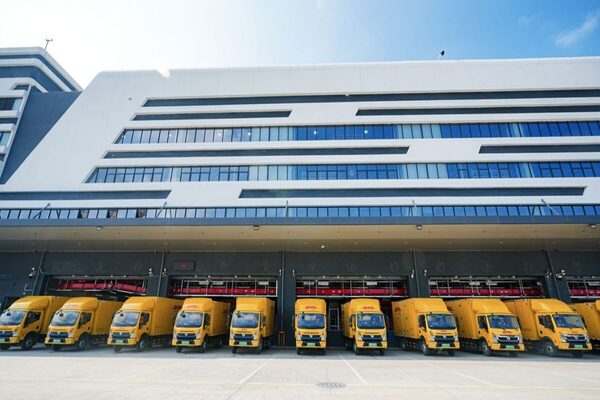
DHL Express has expanded its logistics infrastructure and air network in China via the expansion of its Shenzhen “Super Gateway” with a €177 million (c. £151m) investment.
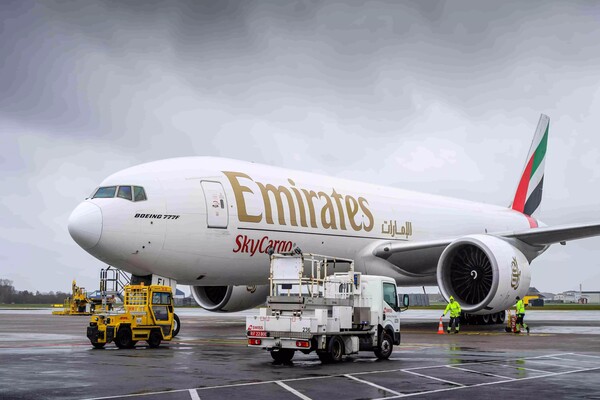
Cargo charters are becoming increasingly vital as airlines and logistics providers embrace flexible capacity to overcome disruptions, handle urgent shipments, and adapt to...
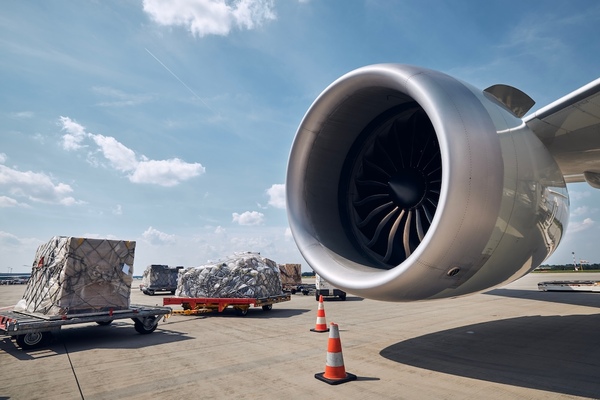
Kolkata | New Delhi: Indian electronics and automobile manufacturers are increasingly flying in raw materials and components despite sharply higher freight costs to ensure...

Air cargo demand from China and Europe continued to fall last week partly as a result of the Euorpean Union’s new rules around the import of e-commerce goods.
Expectations of a strong peak season in the global air cargo market are fading with new data showing slowing demand growth, easing spot rates and little appetite for additional...
The cargo division of Deutsche Lufthansa AG (FRA: LHA) posted a 26% gain in adjusted operating profit during the second quarter as strong shipping demand in Asia and from...

The UK government must adopt a coordinated, whole-system approach to SAF resourcing and usage across air and other modes of transport.

 ALS
ALS