


Many US logistics firms have their hands full with traffic triggered by the AI boom, with repercussions going well beyond data centre construction and outfitting to the energy sector.
Last December US imports from Taiwan outpaced inflows from China for the first time in decades. Data from the US Bureau of Economic Analysis show that whereas cargo from China slumped to $21.1bn, imports from Taiwan soared to $24.7bn, up from about $20.3bn the previous month.
The boom is driven by a ravenous appetite for semiconductors, servers and other high-tech products feeding data centres that are mushrooming across the US. Likewise, South Korea’s exports were up 40.4% year on year in the first 20 days of this month, with the biggest impetus coming from semiconductor shipments, which surged nearly 164%.
According to market intelligence and consulting firm TrendForce, global server shipments are going to grow 12.8% this year, while AI server shipments stand to jump over 28%.
Last September Gartner forecast that spending on servers would reach $466bn this year, up from $382bn in 2025, with spending on AI making up 76% of this sum.
Investment in data centres has produced a strong tailwind for the air cargo industry. Dallas/Ft Worth International Airport registered a 7.7% rise in airfreight throughput in its fiscal 2025 period, despite a slowdown in e-commerce throughput after the White House scrapped the de minimis exemption. A major factor in this growth was a big influx of frames for AI centres, reported Milton de la Paz, VP airline relations and cargo business development.
He added that this development augurs long-term demand.
“These data centres are going to evolve. Frames have a life span of three to five years. They have to be replaced,” he said.
In response to the rampant demand for AI-related products DHL is moving to set up facilities catering to this sector. The company announced this month that it is adding over 7m sq ft of warehouse space and opening 10 new facilities to support clients in the AI and cloud computing segments.
“The expansion comes as data centre operators face compressed build schedules, intricate construction sequences, and global supply chains spanning manufacturing hubs in Asia and deployment markets across North America, Europe, and beyond,” it declared.
To simplify installation and deployment the integrator aims to offer value-added services like pre-rack configuration. It also offers white glove service to ensure products are moved under tightly controlled conditions.
In its announcement the logistics provider cited independent research showing that 85% of data centre operators prefer a single end-to-end logistics partner.
North America is but the opening move of DHL’s plans targeting this sector.
“This marks only the beginning of our group-wide expansion in this fast-growing sector. North America – home to more than 40% of the world’s data centres – is a first major step, with additional regions already scheduled for further capacity upgrades,” commented Hendrik Venter, global CEO, DHL Supply Chain.
In their wake the multiplying data centres have created a scramble for power generation, storage and transmission equipment.
“AI is the boom maker in the industry. The power demand is just unbelievable,” said Ragan Watson, project sales manager at Barnhart Crane & Rigging. “We deliver and pick up transformers and power equipment to and from rail all the time.”
“Demand for power generation is off the charts,” confirmed Erik Zander, project manager at specialized transport firm Omega Morgan.
He added that wait times for large transformers now exceed two years, which has spawned a strong market for refurbished units.
The strong demand has created a tight supply of rail cars to move these units, but this has not resulted in bottlenecks,” he said.
Project forwarder Fracht has restructured its North American organization to establish a dedicated power generation division next to its industrial project/IPC operation.
Faced with rising concern about electricity supply and costs, the US president recently declared that he had told big tech firms to build their own power plants. Project forwarders will have their hands full, it seems.
Source: https://theloadstar.com/data-centre-demand-fuels-logistics-boom/
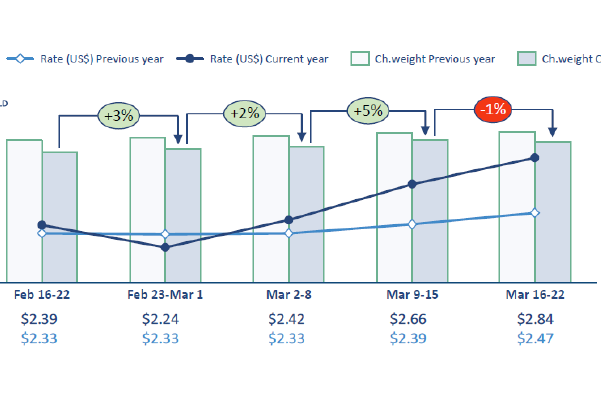
Global air cargo rates have continued to rise strongly as stakeholders adjust to the dynamic and highly challenging conditions following the military attacks on Iran by the...
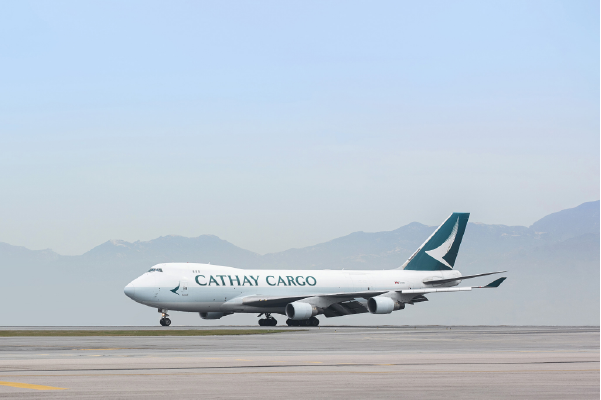
Driven by the direct impact of Jet A-1 fuel prices hitting a record high of nearly $200/barrel (a sharp spike from $95 at the beginning of the year), over 60% of international...
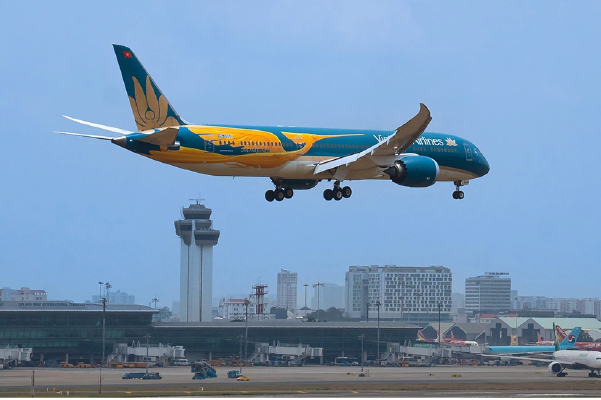
Vietnamese airlines are reviewing flight operations and preparing fuel surcharge plans in response to soaring aviation fuel prices linked to supply disruptions in the Middle...

Air charter rates have surged to “Covid-era” levels as the Iran conflict triggers a sharp capacity squeeze and volatile fuel costs, with brokers warning the market is being...
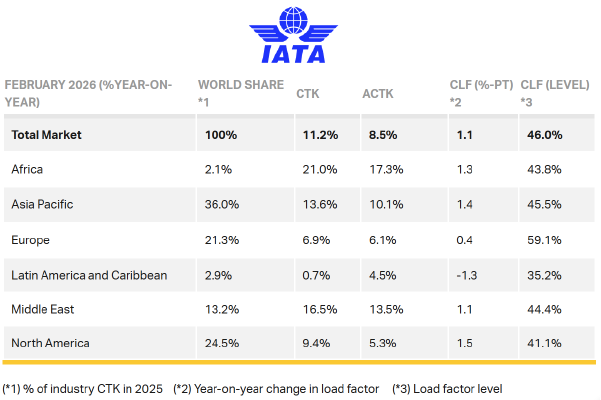
Total demand, measured in cargo tonne-kilometers (CTK), rose by 11.2% compared to February 2025 levels (+11.6% for international operations).

Beyond the immediate impact, the conflict in Iran highlights the need for resilient supply chains capable of quickly adapting to an increasingly uncertain global environment.
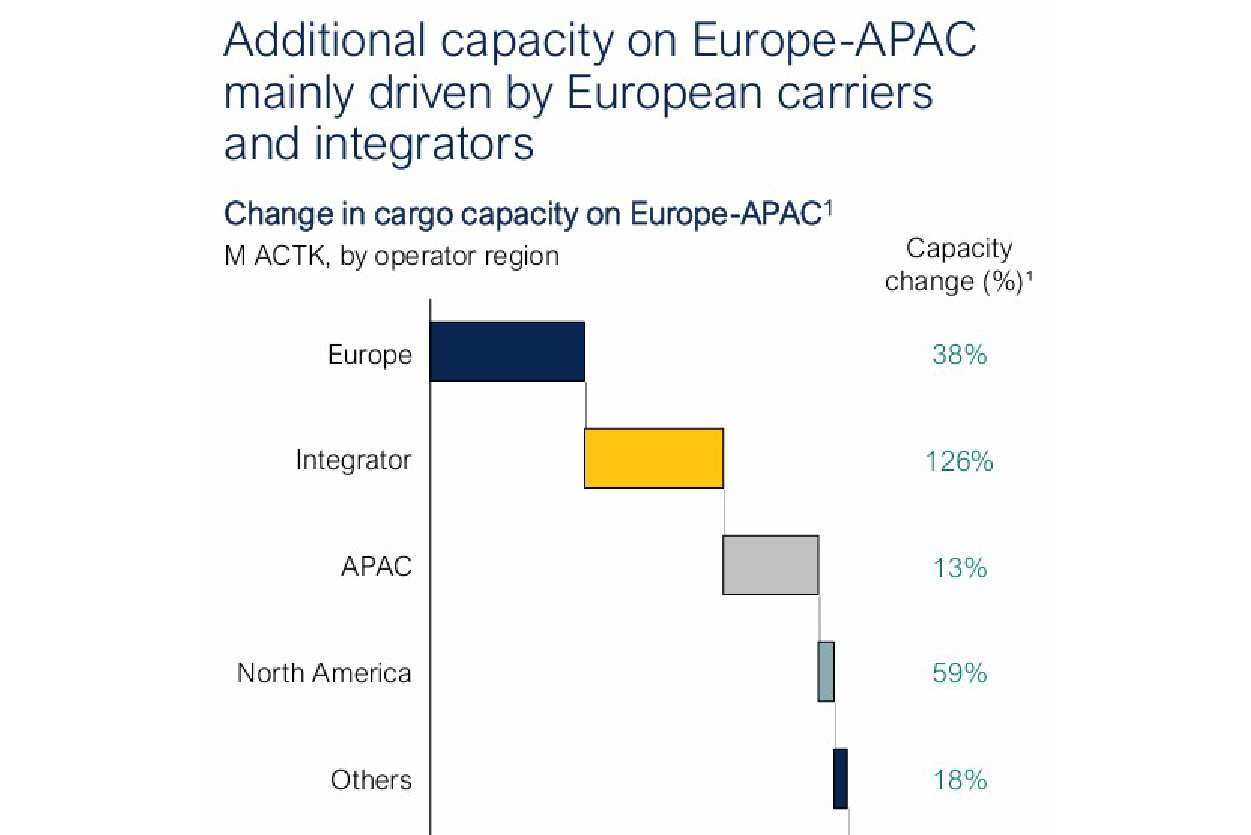
European Airlines and integrators have been the most active in adding capacity to the Asia-Europe trade lane to make up for the shortfall created by the loss of operations...
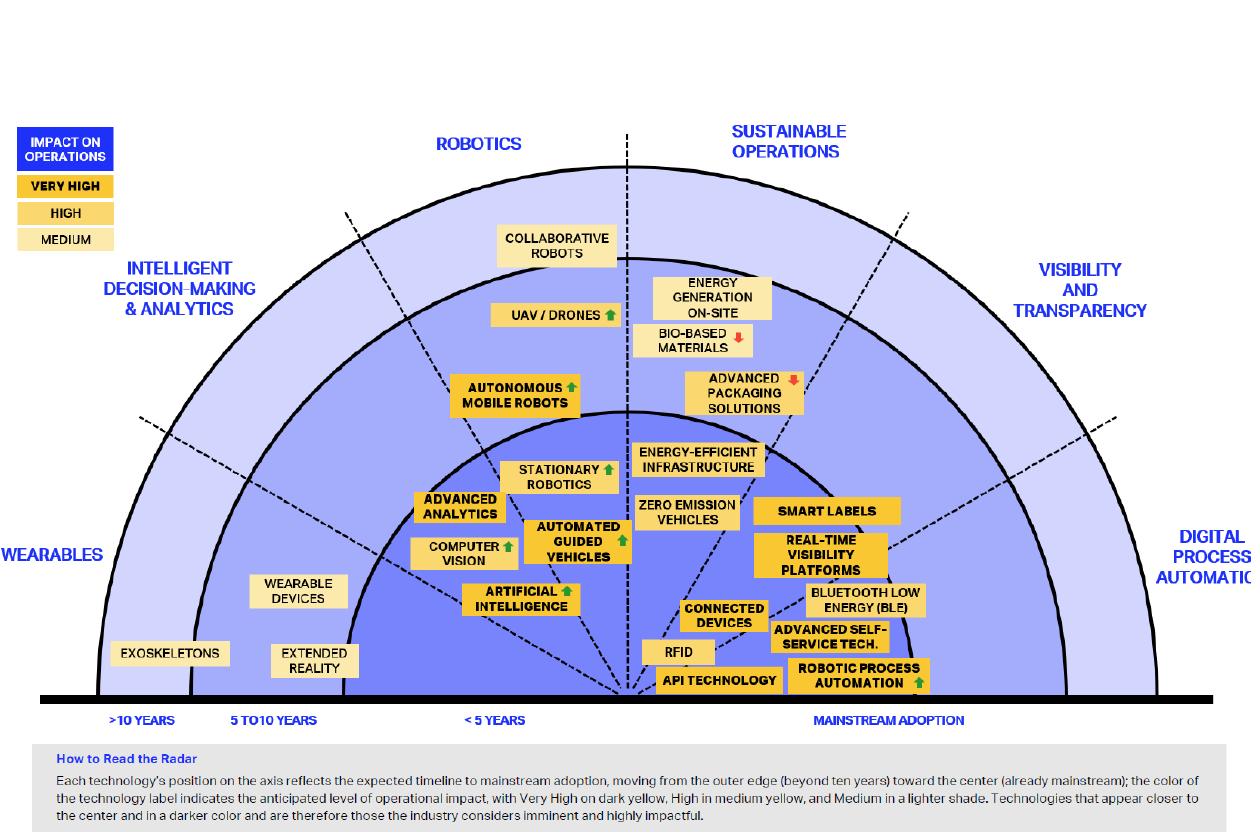
The global air cargo sector is undergoing a steady shift towards automation and data-driven operations, the International Air Transport Association (IATA) said in its 2026...

United Parcel Service Inc (UPS) opened a new US$100 million logistics center in Taiwan yesterday, its largest in the Asia Pacific, riding a wave of demand from tech companies.

 ALS
ALS