


President Donald Trump said on Monday he was increasing tariffs on South Korean imports into the U.S. related to autos, lumber and pharmaceuticals to 25%, while criticizing the ally's legislature for failing to enact a trade deal with Washington.
"South Korea's Legislature is not living up to its Deal with the United States," Trump wrote on social media.
"Because the Korean Legislature hasn't enacted our Historic Trade Agreement, which is their prerogative, I am hereby increasing South Korean TARIFFS on Autos, Lumber, Pharma, and all other Reciprocal TARIFFS, from 15% to 25%."
It was not immediately clear when the tariff hike would take effect, or what specifically triggered Trump's directive.
South Korea's benchmark KOSPI index (.KS11), opens new tab fell 0.7% in early trade on Tuesday, while the won weakened 0.5% against the dollar after hitting a near one-month high on Monday.
The White House and the U.S. Trade Representative's office did not respond immediately to requests for comment.
South Korea's presidential Blue House said on Tuesday that Industry Minister Kim Jung-kwan, who is currently in Canada, would visit the U.S. soon and meet with Secretary of Commerce Howard Lutnick. Kim was scheduled to be in the U.S. from January 28-31, a ministry statement showed.
The Blue House said it had not been officially notified about the U.S. tariff hikes, but South Korea's presidential adviser would meet with related ministries to discuss measures.
A spokesperson for South Korea's ruling Democratic Party did not have an immediate comment when asked about Trump's social media post criticizing the legislature.
South Korea's National Assembly usually approves bills only when regular sessions or extraordinary sessions are scheduled. The next bill review sessions are due to start on February 3.
Trump has previously threatened other tariff hikes and in some cases delayed them or not followed through.
EXPORTS TO U.S. FALL IN 2025
South Korea's exports hit a record high of $709.4 billion in 2025, up 3.8% from 2024, while U.S.-bound shipments stood at $122.9 billion, falling 3.8% but still making it the second-biggest market after China.
Auto exports to the U.S. stood at $30.2 billion, accounting for 25% of the total U.S. shipments, the biggest of any South Korean sector, but down 13.2% from 2024.
In a framework deal reached between the allies last year, Washington and Seoul agreed to set tariffs on U.S. imports of Korean autos and auto parts at 15%, down from 25%, putting them on par with their Japanese competitors. The 15% rate took effect on November 1.
A hike in tariff rates would hit South Korean automaker Hyundai Motor (005380.KS), opens new tab and its affiliate Kia (000270.KS), opens new tab particularly hard, given their significant exports to the United States. Hyundai and Kia shares fell 3.5% and 4.8%, respectively in early trading on Tuesday.
Hyundai did not immediately respond to a request for comment.
General Motors (GM.N), opens new tab, which produces about 500,000 vehicles annually in South Korea and exports most of them to the U.S., also did not immediately respond to a request for comment.
South Korea had been working to implement a deal announced with Washington last year that lowered U.S. tariffs on many of its exports to 15%, but U.S. officials had grown frustrated about the slow pace of implementation.
The two countries said last year that as part of the $350 billion South Korean investment into U.S. strategic sectors, Seoul would pay $200 billion in cash in phased installments that would be capped at $20 billion a year in an effort to maintain won stability.
Earlier this month, South Korea's Finance Minister Koo Yun-cheol told Reuters the government planned to implement the investment package as soon as possible, while noting that uncertainty over an expected U.S. Supreme Court ruling on Trump's tariffs could affect the process.
He said the country's planned investment of $350 billion in strategic U.S. sectors under the trade deal was unlikely to kick off in the first half of 2026, given the weak won currency.
Koo's comments may have contributed to Trump's social media post, said Yoo Ji-woong, a senior analyst at Daol Investment & Securities.
The prospect of large currency outflows has caused headaches for authorities in Seoul at a time when the won has slumped to trade at levels unseen since the global financial crisis from 2007 to 2009.
South Korea's finance ministry said on Tuesday it would actively consult with parliament on the U.S. investment bill. Koo was already planning to ask parliament for cooperation on the matter on Tuesday afternoon, the ministry said.
TRUMP'S 'IMPATIENCE'
Trump has upended global trade by imposing tariffs on nearly every country since beginning his second term in office in 2025.
Economists say his approach has triggered shifts in trading relationships and is likely to boost U.S. inflation this year.
The U.S. Supreme Court is also deciding on the legality of Trump's use of the International Emergency Economic Powers Act of 1977 to justify country-specific tariffs, with a decision not expected until mid-February.
Josh Lipsky, chair of international economics at the Washington-based Atlantic Council, said Trump's action on South Korea reflected his impatience with the pace of Seoul's enactment of the framework trade agreement, while underscoring ongoing uncertainty about tariff rates.
"It's just another reminder that the markets were wrong to believe we were going to get into tariff stability in 2026," Lipsky said. "People say, 'Oh, but he doesn't follow through,' and sometimes that's true, but sometimes it isn't. And the volatility alone - there is a price around that."
Source: https://www.reuters.com/world/asia-pacific/trump-says-he-is-raising-tariffs-certain-south-korean-imports-25-2026-01-26/
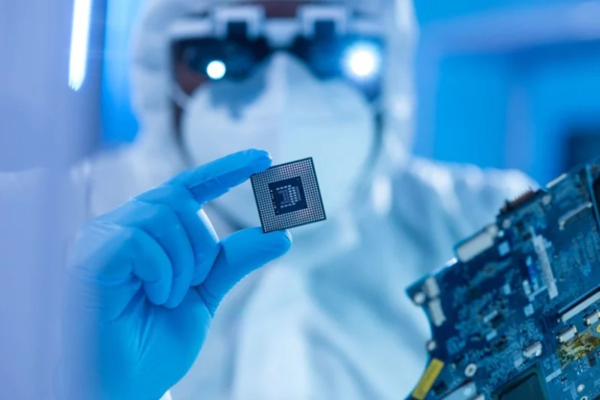
Việt Nam’s semiconductor exports grew at a compounded annual rate of 31.8 per cent between 2006 and 2025, while imports grew by 30 per cent a year during the same period.
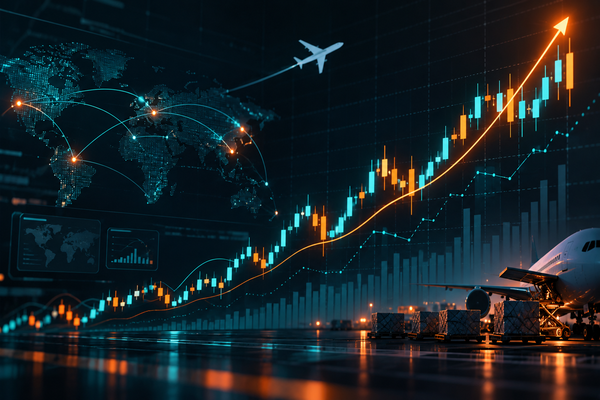
Airfreight rates appear strong as the peak season draws near, with year-on-year gains on transpacific lanes robust while Asia-Europe rates start to recover following the end...
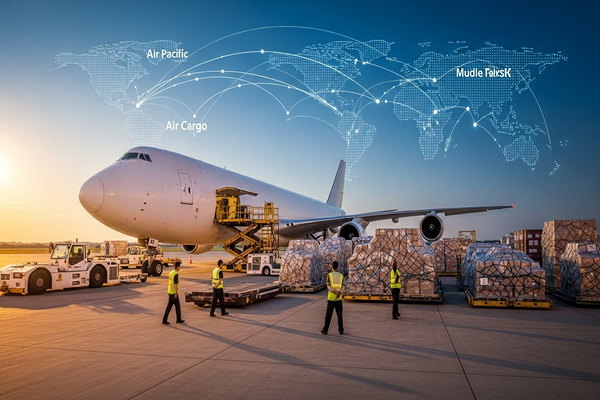
Data-centre investment is reshaping trade flows and putting new pressure on the industry's capacity balance, with hi-tech now the main engine of air cargo growth, according...
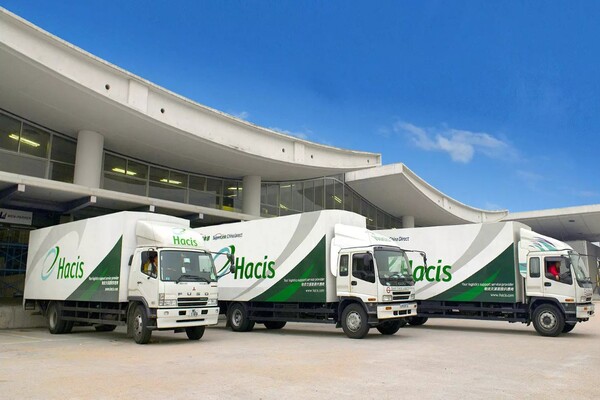
Building on the pilot shipment from Hanoi, Hacis is developing its Vietnam–Hong Kong road feeder service to offer exporters greater routing flexibility and access to Hong...
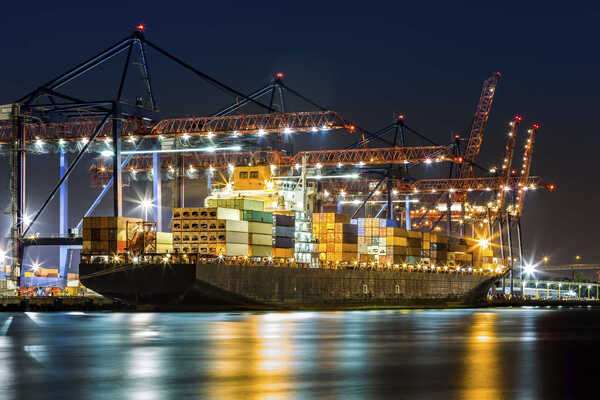
Container spot freight rates on Asia–Europe routes have rebounded after three consecutive months of decline, ahead of new Freight All Kinds (FAK) rate increases scheduled...
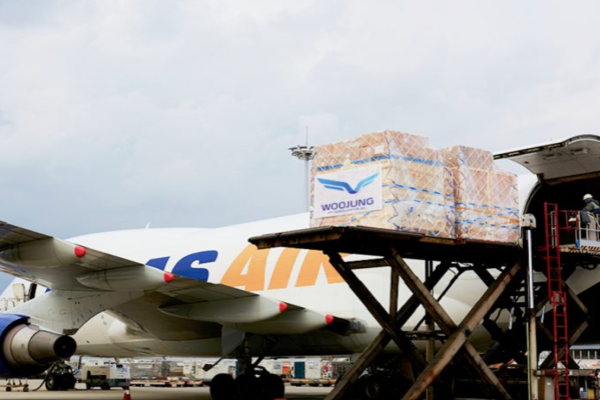
Samsung SDS is expanding its airfreight operations through the acquisition of South Korean cargo consolidator Woojung Air. The deal will strengthen Samsung SDS’s access to...
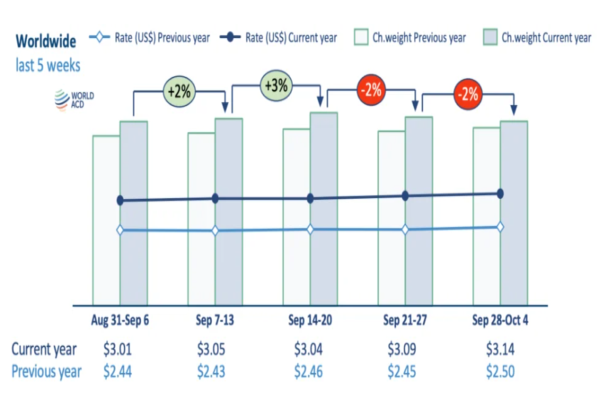
Worldwide air cargo tonnages bounced back strongly in September following their August lull, with volumes rising +3% compared with the previous month and growing +9%, year...

The rapid growth in demand for artificial intelligence (AI-related) goods that has consumed air cargo capacity out of Asia has also helped insulate global trade against tariffs...

Samsung SDS – the IT solutions and logistics arm of Samsung – is expanding its presence in air cargo through the acquisition of Korean airfreight consolidator Woojung Air...
Geopolitical uncertainty and digital transformation are reshaping global logistics, making supply chain resilience a strategic priority. FIATA emphasises the need for diversified...

 ALS
ALS