


2025 was a year of uncertainty for the air cargo industry with tariffs, the end of the de minimis exemption in the US, ongoing geopolitical conflict and supply chain disruption that ensured airlines were kept on high alert.
Despite these market challenges and subsequent supply chain disruption, airlines were on the whole quick to adapt their networks and capacity and full-year demand for the top 25 cargo airlines, measured in cargo tonne-kilometers (CTK), increased by 5.5%.
This was compared to 3.4% across the industry, highlighting the growth opportunities that carriers with major operations in Asia had.
But not all the carriers in the top 25 saw gains. Federal Express (FedEx) kept its first-place position, but only just with a 9.9% drop in volume to 16.3bn CTK.
The company said in its annual report analysis that the continued decline in US consumer goods imports and a slowdown in global industrial production had “contributed to continued weakened business conditions for the transportation industry, leading to lower freight and package volumes”.
The express carrier has been focusing on matching capacity to demand in recent years and as part of its “DRIVE” transformation and cost-reduction programme, it redesigned its Tricolor global air network.
Tricolor is FedEx’s strategy to make its international air network more efficient by utilising FedEx-owned aircraft for high-priority, high-margin volumes, retiming some flights, and using partner airlines for more flexible e-commerce and deferred shipments.
“With the significant growth of e-commerce, and as our service mix continues to shift to deferred services, we are fundamentally redesigning our international air network to operate more efficiently.
“The redesigned network continues to deploy FedEx-owned aircraft in the delivery of International Priority parcel shipments using our existing hub-and-spoke model.
“Additionally, a portion of our owned aircraft fleet has been retimed to operate off-cycle, allowing us to build density, decongest hubs, and connect our global surface networks.
“Finally, we are leveraging our global partner network as an adaptive capacity layer, particularly on imbalanced trade lanes, to move e-commerce and deferred volumes.”
AS part of these initiatives, the express carrier had made network changes that resulted in it flying less, while seeing a reduction in priority and postal volumes, although international economy shipment business increased due to e-commerce demand.
“International economy package volume increased 40% in 2025 primarily due to continued growth in our deferred service offerings as a result of strengthening e-commerce.
“U.S. ground home delivery/economy package volume increased 5% in 2025, also primarily due to strong growth in e-commerce. U.S. deferred package volume increased 4% in 2025 primarily due to mix shift toward our deferred service offerings.”
These deferred services are shipments where the customer pays for a slower, less time-critical delivery service than FedEx’s Priority products.
Supporting this change, FedEx said international priority average daily package volume fell from 667,000 to 584,000, a 12% decline.
“International and U.S. priority package volumes decreased 12% and 2%, respectively, in 2025 primarily due to softness in the global industrial economy.
US freight volumes also declined following the end of FedEx’s primary air cargo provider contract with the United States Postal Service (USPS).
“U.S. average daily freight pounds decreased 44% in 2025 primarily due to the expiration of our contract with the USPS on September 29, 2024,” said FedEx.
Though its network remains extensive, FedEx had been shifting capacity in line with demand – with more flights on in-demand routes, consolidating traffic through hubs, as well as reducing frequencies in some instances.
FedEx did also fly less. “Fuel expense decreased 20% in 2025 due to decreases in fuel prices and usage from lower flight hours,” it said.
Due to trade lane uncertainty stemming from US tariffs, by September, FedEx had reduced own-controlled transpacific freighter capacity by 25% year on year, as well as cut down on capacity provision for third parties.
FedEx did make some strategic, advantageous changes its network. In October, it added five additional weekly 777F flights between Asia Pacific and its European hub at Paris CDG Airport. It also expanded its intra-Asia network.
Additionally, FedEx was actively engaged in its fleet reduction and modernisation strategy to “better align air network capacity with anticipated demand”.
As of 31 May 2025, Federal Express’s global fleet totalled 698 freighters, 695 of which were owned and three of which were leased.
This was unchanged from the same time the previous year, although it did retire 12 aircraft units amongst its larger capacity models.
In November, the carrier’s domestic capacity was constrained when the Federal Aviation Administration (FAA) issued an Emergency Airworthiness Directive (AD) that grounded all MD-11FS after the fatal crash of a UPS Boeing MD-11F during take off from Louisville, US on 4 November.
FedEx said at the time it owned 34 MD-11s, 25 of which were operational and 18 of which were utilised on FedEx’s domestic network.
Although FedEx said it utilised its commercial airline relationships to partly compensate the capacity loss, these aircraft did not return until May 2026.
The carrier had a total of 59 777Fs, up 2 from 7 June 2024. There were also 34 MD-11s, down 3; 145 767Fs, up 7; 58 Airbus A300-600s, down 7; and 90 757-200s, down 2.
Amongst the aircraft with smaller levels of capacity there were 24 ATR-72 600Fs, up 4; 19 ATR-72s, unchanged; 16 ATR-42s, down 2; 27 Cessna 408s, up 8; as well as 226 Cessna 208Bs, down 7.
In 2024, FedEx had retired from service 22 Boeing 757-200Fs and nine MD-11Fs.
As of May 2025, FedEx was scheduled to take delivery of 29 aircraft in 2026, including 7 767Fs, 3 ATR 72-600Fs and 19 Cessna SkyCourier 408s.
Source: https://www.aircargonews.net/insights/2026/09/top-25-cargo-airlines-2025-a-year-of-instability/

ALS Aviation Logistics Corporation (ALS) has been recognized among Vietnam’s Top 5 Value-Creating Enterprises in 2026 (VALUE10) in the Logistics Industry – Air Cargo Transportation...
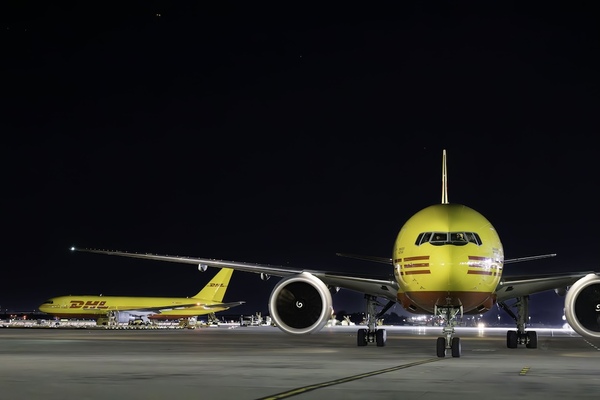
DHL Group has announced its Q3 results, as all divisions together report a 12.6 percent growth in revenue. This comes in at €22.7 billion, up from €20.1 billion in 2025
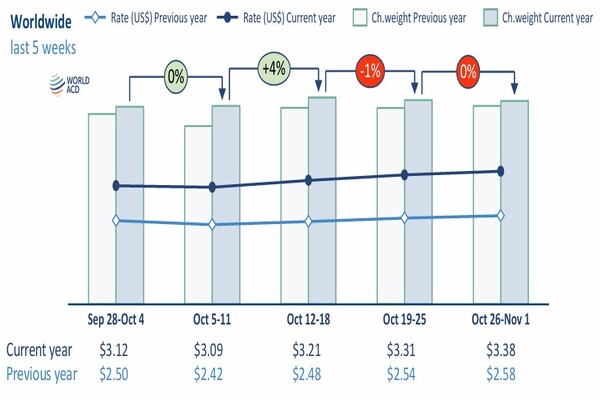
Global air cargo tonnages in October grew by +6% compared with their level this time last year, according to the latest figures from WorldACD Market Data, as growth in most...
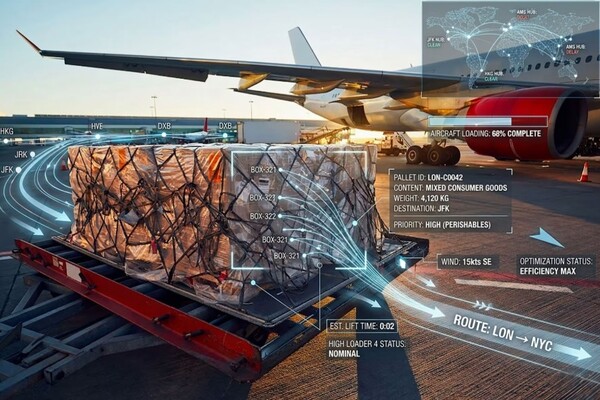
There is no shortage of companies enjoying the Al boom - from airports to airlines and forwarders, the latest airfreight trend is filling both aircraft and coffers - but companies...
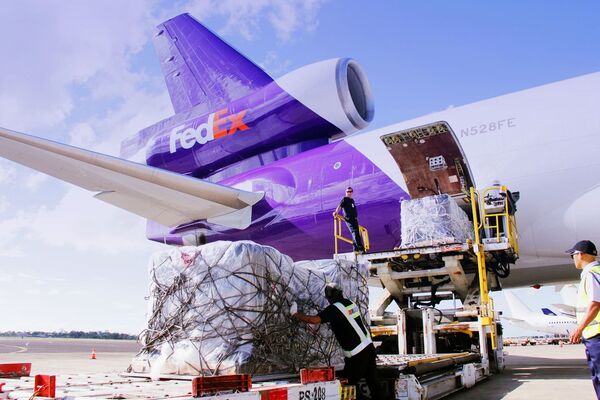
FedEx has expanded trans-Pacific airfreight capacity for industrial supply chains. Five weekly Boeing 777F flights add a stated 567,000kg of capacity, with links through Asian...

The forum will provide a platform to discuss measures for developing the logistics sector amid changing domestic and international conditions, enhancing economic competitiveness,...
Air cargo demand rose 7.7% year-on-year in September, with growth across all regions. Stronger global trade and manufacturing provided a supportive backdrop, while AI-related...

Vietnam’s total goods trade reached an estimated US$1.01 trillion in the first 10 months of 2026, up 32.3 per cent from a year earlier, surpassing the $1 trillion mark for...
Air cargo tonnages out of Asia quickly rebounded following the Golden Week holiday, while volumes from other origins were under pressure.

 ALS