News #202620 - New update from IATA: Global Outlook for Air Transport Energy in Crisis

16.06.2026

Main Takeaways

  • The closure of the Strait of Hormuz on 28 February 2026 triggered an oil-and-refinery shock without modern precedent, cutting crude oil supply by around 10 million barrels per day (approximately 10% of global consumption)—or 15 million barrels per day when refined products and LNG are included—and briefly pushing physical crude prices toward USD 150 per barrel. The disruption has fractured established supply chains: even net-exporting regions are affected, as refined product markets and logistics constraints are driving sharp regional price dislocations.
  • Jet fuel availability is threatened, and the price has roughly doubled since late February. The crack spreads hit a record USD 80 per barrel in April, highlighting that refinery outages and constrained throughput are amplifying the impact beyond the crisis in crude oil. With Hormuz-linked flows representing roughly one-fifth of global seaborne jet fuel trade, competition for limited supply has intensified, particularly in Europe, the US Westcoast, and parts of Asia, raising the risk of localized shortages alongside higher costs.
  • The macro-economic backdrop is deteriorating as the energy shock feeds through to inflation, real incomes, and consumption. In our central scenario, global GDP growth slows from around 3% toward 2.5% in 2026, with risks skewed to the downside should the disruption persist into 2027. Global inflation is set to rise above 5%, increasing the risk of stagflation, i.e., higher inflation and stalling economic activity, particularly in energy importing economies where the policy space is already constrained.
  • Global passenger demand is adjusting to this supply driven shock. Higher fuel costs, airspace disruptions, and longer routings are weighing on growth, yet underlying willingness to travel has not collapsed, only moderated. Passenger traffic is now forecast to grow by 2.1% in 2026, a material slowdown from recent years, with pronounced regional divergence: the Middle East faces a deep contraction due to airspace restrictions, while Africa and Asia Pacific grow thanks to traffic rerouting.
  • Beyond the near term shock, the crisis exposes structural fragilities in the geographic distribution of refining capacity and underscores the strategic case for accelerating the energy transition. With fossil fuels still accounting for more than 80% of global energy consumption, today’s disruption shows the urgent need to develop alternative energies for energy security, if not for the climate. As for sustainable aviation fuels, SAF, its output is projected at only 2.4 million tonnes in 2026 (around 0.8% of jet fuel demand), while 500 Mt will be required in 2050 to achieve the industry’s net-zero target. Scaling low carbon liquid fuels requires a system-wide increase in renewable energy capacity as well as keen attention to the policy mix and its sequencing.
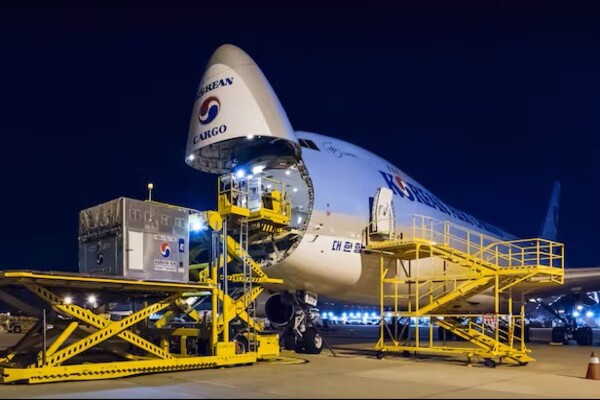
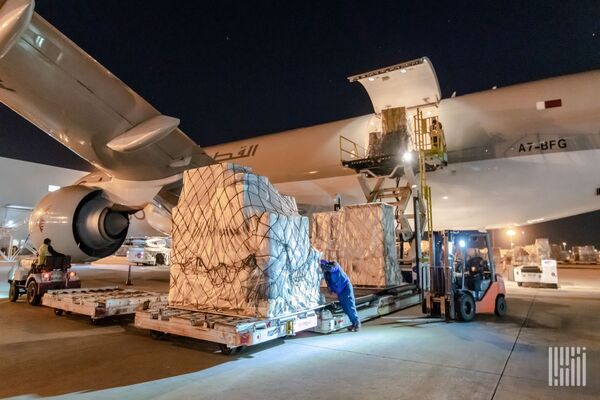
  • Air cargo continues to play a stabilizing role in global trade, but growth is slowing as the Middle East conflict curtails effective capacity and disrupts hub connectivity. After a strong start to the year, cargo demand is now expected to grow by just 0.7% in 2026. Capacity shortages, especially in passenger bellyhold, are tightening the market and pushing adjustment toward higher yields rather than volume expansion.
  • Airlines remain profitable in aggregate, but margins are under severe pressure from the fuel cost shock and limited scope for further efficiency gains. Industry revenue is projected to rise by 9.4% in 2026, supported by higher yields, yet net profit is expected to fall to USD 23 billion, cutting the net margin to 2%, the weakest outcome since the covid years. Some growth in demand, constrained capacity, and hedging provide modest buffer, but cost pass through is challenging, leaving profitability highly exposed to prolonged fuel market disruption and further macro-economic deterioration.
     

Source: https://www.iata.org/en/publications/economics/reports/global-outlook-for-air-transport-june-2026/
Other articles

Contact Us

Booking ALS expert's advice